







SolGuruz Logo
Pricing

Revenue Cycle Management Software Development Company

Build billing software that gets more claims paid on first submission.

SolGuruz builds HIPAA-compliant revenue cycle management software for hospitals, physician groups, and medical billing companies. Front desk, coders, billers, and AR teams work from one claim record instead of five disconnected tools.
Talk to a Healthcare Engineer
  • Two-person team icon for flexible engagement modelsFlexible Engagement Models
  • Locked document icon for a strict NDAStrict NDA
  • Calendar icon for the one-week risk-free trial1 Week Risk Free Trial
Illustration of a developer presenting a healthcare application window with a heartbeat icon, beside a shield with a medical cross

The Engineering Partner You Can Build On

Reliable software takes an experienced team that owns delivery end to end. Here's the track record behind ours.

7+

Years Building Custom Software

90+

Dedicated Team Members

102+

Products Shipped

87+

Clients Across 17+ Countries

Trusted by Startups and Enterprises Worldwide

Custom Software Development Success Stories

Hear It Directly From the Founders Who Built With Us

Real founders, CEOs, CTOs, and product owners behind 102+ shipped products across 14 industries share what working with SolGuruz looked like. Every story is one of 133+ independently verified client reviews across Clutch, Google, Glassdoor, and other platforms, averaging 4.9 ★★★★★ ratings.

Frame 01 / 04

Custom Software Solution Development / Driver Dashboard & Invoice Automation for Food Service Company

SolGuruz has delivered a solution that has reduced 90% of manual efforts through automation and provided real-time insights for supplier fulfillment and order volume trends. The team is responsive to requests and changes, and their proactive approach to problem-solving has stood out.

Summarized from Gary Boyd's Clutch review

Gary Boyd

CEO and Owner, Tasty Food Guys | Florida, USA

Read Clutch Verified Review
Tasty Food Guys

SolGuruz is Rated by Real People on Google and Clutch

SolGuruz Google Reviews
5.0

Rated 5.0 / 5 on Google by clients, partners, and visitors who have experienced SolGuruz first-hand - through our work, our office, or our team.

Read Google reviews →
SolGuruz Clutch Reviews
4.9

4.9 / 5 on Clutch - independently audited reviews from real clients who have shipped products with SolGuruz.

Read Clutch Reviews →

Backed by independent accreditations

What Is Revenue Cycle Management Software?

Revenue cycle management software is healthcare software that tracks and automates every financial step of a patient visit. This includes eligibility checks, prior authorization, coding, claim submission, payment posting, denial follow-up, and patient billing. Custom RCM software follows your payer rules and workflows, not a vendor's defaults.

As part of our custom healthcare software development services, SolGuruz builds RCM platforms that catch claim errors before submission. This matters because 48% of medical group leaders named denials and appeals as their biggest revenue leak in a January 2026 MGMA poll on revenue cycle leaks. Front-end issues such as registration and eligibility errors came second at 23%, ahead of billing and collections (14%) and coding (13%). Every error caught early is a claim your team never works twice.

OUR SERVICES

Our Healthcare RCM Software Development Services

From the first revenue leak assessment to a live platform that posts real payments, we deliver RCM software development services for providers, billing companies, and health plans.

Find Where Your Revenue Leaks First

Share your top denial reasons, and we'll show you which RCM module pays back fastest.

WHAT WE BUILD

Types of Revenue Cycle Management Software We Build

Revenue rarely leaks in one place. It slips out before the first visit, between the chart and the claim, and again when a payment arrives short and nobody notices.

Front End: Patient Access and Authorization

Team lead with a team for provider credentialing

Provider Credentialing and Payer Enrollment Software

Claims from providers who are not enrolled with a payer get denied, no matter how clean the claim is. This software tracks licenses, CAQH profiles, payer enrollment status, and re-credentialing dates. It also stops staff from booking patients under a payer where the provider is not active yet.

Gear and user card for patient access and eligibility checks

Patient Access and Eligibility Verification Software

This software checks a patient's insurance coverage before the visit, not after the claim is denied. It pulls patient details from your scheduling system and sends a 270 request in X12, the standard format US payers use to exchange billing data. The payer replies with a 271 response showing active coverage, copays, and deductibles, so your front desk sees coverage gaps while there is still time to act.

Magnifying glass over a report for insurance discovery

Insurance Discovery Software

Many self-pay patients actually have coverage that nobody found. The software searches payer records using patient details and returns active plans before the account goes to self-pay collections.

Calendar for prior authorization tracking

Prior Authorization Software

Prior authorization software checks which services need approval, assembles the clinical documents, and tracks each request to a decision. It supports X12 278 and FHIR-based payer APIs, so staff stop calling payers and checking portals all day. Expiring authorizations are flagged before the visit, not after the denial.

Mid-Cycle: Charges, Coding, and Claims

Order box with a gear for charge capture

Charge Capture Software

Every billable service from the encounter, procedure log, or EHR order flows into one charge queue. Missing charges, unsigned notes, and late entries are flagged daily, so nothing billable sits unclaimed past the filing deadline.

Code window under a magnifying glass for medical coding

Medical Coding Software

Coders work from one screen that shows the clinical note, the charge it belongs to, and code lookup for ICD-10-CM, CPT, and HCPCS. Specialty-specific rules and modifier checks sit inside the workflow, and charts are queued by specialty and coder. Every change carries an audit trail for compliance review.

Heart monitor for risk adjustment coding

Risk Adjustment (HCC) Coding Software

Value-based contracts pay based on how well patient risk is documented. The software flags chronic conditions that appear in the chart but are missing from claims, so coders can confirm them within the coding year.

Document with a check mark for claim scrubbing

Claim Scrubbing and Submission Software

The software checks each claim against NCCI edits (CMS rules on which codes can be billed together), payer-specific rules, and your own past denials before it goes out as an 837P or 837I file. Errors go back to the right person with a clear reason. Clean claims move to the clearinghouse automatically, and as claims management software it tracks each claim from submission to payer response, so none sits unworked.

Back End: Denials, Payments, Collections, and Reporting

Warning sign for denial management

Denial Management Software

Denial management software sorts every denied claim by CARC and RARC codes, the standard reason codes payers attach to denials, and sends it to the right work queue. Appeal templates fill in with claim data, and root-cause reports show which departments or payers cause the most denials. Teams then fix the cause, not just the claim.

Money bag for payment posting and reconciliation

Payment Posting and Reconciliation Software

ERA files (X12 835) post automatically against the right claim lines, including adjustments and patient responsibility. Bank deposits reconcile against posted payments, so finance closes the month without a spreadsheet hunt.

Salary allocation chart for underpayment recovery

Underpayment and Contract Management Software

Your payer contracts and fee schedules sit inside the system as rules. Every payment is compared with what the contract says you should receive. Short payments go to a recovery queue instead of being written off without a second look.

Stopwatch in hand for AR follow-up

AR Follow-Up and Collections Software

Each open claim sits in a follow-up queue with its status, payer response, and next action in one view. Claim status checks run automatically through X12 276/277, so your team sees where every claim stands each morning.

Shopping cart with money for patient billing and payments

Patient Billing and Payment Software

Patients get clear statements, cost estimates, online payment, and payment plans in one place. Payment reminder campaigns run from a connected healthcare CRM, built through our HIPAA-compliant healthcare CRM development services. Good Faith Estimates for self-pay patients are created from the same price data your billing team uses.
Charts on a monitor for RCM analytics and reporting

RCM Analytics and Reporting Dashboard

Clean claim rate, first-pass yield, days in AR, denial rate, and net collection rate update in one dashboard. Leaders can drill down by payer, provider, location, or specialty. Weekly reviews start from facts instead of exports that never match.

See Which Module Fits Your Revenue Cycle

Tell us how claims move today, and we'll map your first module.

CORE FEATURES

Core Features in Every RCM Platform

Whichever module you start with, these features run underneath every healthcare revenue cycle management software build we ship.

Workflow diagram for the payer rules engine

Payer Rules Engine

Payer-specific edits, filing limits, and documentation rules live in one place your billing lead can update. When a payer changes a policy, you change one rule instead of retraining the whole team.

Team around a gear for role-based work queues

Role-Based Work Queues

Each task goes to the right person automatically: registration errors to the front desk, coding issues to coders, and denials to AR specialists. Nobody digs through a shared inbox to find their work.

Secure folder with a lock for PHI access control

PHI Access Control and Audit Logs

Front desk staff, coders, billers, and client users each see only the protected health information (PHI) their role allows. The system logs every record view and edit with who, what, and when.

Document with a clock for deadline and exception alerts

Deadline and Exception Alerts

Timely filing limits, authorization expiry dates, and appeal windows trigger alerts before they pass. A claim stuck in one status too long escalates to a supervisor.

Document and pen for claim attachments

Document and Attachment Handling

Medical records requests, appeal letters, and claim attachments stay linked to the claim they belong to. Staff can send records to payers without searching through shared drives.

Rotating gears for multi-clearinghouse routing

Multi-Clearinghouse Routing

Claims and eligibility checks can route through a backup clearinghouse when the main one goes down, so one vendor outage does not freeze your cash.

free resource

Building RCM Software? Start With the Compliance-First Guide

Covers what a regulated healthcare build actually needs: HIPAA, GDPR and FHIR, RBAC and audit trails, privacy-by-design, and QA in validated environments. Free to download.

18+ Downloads
healthcare app development a compliance-first development guide
Ebook

Healthcare App Development: A Compliance-First Development Guide

A practical eBook for healthcare founders, CTOs, and product teams on building secure, scalable, and regulation-ready healthcare apps without slowing innovation.

AI IN RCM

AI Features We Build Into Revenue Cycle Management Software

Practices are adding AI to their operations quickly. In a September 2025 MGMA poll on AI adoption in medical groups, 68% of medical groups said they added or expanded AI tools that year, and among groups planning their next step, revenue cycle work such as coding, denials, eligibility checks, and prior authorization was the most common target. We build AI where it removes a repeated judgment call, and we keep a person in the approval loop. Our guide to AI agents in healthcare covers where agents fit across the wider care workflow.

AI browser window for denial prediction

Denial Prediction Before Submission

Models built through our machine learning development services learn from your own claim history. They score each claim for denial risk before it goes out, so billers fix the risky ones first.
Code window under a magnifying glass for AI coding suggestions

Coding Suggestions With Coder Approval

AI reads the clinical note and suggests codes with the supporting text highlighted. Certified coders accept, edit, or reject each suggestion, and their decisions improve future suggestions.

Document under a magnifying glass for reading payer letters

Remittance and Denial Letter Reading

Paper EOBs (explanation of benefits), denial letters, and payer correspondence arrive in many formats. AI extracts the key fields, matches them to the claim, and routes them to the right queue.

API chip for a prior authorization agent

Prior Authorization Agent

An agent built through our AI agent development services checks whether a service needs approval, gathers the required documents from the chart, submits the request, and follows up until a decision arrives. Staff step in only when the payer asks for more information, and a person approves any change to codes or charges.
Charts and a database for AR prioritization

AR Prioritization

AI ranks open accounts by expected payment, age, and payer behavior. Your team spends its day on claims that are likely to pay, not on whatever sits at the top of an aging report.

Phone with a payment confirmation for patient payment likelihood

Patient Payment Likelihood

AI looks at past balances, payment history, and coverage to predict which patients may struggle to pay. Your team can offer payment plans or financial help early, before the balance goes to collections.

COMPLIANCE

RCM Compliance We Build For

Healthcare billing is a regulated process before it is a software process. We treat compliance rules as design inputs from day one, so audit records already exist when someone asks for them.

Secure folder with a lock for HIPAA privacy and security

HIPAA Privacy and Security

We encrypt PHI in transit and at rest, and access follows the minimum-necessary rule. We sign a Business Associate Agreement when an engagement requires access to production PHI.

Code window with a gear for transaction and code set standards

HIPAA Transaction and Code Set Standards

Claims, remittances, eligibility checks, and status inquiries follow X12 5010 formats. Coding runs on current ICD-10-CM, ICD-10-PCS, CPT, and HCPCS code sets, with NCCI edits applied before submission.

API chip for prior authorization and interoperability rules

Prior Authorization and Interoperability Rules

CMS-0057-F requires specified payers to provide FHIR-based APIs, including an EHR-to-payer prior authorization API, by January 1, 2027. We build provider-side and payer-side tools that align with the Da Vinci implementation guides behind that rule.

Health insurance shield for Medicare and Medicaid rules

Medicare, Medicaid, and Medical Necessity Rules

The software checks claims against Medicare's local and national coverage rules (LCDs and NCDs) before they go out. It prompts staff to collect an Advance Beneficiary Notice (ABN) when Medicare may not cover a service. Medicaid claims follow each state's billing rules and timely filing limits.

Secured folder for substance use disorder records

Substance Use Disorder Records (42 CFR Part 2)

Behavioral health claims often carry substance use disorder data, which has stricter consent rules than standard HIPAA records. We tag Part 2 records, track patient consent, and limit who can view or send them, in line with the updated rule's February 16, 2026 compliance date.

Receipt icon for patient billing and payment rules

Patient Billing and Payment Rules

Good Faith Estimates follow No Surprises Act requirements, and card payments run through PCI DSS-compliant gateways.

RCM Software Integrations We Build Into Your Platform

New billing software must work with the systems you already run. Each connection below is designed during architecture, not added after launch. For the clinical side, our EHR integration guide covers how patient data moves between systems.

Connection TypePlatforms We Work WithWhat Your Team Gains
EHR and EMREpic, Oracle Health, athenahealth, eClinicalWorks, NextGen via HL7 v2 and FHIR R4Charges, demographics, and notes flow in without manual re-entry
ClearinghousesAvaility, Waystar, Optum (Change Healthcare), Office AllyClaims, status checks, and remittances move through one connection
X12 EDI Transactions270/271, 276/277, 278, 837P/837I, 835Eligibility, authorization, claims, and payments use payer-standard formats
Payer APIsFHIR prior authorization APIs, payer portalsAuthorization requests and decisions arrive without portal logins
Payment GatewaysStripe, Authorize.net, Square, healthcare payment processorsPatients pay online, and payments post to the right account
Accounting and ERPQuickBooks, NetSuite, Microsoft Dynamics, Sage IntacctCollections reconcile with finance without month-end exports

Payers read the same X12 standard in slightly different ways, so a platform connected to five payers is a different project than one connected to fifty. We scope integrations by payer count, not just by system count.

Know Which Integrations to Build First

Share your EHR, clearinghouse, and top payers, and we'll plan the connections that save the most manual work.

how we work

Our RCM Software Development Process

Six stages, planned around the fact that your cash flow cannot pause for a software launch. The timeline depends on scope, payer count, and integrations. Through our AI-assisted software development services, code is written inside project-level rule files, and every file goes through human review before it merges.

  1. 01 / 06

    Revenue Discovery (2 weeks)

    We spend time with your front desk, coders, billers, and AR staff to see how a claim really moves, including the workarounds nobody wrote down. We note every manual step and spreadsheet your team uses to keep claims moving.

    We also review your recent denials and short payments to see where revenue drops out and what each gap costs. These findings set the build order in your plan.


    AI Tools: Claude, Notion AI, Miro

    Deliverables: Workflow map, revenue leak report, manual step and workaround list, payer list, compliance brief, scoped module list.

    Illustration of a chart and magnifying glass for revenue discovery
  2. 02 / 06

    Architecture and Integration Design (1-2 weeks)

    Next, we design the data model, payer rules engine, and security controls around your claim volume. Every EHR, clearinghouse, and payer connection is confirmed against sandbox files before development begins, while changes are still cheap.

    AI Tools: Kiro, Claude Code, Postman

    Deliverables: Architecture document, integration map, EDI transaction list, security plan.

    Illustration of a design screen for architecture and integration design
  3. 03 / 06

    Workflow and Interface Design (1-2 weeks, alongside architecture)

    Billers and coders spend all day in work queues, so we design every screen for speed and fewer clicks. We test the prototype with the people who will use it before production code is written.

    AI Tools: Figma, v0, Claude

    Deliverables: Wireframes, clickable prototype, work queue logic, UI system.

    Illustration of a report with a pie chart for workflow and interface design
  4. 04 / 06

    Sprint Development (6-16 weeks, based on scope)

    We build in two-week sprints and show working software at the end of each one. Core claim workflows come first, then integrations, then reporting.

    AI Tools: Claude Code, Cursor, GitHub Copilot, Jira

    Deliverables: Working modules per sprint, sprint demos, test reports, updated backlog.

    Illustration of a code window with a gear for sprint development
  5. 05 / 06

    Test Claims and Data Migration (2 weeks)

    Test claims run through the clearinghouse and payer sandboxes until acceptance rates match what we expect. Meanwhile, historical claims and payer rules are cleaned, checked, and moved, and payer EDI and ERA enrollment for the new platform is confirmed.

    AI Tools: Python, Pandas, Claude Code

    Deliverables: Clearinghouse test results, migration validation report, payer enrollment tracker, open AR work-down plan.

    Illustration of a test board for test claims and data migration
  6. 06 / 06

    Go-Live and Ongoing Support

    The first live claims go out on the new platform, and we watch acceptance rates, payer responses, and payment posting closely in the first weeks.

    After launch, we track clean claim rate and days in AR against your starting baseline and review the numbers with your billing lead each month.


    AI Tools: GitHub Actions, Datadog, Sentry

    Deliverables: Deployed platform, KPI baseline report, support plan, module roadmap.

    Illustration of connected screens for go-live and ongoing support

AI-native engineering

Our AI-Native Engineering Standards

AI-native by practice, engineer-led by principle. We use AI-assisted tools at every step of design, development, launch and growth, and a senior engineer still owns every architecture decision, every security review and every line that reaches production.

  1. 01Design

    • AI-Assisted Discovery and Prototyping

      We use AI to map requirements, user stories and workflows, and to turn them into a clickable prototype your stakeholders can test before production code is written.

      Engineer-ledOur team runs discovery with you and agrees the scope before anything is built.

    • Pixel-Perfect UI/UX and Design Systems

      AI speeds up layout variations, accessibility checks and design-to-code handoff, on a shared design system in Figma.

      Engineer-ledDesigners make every design decision, and every screen is built to match the approved design on every device.

    • Architecture-First Planning

      We settle the architecture, data model, state management and integrations before the build starts, so the product scales without a rewrite.

      Engineer-ledA senior engineer owns every architecture decision.

  2. 02Build

    • AI-Assisted Development, Human-Owned Code

      Our developers use Claude Code, GitHub Copilot and Cursor for scaffolding, boilerplate and repetitive patterns.

      Engineer-ledSenior engineers own the logic, and a developer reviews every AI-generated change.

    • Coding Standards, Git Flow and Peer Review

      Code follows agreed standards and a Git Flow branching model, and AI-powered review flags issues on every commit.

      Engineer-ledA second developer reviews every change before it merges.

    • Secure and Compliant by Default

      We work under ISO 27001 and ISO 9001 certified processes, build to SOC 2-aligned controls, and add HIPAA-aligned safeguards where health data is involved.

      Engineer-ledA senior engineer owns every security review. Independent security agencies run penetration tests, and we remediate their findings.

  3. 03Ship

    • AI-Generated Tests and Manual QA

      AI generates unit tests, edge cases and regression suites from the codebase.

      Engineer-ledQA engineers test the real user flows by hand before every release.

    • Static Analysis and CI/CD Pipelines

      Static code analysis scans every commit, and CI/CD pipelines build, test and deploy across development, staging and production.

      Engineer-ledEngineers set the quality gates the pipeline enforces and fix what the scans flag.

    • Phased, Monitored Releases

      Alpha and beta builds go to internal and external users first, and releases roll out in phases with a rollback plan.

      Engineer-ledYou get a demo build after every sprint and review it with the team.

  4. 04Grow

    • Monitoring, Analytics and Performance

      Crash reporting, performance monitoring and usage analytics are in place from launch day, and for mobile apps we track Google Play and App Store analytics too.

      Engineer-ledOur engineers keep checking crash reports and store analytics for the life of the product, so it stays stable long after launch.

    • Data-Driven Iteration and Growth

      We plan in two-week sprints and prioritise new features from user feedback and analytics, not guesswork. For clients without an in-house marketing team, we also run the product growth strategy after launch.

      Engineer-ledDaily stand-ups and sprint demos keep you in every decision about what ships next.

    • Documentation, Ownership and Ongoing Support

      AI keeps API references and technical docs in sync with the code, and maintenance plans keep the product secure and up to date.

      Engineer-ledYou get full repository access and IP ownership, and one in-house senior team stays accountable for the outcome.

Custom RCM Software vs Off-the-Shelf RCM Products

Buy when a packaged product fits your specialties and payers. Build when payer rules, specialty workflows, or per-claim fees no longer fit, or when you sell billing services and need your own platform.

Off-the-shelf RCM productCustom RCM software
Pricing modelOngoing subscription, often per provider, per claim, or a share of collectionsA one-time build, then hosting and support you control
Payer rulesThe vendor's rule sets, updated on the vendor's scheduleYour payer contracts and edits, updated by your billing lead
Specialty workflowsDesigned around the most common specialtiesShaped around your specialties, modifiers, and approval chains
IntegrationsThe vendor's supported listYour EHR, clearinghouses, and payers, scoped by payer count
OwnershipYour data lives on the vendor's platformYou own the code, the payer rule library, and your data
Best fitPractices whose specialties and payers match the productMulti-specialty groups, billing companies, and teams outgrowing per-claim fees

How Much Does Revenue Cycle Management Software Development Cost?

Scope drives the cost more than anything else. Here is where most RCM builds land.

Build TierWhat It CoversTimelineCost Range
Focused RCM Module (MVP)One workflow such as claim scrubbing, denial management, or eligibility checks12-16 weeks$20,000 - $35,000
Connected RCM PlatformFront-to-back claim workflow with EHR and clearinghouse integration16-20 weeks$35,000 - $45,000
Enterprise RCM PlatformMulti-entity billing, AI denial prediction, prior authorization APIs, deep integrations20+ weeks$50,000+

Custom RCM software with SolGuruz starts at $20,000. The final number depends mostly on payer count, integration depth, and the number of specialties you bill for.

See What Your RCM Build Would Cost

Share your payers and systems, and we'll send a cost range.

WHO WE BUILD FOR

Industries We Build Revenue Cycle Management Software For

Each care setting bills differently. Here is how we shape the build for the teams we serve most.

  • Hospital trolley for hospitals and health systems

    Hospitals and Health Systems

    Facility and professional billing run side by side, with UB-04 and CMS-1500 claims handled in one platform. Multi-entity reporting, chargemaster control, and department-level denial tracking help finance leaders see which service lines lose money.

  • Doctor illustration for physician groups and specialty practices

    Physician Groups and Specialty Practices

    Cardiology, orthopedics, oncology, and other specialties get the modifier rules, coding checks, and payer edits their billing depends on. Multi-provider groups see collections by provider and location without building reports by hand.

  • Surgery illustration for ambulatory surgery centers

    Ambulatory Surgery Centers

    Case costing, implant billing, and multi-procedure payment rules are built into the claim workflow. Authorization checks run before the surgery date, so cases do not get cancelled at the last minute.

  • Charts on a monitor for medical billing and RCM companies

    Medical Billing and RCM Companies

    Billing companies need to see which clients make money and which ones drain biller hours. We build client-level profit reports, biller productivity tracking, and a quick setup flow for each new practice's payer list. Your team can take on more clients without hiring billers at the same pace.

  • Hands holding a heart for behavioral health providers

    Behavioral Health Providers

    Session-based billing, authorization unit tracking, and payer-specific documentation rules are built in. Teams know how many approved sessions remain before they schedule the next visit.

  • Wheelchair for home health and hospice agencies

    Home Health and Hospice Agencies

    RCM modules connect with the home care platforms we build through our home care software development services, so visit records flow into billing without re-entry. Episode billing, visit verification, and payer authorization limits are tracked per patient.
  • Phone with a stethoscope for telehealth providers

    Telehealth Providers

    Billing connects with the telehealth apps we build through our telemedicine app development services, so virtual visits carry the right place-of-service codes and modifiers. Multi-state coverage rules are applied before the claim goes out.
  • Medicine bottle and pills for pharmacies, labs, and DME suppliers

    Pharmacies, Labs, and DME Suppliers

    For pharmacies, billing connects with the pharmacy systems we build through our pharmacy management software development services to handle claim adjudication and reimbursement checks. Labs and DME suppliers get order-based billing, medical necessity checks, and documentation tracking for each claim.
  • Team around a gear for health plans and TPAs

    Health Plans and TPAs

    Health plans and third-party administrators handle member questions, provider disputes, and clinical reviews on top of claims. We build member and provider portals, appeal and grievance tracking, and utilization review queues with clear decision deadlines. Reviewers see the full case history before they make a call.

The Tech Stack Behind Your RCM Platform

The languages, frameworks, cloud services, and tools we use to build, test, and run RCM platforms.

Why Choose SolGuruz for Revenue Cycle Management Software Development

Most buyers compare RCM vendors by feature lists. We build revenue cycle management software that your billers and coders keep using long after go-live.

  • Billing Domain Knowledge From Day One

    Our team works with X12 files, payer edits, and denial codes every day, so your billing lead does not spend weeks teaching us how claims work. We ask the right payer and workflow questions from the first call.
  • Compliance and Security by Design

    Delivery runs on ISO 27001:2022 and ISO 9001:2015 certified processes. Our engineers apply HIPAA safeguards from the first sprint, so compliance reviews do not stall your launch.
  • Proven Healthcare Delivery

    Clutch recognizes SolGuruz as a Top Medical Software Developer in India. Our team has shipped HIPAA-compliant telemedicine, healthcare staffing software, elder care, and AI clinical documentation platforms.
  • Fast Delivery With Engineering Discipline

    Our 90+ experts use AI-assisted development under human review to move faster without cutting corners, backed by a 99.9% delivery rate. Teams that want engineers inside their own sprints can hire dedicated developers from the same team.
  • Full Ownership and Transparency

    You get a clear scope and estimate up front, weekly demos, and full repository access. You own the code, the payer rule library, and your data from day one.

From Our Portfolio

Healthcare Software Projects We Have Delivered

SolGuruz has shipped 102+ products across 14 industries.

  • AI Clinical Notes Platform That Turns 2-Hour Documentation Into One Click

    AI Clinical Notes Platform That Turns 2-Hour Documentation Into One Click

    NoteCliniq transforms clinical conversations into HIPAA-compliant SOAP notes in seconds, eliminating 2+ hours of manual documentation daily for busy clinicians.

    Key Outcomes

    6-8 Weeks
    Delivery Timeline
    2-Hour to 1-Click
    Documentation Transform
    HIPAA
    Compliant Architecture
    Per-Note
    Usage-Based Pricing Model
  • Telemedicine App Online Doctor Consultancy App Solution

    Telemedicine App Development

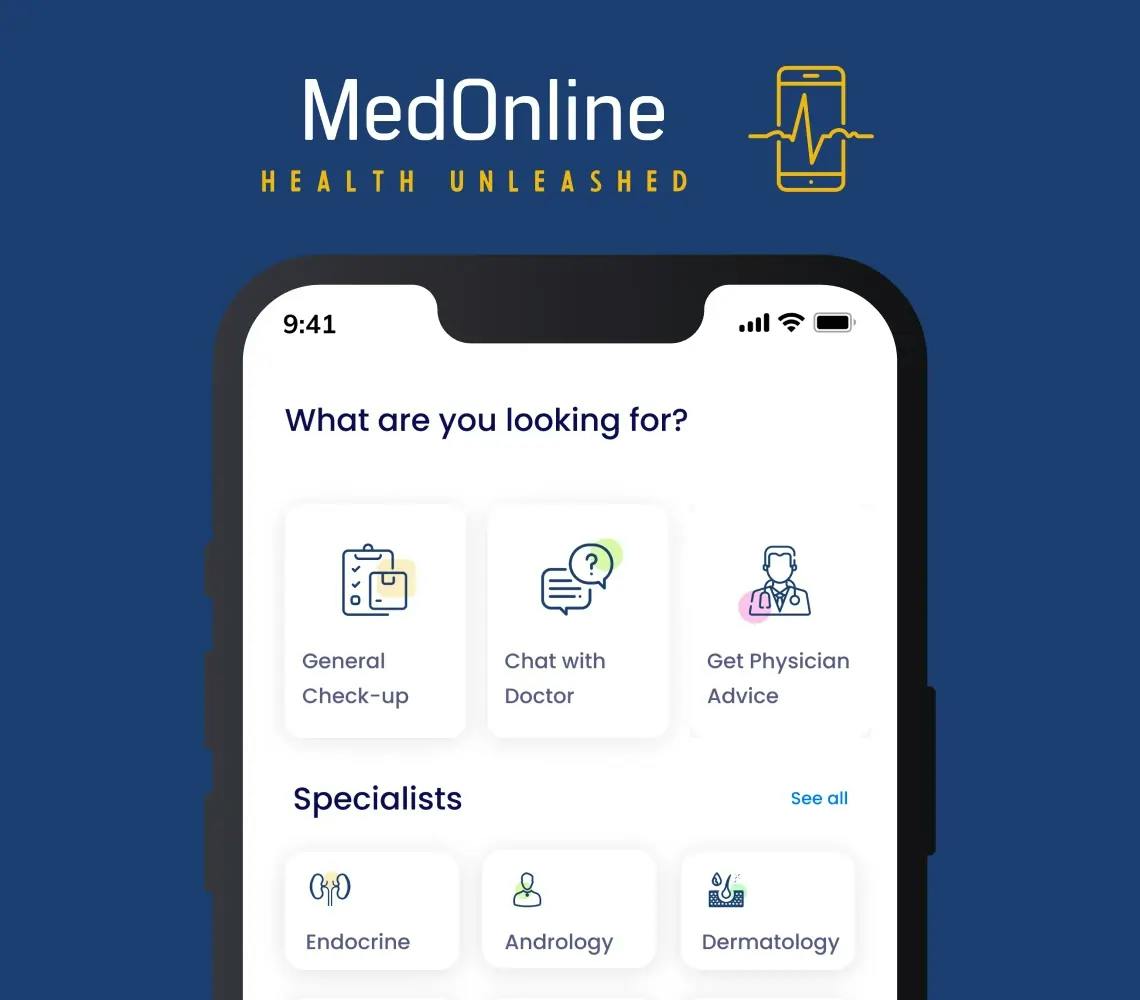
    Our app is a single interface for direct communication when booking clinical appointments and consultations and placing medicine orders right from the comfort of your home.

    Key Outcomes

    3-4 Month
    Delivery Timeline
    3 Apps
    Doctor + Patient + Pharmacy, HIPAA Compliant
    4 Categories
    Appointments, Consults, Rx, Delivery
    100%
    HIPAA Compliant
  • A Healthcare Staffing App And Nurse Staffing Solutions

    AI-Powered Healthcare Staffing App Solution

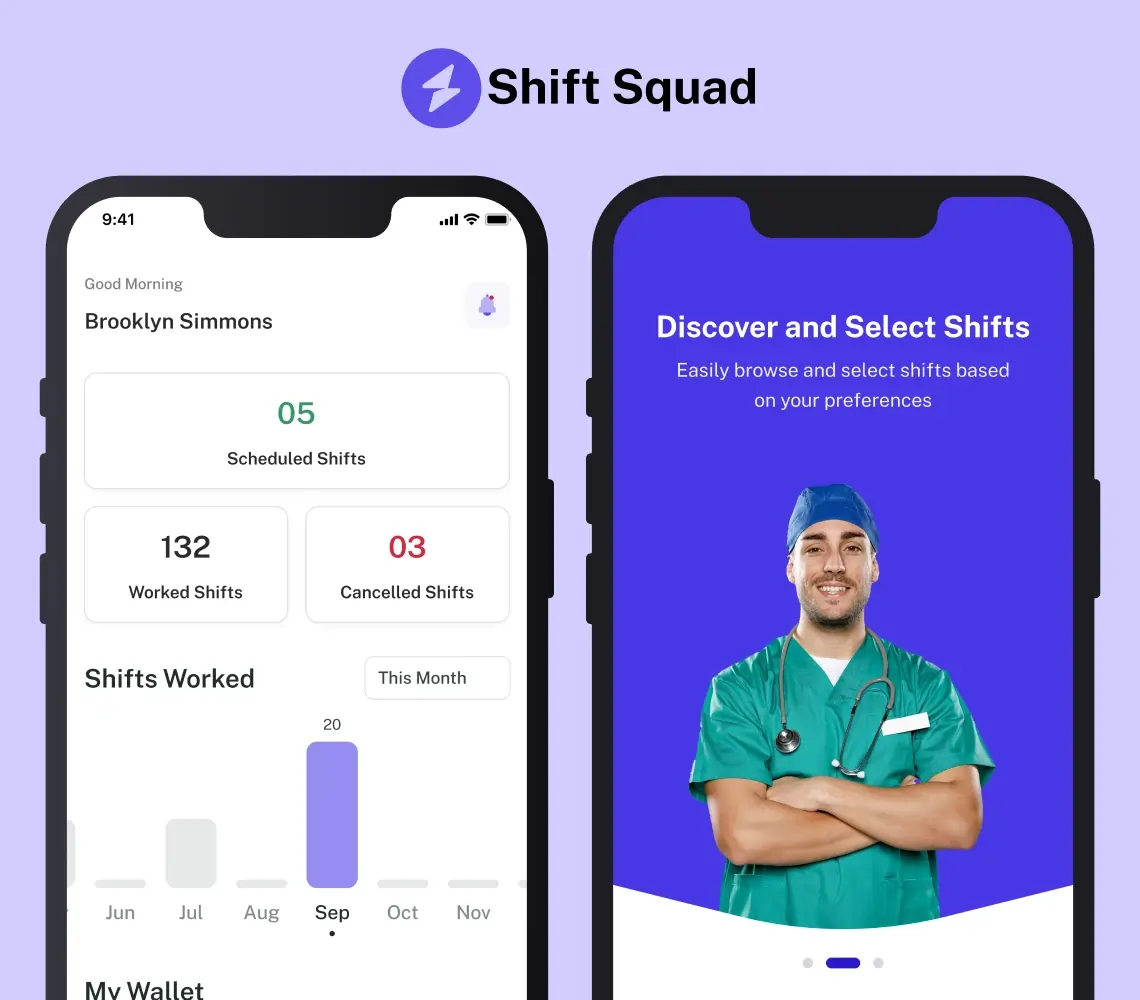
    Explore our AI-powered healthcare staffing app case study. See how SolGuruz's expertise turns nurse staffing challenges into a system that holds up on a live rota.

    Key Outcomes

    3-4 Month
    Delivery Timeline
    60%+
    Reduction in Manual Scheduling
    3x
    Faster Shift Fulfillment
    100%
    HIPAA Compliant from Day 1
  • Elderly Care App Solution

    Elderly Care App Solution

    We delivered safety, independence, and happiness to the seniors with our innovative elder care solutions, and we are proud to build it!

    Key Outcomes

    3-4 Month
    Delivery Timeline
    3 Portals
    Caregiver, Family, Healthcare
    HIPAA
    Compliant
    Cross-Platform
    iOS, Android, Web

What Our Clients Say

Explore the latest reviews from our existing clients to get a better picture of our services and collaboration.

Top Clutch Health & Wellness App Developers Ahmedabad 2026
Top Clutch Software Developers - Medical, Ahmedabad
Top Clutch Software Developers - Medical, India
Clutch Fall Champion 2024
Clutch Global Award Fall 2024
Health & Fitness

Fitness Mobile App Development for Wellness & Fitness Company

The app was delivered ahead of schedule, leaving the client impressed with SolGuruz' efficiency. The vendor ensured a seamless customer experience by always addressing queries and requests promptly. Moreover, they worked flexibly to accommodate any ad hoc tasks and followed a professional approach.

Arinze review for SolGuruz

Summarized from Arinze Pascal's Clutch review

Arinze Pascal, CEO, Bakoomba Fitness

UsaMiami, Florida, United States

Dec. 2022 - Jan. 2023
Software & SaaS

Custom Software Development - Mobile & Web Dev for Documentation Solutions Firm

SolGuruz's work continues to receive positive feedback from the client's customers. The team is highly communicative and professional from a project management standpoint, and internal stakeholders are impressed with the service provider's technical expertise.

Deepak Dhanak's review for SolGuruz

Summarized from Deepak Dhanak's Clutch review

Deepak Dhanak, Co-founder & CEO

IndiaMumbai, India

Sep. 2023 - Ongoing
Have an RCM Software Project in Mind?

Tell us what you need, and we'll come back with the right approach and cost.

Book a consultation about an RCM software project with SolGuruz

Related Healthcare Software Services

Healthcare rarely runs in isolation. Explore the connected platforms our team builds and integrates.

You are hereRevenue Cycle Management Software

Frequently Asked Questions

Quick answers to the questions our clients and prospects ask most. If yours is not here, our team is one click away.

Jay Nandwana Technical Business Consultant at SolGuruz

Jay NandwanaSenior Technical Business Consultant

Need advice tailored to your project?

FAQs cover the common ground. For decisions specific to your tech stack, timeline, and team, talk to Jay and the team, who have shipped what you are planning.

Revenue cycle management (RCM) software is healthcare software that tracks and automates every financial step of a patient visit, from eligibility checks and prior authorization to coding, claim submission, payment posting, denial follow-up, and patient billing. It helps providers get paid correctly and faster.

A focused RCM module costs $20,000 to $35,000. A connected platform with EHR and clearinghouse integration costs $35,000 to $45,000. Enterprise builds with AI and prior authorization APIs start at $50,000.

A focused module takes 12-16 weeks. A connected platform takes 16-20 weeks. Enterprise builds run 20 weeks or more, depending on payer count, EHR connections, and specialties.

Medical billing software handles claim creation, submission, and payment posting. RCM software covers the full cycle, adding eligibility checks, prior authorization, coding support, denial management, and AR follow-up.

Buy when a packaged product fits your specialties and payers. Build when payer rules, specialty workflows, or per-claim fees no longer fit, or when you sell billing services and need your own platform.

Yes. We connect through HL7 v2, FHIR R4, and vendor APIs for Epic, Oracle Health, athenahealth, eClinicalWorks, and NextGen, so charges and patient details flow in without re-entry.

It shows which errors keep causing denials, such as missing authorizations or wrong patient details. Your team fixes those steps at registration or coding, so fewer claims get denied in the first place.

Yes, with human review. AI suggests codes and flags risky claims, but certified coders and billers approve every change. Each suggestion keeps an audit trail for compliance teams.

We encrypt protected health information (PHI) in transit and at rest, apply role-based access, and log every record view. We also sign a Business Associate Agreement (BAA) when an engagement requires access to production PHI.

Yes. Your billers work claims for every client practice from one login, while each practice's data, payer rules, and reports stay separate.

Yes. Open AR stays in the old system until your team works it down, while new claims go through the new platform. Billing keeps running during the switch.

Yes. If the main clearinghouse stops responding, the platform sends claims and eligibility checks through a backup connection on its own. Your staff does not need to step in, and claims keep moving.

The revenue cycle has three stages. The front end covers provider credentialing, patient access and eligibility verification, insurance discovery, and prior authorization. The mid-cycle covers charge capture, medical coding, risk adjustment coding, and claim scrubbing and submission. The back end covers denial management, payment posting, underpayment recovery, AR follow-up, patient billing, and the reporting that ties them together.