












SolGuruz Logo
Pricing

Manufacturing ERP Software Development

Production planning, shop floor visibility, and costing, built around how your plant actually runs.

Manufacturing ERP software connects production with the rest of your operations, covering material requirements planning, production scheduling, bills of materials, shop floor control, inventory, quality, and job costing in one system. At SolGuruz, we build custom manufacturing ERP software around your existing production processes when packaged software cannot model the way your plant operates.
Get My Estimate
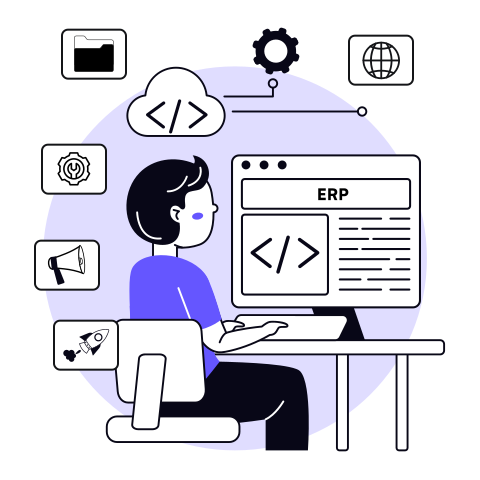
Illustration of a developer at a laptop building an ERP application window, with a code icon and a settings gear alongside it

Flexible Engagement Models

Strict NDA

1 Week Risk Free Trial

The Engineering Partner You Can Build On

Reliable software takes an experienced team that owns delivery end to end. Here's the track record behind ours.

7+

Years Building Custom Software

102+

Products Delivered Across Apps, Web & Software

80%

Repeat Client Rate

87+

Clients Served Across 17+ Countries

Trusted by Startups and Enterprises Worldwide

success speaks louder

Watch How We Make a Difference

Tim Samuel, Vice President and Co-Founder at Sparketh
Sparketh

Online Art Education Platform

I've been working with SolGuruz for almost five or six years. They say you have to pick two of the three: cost, quality, or speed. SolGuruz has been the only company that I have ever experienced that has delivered on all three of those pillars at the same time. They deliver the highest quality code, designs, and projects at the best price and within timelines you think are impossible. You guys are amazing and unmatched.

Tim Samuel

Vice President & Co-Founder, Sparketh | Shark Tank Featured Startup

Gary Boyd, CEO of Tasty Food Guys LLC

Custom Software Solution Development / Driver Dashboard & Invoice Automation for Food Service Company

SolGuruz has delivered a solution that has reduced 90% of manual efforts through automation and provided real-time insights for supplier fulfillment and order volume trends. The team is responsive to requests and changes, and their proactive approach to problem-solving has stood out.

Tasty Food Guys

Summarized from Gary Boyd's Clutch review

Gary Boyd

CEO and Owner, Tasty Food Guys | Florida, USA

Read Clutch Verified Review
Robert Mond, Principal at The Master Storytellers LLC

Mobile App & Web App Dev & UX/UI Design for Social Platform / Daily Journaling App

SolGuruz has delivered the initial design and meets weekly to track progress. The team coordinates the project through a project manager as the primary client contact. SolGuruz is communicative and provides follow-up to meet requirements. They communicate via virtual meetings, emails, and messages.

DreamStoryLive

Summarized from Robert Mond's Clutch review

Robert Mond

Principal, The Master Storytellers LLC & Founder/CEO, DreamStoryLive | New Mexico, USA

Read Clutch Verified Review
Chad Smith, Owner of Monarch Radon Testing and Founder of RadonSketch

Radon Compliance Software - Website & Mobile App Dev for Home Services Company

SolGuruz delivered the project on time and had outstanding project management skills. Furthermore, the team communicated effectively and cohesively through Microsoft Teams. Overall, the service provider's performance led to the client's satisfaction.

RadonSketch

Summarized from Chad Smith's Clutch review

Chad Smith

Owner, Monarch Radon Testing LLC & Founder, RadonSketch | Colorado, USA

Read Clutch Verified Review

SolGuruz is Rated by Real People on Google and Clutch

SolGuruz Google Reviews
5.0

Rated 5.0 / 5 on Google by clients, partners, and visitors who have experienced SolGuruz first-hand - through our work, our office, or our team.

Read Google reviews →
SolGuruz Clutch Reviews
4.9

4.9 / 5 on Clutch - independently audited reviews from real clients who have shipped products with SolGuruz.

Read Clutch Reviews →

Backed by independent accreditations

WHAT WE DO

ERP for Manufacturing Services

Explore the services regarding ERP in the manufacturing industry.

Custom Manufacturing ERP Development

Systems built around your routings, work centers, and costing rules rather than configured into a vendor's model. Module scope is set during the plant walkthrough, so release one covers the lines carrying the most manual effort.

Manufacturing ERP Consulting

Current-state review across planning, production, and costing, then a costed build-or-buy comparison before development starts. You keep the process maps and requirements documentation, whichever route the numbers point to.

Manufacturing ERP Implementation

Configuration, data migration, and go-live run line by line or plant by plant. Cutover dates are set around your production calendar, so the first live period avoids month-end and peak runs.

Shop Floor and Systems Integration Services

Connecting the ERP to MES, machine controllers, quality systems, and scanning hardware on the floor. Each connection is rated for complexity, since a documented API and a serial port are very different jobs.

Manufacturing Data Migration

Moving item masters, multi-level BOMs, routings, standard costs, and open work orders across. BOM accuracy gets the most attention, because a wrong component quantity propagates into every job that uses it.

Hire Manufacturing ERP Engineers

Engineers who have built for discrete, process, and mixed mode operations, working inside your team on your roadmap. They work to your delivery process, your security requirements, and your reporting lines.

AT THE ERP END

Platforms and Systems We Work With

What sits at the ERP end changes how the work runs. Three situations cover most manufacturing projects.

Custom manufacturing ERP

Built from the data model up around your production method, routings, and costing rules. Suited to operations whose process sits outside what packaged systems model, or where compliance requirements need validation designed in rather than added on. Covered in more depth on our custom ERP development page.

Odoo

Odoo carries manufacturing modules covering MRP, work orders, quality, and maintenance, with custom module development for anything the standard apps do not reach. Suited to operations needing meaningful configuration without a system built from nothing.

Your existing ERP

Where a system is already running, we work with whatever interface it exposes. That covers building missing modules, connecting shop floor equipment, or extending costing and reporting beyond what the platform provides natively.

Already running something that half works?

We pick up from wherever the system stands, whether that means extending it or replacing it.

THE SCOPE

What Manufacturing ERP Software Covers

Manufacturing ERP software runs the operation from raw material through to finished goods and the ledger. It connects what happens on the floor with what finance sees, so both work from the same numbers. Four areas make up the core.

Production planning and scheduling

Work orders get scheduled against real capacity rather than a theoretical calendar. The system accounts for machine availability, labor, tooling, and changeover time. When a rush order lands, rescheduling shows you what moves and what slips before you commit to a date.

Materials and inventory control

Material requirements planning works backward from demand to tell you what to buy and when. Stock is tracked by lot, serial, and location across every site. Reorder points adjust against actual consumption, so raw material arrives ahead of the run instead of holding cash on the shelf.

Shop floor visibility

Operators record production, scrap, and downtime as it happens. Supervisors see order status by work center without walking the floor. That same data feeds costing, so the labor and machine time on a job reflect what was actually spent.

Costing and financial integration

Standard costs get compared against actual costs per job, per run, and per product. Material, labor, overhead, and scrap all roll up automatically. Month-end closes on production data that finance can reconcile rather than on estimates gathered by email.

ERP and MRP: What the Difference Actually Is

Manufacturers use these terms interchangeably, and vendors do not always help. The three sit in a sequence, each one absorbing what came before.

SystemMRPMRP IIManufacturing ERP
HandlesMaterial requirements and purchasingAdds capacity planning, scheduling, and shop floorAdds finance, procurement, sales, quality, and HR
AnswersWhat to order and whenWhether you can actually make it on timeWhat the whole operation costs to run
Typical userPlanning and purchasingPlanning, production, and operationsEvery department
Data it needsBOMs, inventory, demandAdds routings, work centers, laborAdds ledger, customers, suppliers, quality records
Where it sitsA moduleA module setThe full system

ERP and MRP have their differences, and it is important to make the correct choice for your manufacturing business and understand what will follow.

Do you need MRP capability or a full ERP?

Smaller operations running a stable product mix often need planning and purchasing, nothing more. If your accounting software already works and the pain sits in material shortages, an MRP system solves the actual problem. We scope builds that way, so you are not paying to develop modules nobody opens.

What changes when you outgrow it

The limit usually shows up at month-end, when production data lives in one place and costs live in another. Multi-site operations hit it sooner, since consolidating inventory and costing across plants is where standalone MRP software for manufacturing stops. At that point, the build widens to cover finance, procurement, and quality alongside planning.

Scoping starts with that question. Whether you need to know what to order or what it cost once you made it decides which modules get built first.

Manufacturing ERP Modules

A manufacturing ERP system runs on ten core modules. Most builds launch with five or six, then add the rest as the operation needs them.

ModuleWhat it handlesConnects to
Material requirements planningDemand-driven purchasing, lot sizing, safety stock, lead time offsets, and the master production scheduleInventory, procurement, production
Production planning and schedulingWork orders, finite capacity scheduling, work center loading, changeover sequencingMRP, shop floor, costing
Bill of materials and routingsMulti-level BOMs, revision control, engineering change orders, operation sequences, standard timesProduction, costing, engineering
Shop floor controlJob clock-in, production reporting, scrap and downtime capture, work in progress trackingProduction, costing, MES
Inventory and warehouseLot and serial tracking, bin locations, cycle counting, multi-site stock, inventory valuationMRP, production, sales
Quality managementInspection plans, non-conformance records, corrective action, certificates of analysis, traceabilityProduction, procurement, compliance
Procurement and supplier managementPurchase orders, supplier performance, approval chains, incoming inspectionMRP, inventory, finance
Job and standard costingStandard versus actual cost, material and labor rollup, overhead absorption, yield and scrap varianceProduction, shop floor, finance
Maintenance managementPreventive schedules, work requests, spare parts, machine downtime historyShop floor, inventory
Reporting and analyticsOEE, throughput, on-time delivery, cost per unit, role-based dashboardsEvery module

CAD2BOM sits alongside these for engineering-heavy operations. It pulls bills of materials straight out of CAD so revisions propagate into the ERP rather than getting rekeyed. Make-to-order and engineer-to-order manufacturers get the most from it, since their BOMs change per job.

Manufacturing ERP software modules get selected during discovery, so the first release covers the areas carrying the most manual effort today.

Wondering which five to launch with?

Share where the manual effort concentrates and we will prioritize the first release.

BY PRODUCTION METHOD

Which Type of Manufacturing ERP Fits Your Operation

Production method changes what the system has to model. Six types cover most operations, and the one you fall into decides which modules matter first.

Discrete manufacturing

You build countable units from assemblies. Electronics, vehicle parts, machinery, furniture. The system carries multi-level BOMs, work orders per unit or batch, and serial number tracking through assembly. Routings and work center scheduling do the heavy lifting here, and costing rolls up per unit.

Process manufacturing

You work from formulas and recipes rather than parts lists. Food, chemicals, pharmaceuticals, cosmetics. ERP for process manufacturing handles batch sizing, potency and concentration, unit of measure conversions, co-products and by-products, and yield variance against theoretical output. Lot traceability runs from raw ingredient through to shipped case.

Mixed mode

Many operations run both. You might mold plastic components as a process step, then assemble them as discrete units. The system needs formula management and BOM management working together, with costing that follows material across both stages.

Make-to-order and engineer-to-order

Nothing ships until someone orders it, and the specification often changes mid-build. Project costing, configuration management, and engineering change orders sit at the center. CAD2BOM matters most here, since the BOM is different on every job.

Assemble-to-order

Components are stocked and assembly starts when the order lands. Configured furniture, industrial equipment, build-to-spec electronics. Configuration rules drive which parts pull, so the BOM is created per order from a defined option set. The planning question shifts from finished goods to component availability, since promising a date depends on whether the parts are on the shelf.

Make-to-stock

You produce against forecast and hold finished goods. Demand forecasting accuracy, inventory turns, and production leveling drive the system. The costing question is whether your standard costs still match reality after a year of input price changes.

Most manufacturers sit in one of these clearly, though mixed-mode operations often discover it during process mapping rather than before.

Weighing a build against a packaged system?

Tell us how your plant runs and we will cost both routes against your module set.

CONNECTED PLANT

Shop Floor and Systems Integration

A manufacturing ERP is only as accurate as the data reaching it. These are the systems and equipment it usually has to connect to.

MES and production execution

Work orders flow from the ERP to the MES, and completions, scrap, and machine time come back. The connection decides whether your work-in-progress balance reflects the floor or yesterday's estimate.

SCADA, PLCs, and machine controllers

Older equipment rarely exposes an API. Connections get built against OPC UA, Modbus, or a purpose-built service layer, so run time, cycle counts, and downtime reach the ERP without an operator typing them in.

IoT sensors and machine data

Temperature, vibration, pressure, and energy readings feed maintenance scheduling and quality records. Time-series data lands in a store built for it, then summarizes into the ERP rather than flooding it.

Barcode and scanning hardware

Goods receipts, pick confirmations, job clock-in, and lot capture all run through scanners on the floor. Getting this right removes most manual entry from inventory and production reporting.

CAD and PLM

Bills of materials and engineering changes move from the design system into the ERP. Revision control stays in one place, so production builds from the current drawing.

WMS and logistics

Stock movements, bin locations, and shipment confirmations sync between the warehouse system and the ERP. Inventory valuation reflects what has physically moved.

Connection count and complexity get established during discovery, and we cover the wider picture on our ERP integration services page.

how we work

Our Manufacturing ERP Development Process

Manufacturing ERP software development runs across six phases, from plant walkthrough to phased go-live. SolGuruz uses sprint-based delivery, spec-driven documentation, and AI-assisted analysis, so every module traces back to something your operations team confirmed.

01

Operations and Process Mapping

We start on the floor. How work moves from order to dispatch, where material waits, which steps run on paper, and what the planners do in spreadsheets because the current system cannot hold it.

Each production method gets documented separately, since discrete, process, and make-to-order flows need different data models. Costing rules, approval chains, and month-end sequence are captured alongside, because those decide what the reporting layer has to support.

Tools: Otter AI, Claude, Whimsical AI, Metastory AI, Notion

Deliverables: Current-state process maps per department, production method classification, costing rule documentation, and a prioritized list of manual effort by area.

02

Module Scope and Architecture Design

The module set for release one is agreed against where the manual effort concentrates. Most plants start with MRP, inventory, production scheduling, and costing, then add quality and maintenance in later phases.

Architecture decisions land here too. Data model, work order structure, BOM depth, deployment target, and how the system will handle multiple sites if that is on the roadmap.

Tools: Claude Code, ChatGPT, Gemini, GitHub Copilot, Antigravity

Deliverables: Technical architecture document, data model specification, module priority matrix, API specifications, and security architecture.

03

Shop Floor and Systems Integration Scoping

Every system and machine the ERP must connect to gets listed, from the MES down to individual controllers. Each connection is rated for complexity, covering documented APIs, industrial protocols, and equipment with no interface at all.

Machine-level connections are where estimates slip most, since a controller with no documented interface takes far longer than a documented API. Rating each one here keeps the figure honest.

Tools: Postman, Claude, Whimsical AI, Notion

Deliverables: Systems and equipment inventory, integration complexity ratings, data mapping specification, and connection effort breakdown.

04

Build in Two-Week Sprints

Modules are developed in priority order with a working demo at the end of each sprint. Your planners and floor supervisors review real screens, so interface problems surface while they are still cheap to fix.

Throughout the build we apply AI-assisted development for code review, automated testing, and early anomaly detection. Every pull request is scored across nine criteria before merge.

Tools: GitHub Copilot, Claude Code, ChatGPT, Notion, Ollama, Antigravity

Deliverables: Working software increments every two weeks, sprint reports, role-specific screen reviews, and updated backlog.

05

Data Migration and Validation

Item masters, BOMs, routings, open work orders, and inventory balances are mapped, cleaned, and moved to a staging environment for validation against source. BOM accuracy gets the most attention, since a wrong component quantity propagates into every job that uses it.

Migration runs in passes with a full dry run before the live move. Rollback procedures are documented and tested ahead of cutover.

Tools: Claude Code, Python, SonarQube, Notion

Deliverables: Data mapping document, BOM validation report, inventory reconciliation, dry run report, and tested rollback plan.

06

Phased Go-Live by Line or Plant

Rollout runs line by line or plant by plant, with each group trained and stable before the next starts. Go-live dates avoid month-end and peak production so the first live period has room to absorb issues.

Support continues through the first full costing cycle, covering monitoring, issue resolution, and enhancement planning as later modules come into scope.

Tools: Claude Code, N8N Automation Agent, Userback, Zoho Projects, Ollama

Deliverables: Rollout schedule by line, role-specific onboarding kits, administrative credential transfer, training materials, and SLA-backed support agreement.

Manufacturing ERP Software by Sub-Industry

ERP software for the manufacturing industry looks different depending on what you make. Six sub-industries where compliance and process requirements push operations toward a custom build.

Food and beverage

Food manufacturing ERP software has to hold lot traceability from raw ingredient through to shipped case, because recall readiness depends on an unbroken chain. Expiry and shelf-life drive both production sequencing and inventory rotation. Yield variance against theoretical output tells you whether a batch ran to formula. HACCP documentation and allergen segregation sit inside the quality module rather than in a separate binder.

Chemical

ERP software for chemical manufacturing works from formulas that adjust for potency and concentration, so a batch scales on active ingredient rather than gross weight. Co-products and by-products both need costing. Safety data sheets, hazard classification, and regulated storage rules attach to the item master, and batch records have to reconstruct exactly what went into any drum.

Garment and apparel

Style, color, and size matrices multiply every SKU, so inventory and BOM structures work on a matrix rather than a flat list. Cut-and-sew routing tracks work in progress across bundles. Seasonal production cycles mean forecasting and capacity planning run to a calendar most manufacturers do not share.

Plastics

Mold scheduling, cavity counts, and cycle times drive capacity planning. Regrind and recycled material need tracking through the costing model, since they affect both material cost and quality limits. Changeover time between colors and resins is often the largest scheduling constraint on the floor.

Medical device

Device history records, design history files, and lot traceability are audit requirements rather than reporting preferences. FDA 21 CFR Part 11 applies to electronic records and signatures, so validation, access control, and audit trails get designed into the build. Non-conformance and corrective action workflows carry regulatory weight.

Cosmetic

Formula versioning matters because ingredient regulations change by market. Batch records track fill quantities and packaging components alongside the formula itself. Multi-market compliance means the same product can carry different approved ingredient lists depending on where it ships.

Technologies We Build Manufacturing Systems With

A manufacturing ERP has to read from equipment, hold high transaction volumes, and stay available across shifts. These are the layers we build across.

Claude Code

GitHub Copilot

Cursor

Windsurf

v0

Gemini

Codex

Banani

Figma Make

Uizard

Pencil Dev

Stitch

Kiro

Antigravity

User-doc

Miro AI

Whimsical AI

Claude Code

GitHub Copilot

Cursor

Windsurf

v0

Gemini

Codex

Banani

Figma Make

Uizard

Pencil Dev

Stitch

Kiro

Antigravity

User-doc

Miro AI

Whimsical AI

Why Manufacturers Choose SolGuruz

Choosing who builds your manufacturing ERP comes down to who does the work and what you hold when it ships. Here is how ours runs.

Engineers Who Walk Your Floor

Process mapping happens on site with the people running the lines. The engineers who document your routings and costing rules are the same ones writing the code, so what gets built matches what your planners described.

Module Scope Fixed Before Budget

Manufacturing ERP software solutions vary enormously in scope, so the module set and integration count are agreed during discovery. Undiscovered shop floor connections are the most common reason these budgets move after kickoff.

Full Code and Documentation Ownership

Repository access from the first working day, along with data model documentation, integration specs, and the error runbook. Our clients own their IP, code, and designs from day one, so the system stays yours, whoever maintains it later.

Two Review Layers on Every Change

SonarQube and Codebeat run automated reviews on every push, and a custom AI quality agent scores each pull request across nine criteria before merge. Costing logic and BOM calculations get reviewed twice, because an error there propagates into every job.

Certified Delivery Standards

ISO 9001 for quality management and ISO 27001 for information security, both independently audited. For manufacturers under regulatory audit, that framework has been externally reviewed rather than self-declared.

A Delivery Record Behind the Build

102+ products delivered across 14 industries and 17+ countries, with zero projects abandoned since 2019. An ERP software for manufacturing company is a multi-year commitment, and we have never walked away from one.

Want an engineer to look at your setup?

Bring your equipment and systems list, or just describe them. Whichever is convenient for you.

Talk to a SolGuruz engineer about your manufacturing ERP setup

From Our Portfolio

Software Projects We Have Delivered for Businesses

SolGuruz has shipped 102+ products across 14 industries.

Supply Chain Management App Solutions

Supply Chain Management App Solutions

SolGuruz's Supply Chain Management Case Study demonstrates substantial improvements in logistics and inventory strategies for a tech firm.

Key Outcomes

6+ Month
Delivery Timeline
B2B + B2C
in One Platform
ELD
Driver Safety & Compliance
5 Layers
Encryption, OAuth 2.0, AWS
View Full Case Study
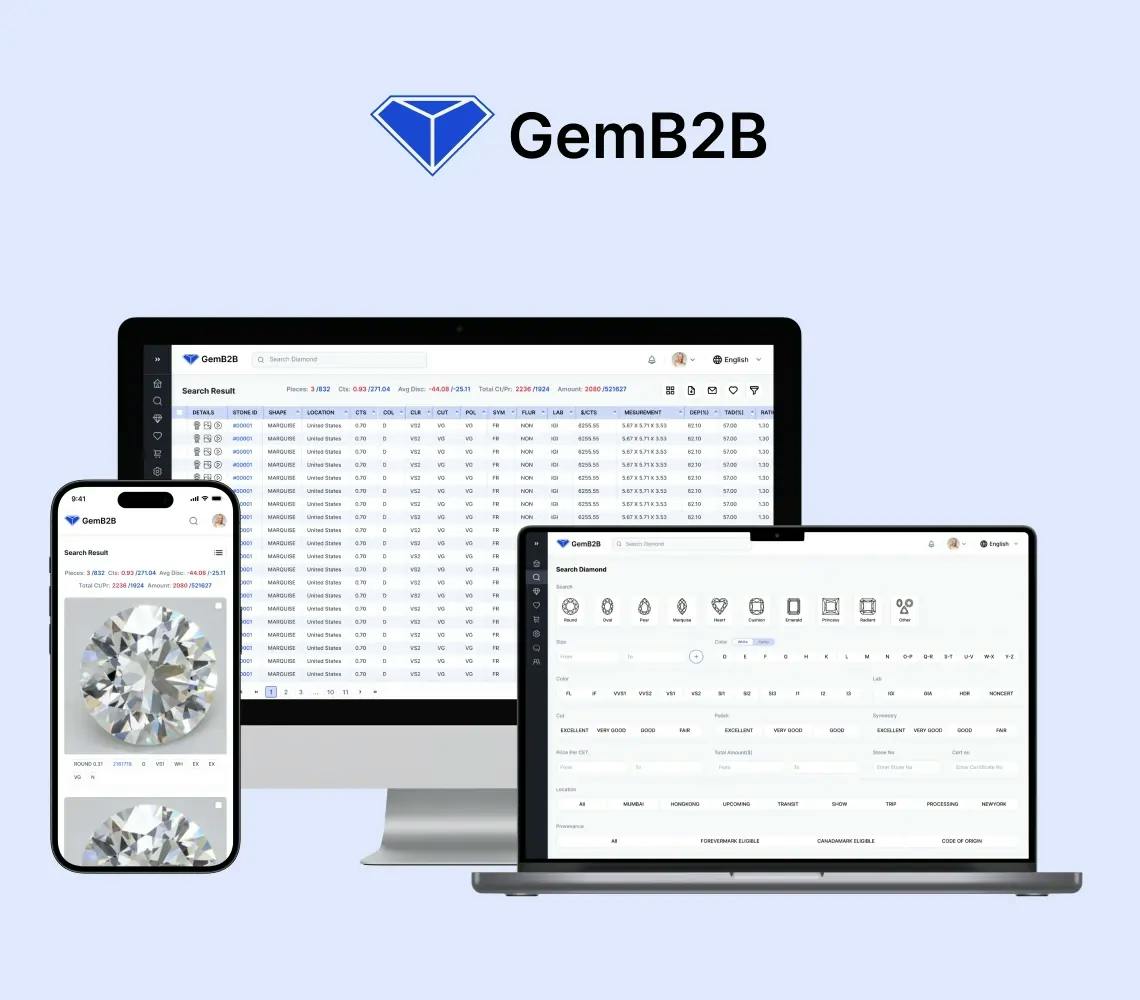
Diamond B2B Portal and Diamond CRM Development

B2B Diamond CRM Portal With ERP Synchronisation

Gem is a B2B diamond trading portal with inventory sync to client ERP systems, 4 platforms (web, mobile, backend, cloud), and enterprise security.

Key Outcomes

6+ Month
Delivery Timeline
4 Platforms
Web, Mobile, Backend, Cloud
ERP Sync
Inventory Synced with Client ERP
B2B
Diamond Trading
View Full Case Study
HotelGuruz: CMMS Software Delivered in 45 Days - Live on App Store & Google Play

HotelGuruz: CMMS Software Delivered in 45 Days - Live on App Store & Google Play

HotelGuruz Redefines Hotel Operations with a CMMS Solution that Simplifies Maintenance, Asset Management, Reduces Costs & Unites Hotel Teams under One Centralized Platform.

Key Outcomes

45-Day
Delivery Timeline
$180-$350
Saved Per Room / Year
iOS + Android
Native Apps
Hospitality
CMMS Platform
View Full Case Study
View All Case Studies

What Our Clients Say

Explore the latest reviews from our existing clients to get a better picture of our services and collaboration.

Clutch Fall Champion 2024
Clutch Global Award Fall 2024
Top Clutch Nextjs Developer 2023 Award
Most Reviewed App Development Company
Top App Development Company on appFutura
Food & Beverage

Web & Mobile App Dev for Online Food and Grocery Platform

SolGuruz successfully delivered a reliable and robust system with an easy operating experience. The team fulfilled all the client's expectations and delivered the project on time. Their active involvement in the project and effective communication via virtual meetings were hallmarks of their work.

Kastriot Shatri review for SolGuruz

Summarized from Kastriot Shatri's Clutch review

Kastriot Shatri, CEO, Kas Foods Solution Group Kft

Budapest, HungaryBudapest, Hungary

Sep. 2023 - Mar. 2025
Diamond & Jewelry

Custom Software Development, Design and App Development for B2B Diamond Platform

Since partnering with SolGuruz, the client has gained an all-encompassing solution to provide their customers. The team accomplishes their goals with agility, and internal stakeholders are particularly impressed with the vendor's comprehensive approach to support and maintenance.

Kalpesh review for SolGuruz

Summarized from Kalpesh Zalavadiya's Clutch review

Kalpesh Zalavadiya, Managing Director, DiamNow

IndiaSurat, India

Nov. 2021 - Ongoing
Education

Web and Mobile App Development for Language Education Platform

SolGuruz delivers a fully functional app and website within the agreed timeline and budget. The team follows a clear workflow with defined milestones, making it easy to track the project's progress. They are also responsive to the client's needs and provide professional suggestions.

Iman Alsharhan review for SolGuruz

Summarized from Iman Alsharhan's Clutch review

Iman Alsharhan, Founder, TirTir World

KuwaitKuwait

Sep. 2025 - Ongoing
Real estate

Web Design, Mobile App Development of Real Estate Platform for Real Estate Company

SolGuruz has delivered a functional, error-free platform that aligns with the client's needs and requirements, meeting expectations. They ensure a smooth process through their effective communication, responsiveness, proactive problem-solving, and streamlined, transparent development process.

Chirag Balani

Summarized from Chirag Balani's Clutch review

Chirag Balani, General Manager, Property Dollar

AustraliaSydney, Australia

Oct. 2021 - Ongoing
Artificial Intelligence

AI Development for Consultancy Firm

SolGuruz successfully delivered the project on time, meeting the client's expectations. The team demonstrated strong technical skills and efficient communication through virtual meetings and email updates. Their flexibility and value for money were also commendable.

Matt Kuperholz review for SolGuruz

Summarized from Matt Kuperholz's Clutch review

Matt Kuperholz, AI Scientist & Advisor, Matt Kuperholz Consultancy

AustraliaMelbourne, Australia

Jun. 2026 - Jul. 2026
Media

Custom Software Dev for Digital Media Distribution Company

SolGuruz delivered the project in a timely manner that met the client's expectations. The service provider ensured excellent communication via email and virtual meetings. Their accommodating and empathetic approach was impeccable.

Samir Khandwala review for SolGuruz

Summarized from Samir Khandwala's Clutch review

Samir Khandwala, CEO, iMusti, Inc.

UsaFremont, California, United States

Jul. 2022 - Sep. 2022

Frequently Asked Questions

Quick answers to the questions our clients and prospects ask most. If yours is not here, our team is one click away.

Need advice tailored to your project?

FAQs cover the common ground. For decisions specific to your tech stack, timeline, and team, talk directly to a senior engineer who has shipped what you are planning.