

SolGuruz Logo
Pricing

Custom Odoo ERP Development Services

Custom modules built on top of the core, so your changes stay upgradeable from one Odoo version to the next.

Odoo ERP development is the work of configuring, extending, and connecting the Odoo platform so it matches how a business actually operates. It covers configuring the standard apps, custom module development, integrations through the Odoo API, and data migration. Companies turn to Odoo ERP software development when standard apps cover most of the operation but not all of it.
Request a Quote
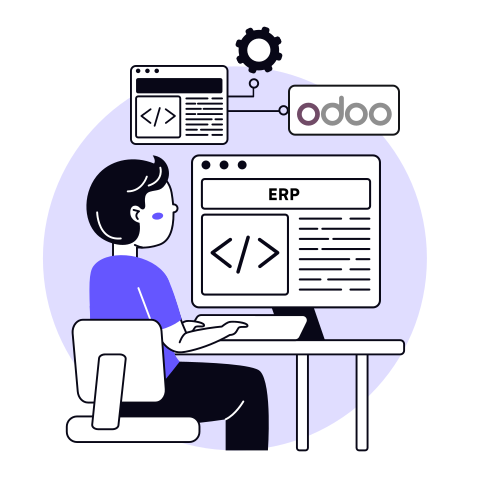
Illustration of a developer at a desk building an ERP application, with a code window and a settings gear connected to an Odoo logo
  • Flexible Engagement Models
  • Strict NDA
  • 1 Week Risk Free Trial

The Engineering Partner You Can Build On

Reliable software takes an experienced team that owns delivery end to end. Here's the track record behind ours.

7+

Years Building Custom Software

102+

Products Delivered Across Apps, Web & Software

80%

Repeat Client Rate

87+

Clients Served Across 17+ Countries

Trusted by Startups and Enterprises Worldwide

success speaks louder

Watch How We Make a Difference

Frame 01 / 04

Custom Software Solution Development / Driver Dashboard & Invoice Automation for Food Service Company

SolGuruz has delivered a solution that has reduced 90% of manual efforts through automation and provided real-time insights for supplier fulfillment and order volume trends. The team is responsive to requests and changes, and their proactive approach to problem-solving has stood out.

Summarized from Gary Boyd's Clutch review

Gary Boyd

CEO and Owner, Tasty Food Guys | Florida, USA

Read Clutch Verified Review
Tasty Food Guys

SolGuruz is Rated by Real People on Google and Clutch

SolGuruz Google Reviews
5.0

Rated 5.0 / 5 on Google by clients, partners, and visitors who have experienced SolGuruz first-hand - through our work, our office, or our team.

Read Google reviews →
SolGuruz Clutch Reviews
4.9

4.9 / 5 on Clutch - independently audited reviews from real clients who have shipped products with SolGuruz.

Read Clutch Reviews →

Backed by independent accreditations

THE SCOPE

What Odoo ERP Development Covers

Odoo ships as a set of modular apps covering most standard business functions. Odoo ERP software development starts where those apps stop fitting your operation. Four areas make up the scope.

Standard Odoo apps, configured to your workflows

Selecting which of the standard apps your operation needs, then configuring workflows, approval chains, user roles, and reporting views inside them. A large share of what teams assume needs building turns out to be configuration, and we scope that first.

Custom modules that stay upgradeable

Odoo ERP software runs on Python and PostgreSQL, so new functionality gets built in the same stack, against the Odoo ORM. Custom modules extend the system, leaving core files untouched, which is what keeps the installation upgradeable when Odoo releases a new version.

Connections through the Odoo API

Connecting Odoo to the systems around it, from ecommerce platforms and payment gateways to accounting tools and legacy applications. Odoo exposes a documented API, so most connections are a mapping exercise with a defined contract on both sides.

Migration into the Odoo data model

Moving records from spreadsheets or an existing system into the Odoo data model, validating them against the source, then rolling out department by department.

The balance between those four is what sets the cost. An operation needing configuration plus two integrations is a different project from one needing six custom modules, and the Odoo ERP solutions that hold up tend to lean on standard apps wherever they genuinely fit.

Odoo Community vs Enterprise

The edition decides what you get out of the box and what has to be built. Most development questions trace back to this choice.

CommunityEnterprise
LicensingFree, open source, self-hostedPaid subscription, priced per user
Apps includedCore apps covering sales, inventory, CRM, manufacturing, and basic accountingEverything in Community, plus full accounting, Studio, advanced manufacturing such as PLM, quality, and master production scheduling, and service apps such as Helpdesk, Field Service, and Planning
SupportCommunity forums and documentationOfficial Odoo support, hosting, and upgrades
Mobile accessWeb interface onlyNative mobile apps
Upgrade pathSelf-managedStandard apps upgraded under the subscription, custom modules upgraded separately
Best suited toTeams comfortable managing their own hosting and upgradesOperations needing official support and the advanced modules

Both editions run the same open-source core, so development work carries across, except modules built on an Enterprise-only app.

Where Community needs development work

The gaps are usually accounting depth, advanced manufacturing, the Enterprise-only service apps such as Helpdesk and Field Service, and anything Studio would otherwise handle. Custom modules close those, and the trade is a one-time build cost against a recurring per-user subscription. For teams with twenty-plus users, that arithmetic often favors Community plus targeted development.

Where Enterprise still needs development work

Subscribing does not remove the need for custom work. It changes what the custom work is. Enterprise covers the standard functionality well, so development focuses on the workflows specific to your industry, the integrations to systems outside Odoo, and reporting the standard views do not produce.

Odoo development services apply to both editions. We scope the edition decision during discovery, because it changes the module list, the build scope, and the five-year cost in different directions.

Working out which edition you need?

Tell us your user count and what the standard apps are missing. We will map the gap.

Odoo Modules We Work Across

An Odoo ERP system runs as separate apps sharing one database. These are the modules our Odoo development work touches most.

ModuleWhat it handles
SalesQuotations, pricelists, order management, e-signatures, customer portals
InventoryMulti-warehouse stock, reordering rules, lot and serial tracking, barcode scanning
AccountingInvoicing, bank reconciliation, multi-currency, tax rules, financial reporting
Manufacturing (MRP)Bills of materials, manufacturing orders, work orders, routings, work centers
PurchaseRequests for quotation, vendor pricelists, approval chains, receipt matching
CRMLead and opportunity pipelines, activity scheduling, forecasting
ProjectTask management, timesheets, project profitability, resource planning
HREmployee records, leave, attendance, recruitment, appraisals
EcommerceOnline storefront, product catalog, payment providers, delivery methods
Point of SaleOffline-capable till, session management, stock sync across stores
Helpdesk (Enterprise)Ticketing, SLA policies, customer portal, knowledge base
Field Service (Enterprise)Work order dispatch, on-site timesheets, mobile access

Most development work concentrates in three or four of these rather than spreading evenly. Manufacturing, inventory, and accounting carry the most custom work in our experience, because those are the areas where standard Odoo modules meet the widest variation between businesses.

Odoo Customization Services: When to Configure and When to Build

Configure Odoo when a standard app covers the workflow with settings changes. Customize when the workflow is specific to your industry and no app models it. Configuration costs less and carries no upgrade risk, so it gets scoped first.

Odoo can be reshaped at several levels, and the level you choose sets the cost and the upgrade risk. This table covers which situations call for which.

Use standard Odoo whenCustomize when
A standard module covers the workflow with settings changesThe workflow is specific to your industry and no app models it
Your team can adapt to Odoo's default process without losing timeAdapting to the default would create a real operational bottleneck
Speed to go-live matters more than a perfect process matchThe gap between standard behavior and your process affects revenue or compliance
The budget is tight and the standard app does the jobConfiguration has already been tried and genuinely cannot cover the workflow

Odoo customization should be the exception you reach for after configuration falls short.

The levels of Odoo customization

Customization carries different weight at different levels. Field-level changes and custom views sit at the light end, and altered workflow logic inside a standard module sits at the heavy end. That is why our Odoo customization services are quoted per change level, not at a flat rate.

What over-customizing actually costs

Every modification raises cost twice. Once during the build, and again at every Odoo release, when a heavily modified installation cannot absorb the upgrade cleanly. A team that customized ten standard modules pays for ten upgrade reviews each time Odoo ships a new version.

That is why we scope configuration first and build only where it cannot reach. It keeps the installation upgradeable and it keeps the quote smaller than it would otherwise be.

Send us your requirement list

We will mark each one configure or build before quoting anything.

CUSTOM MODULES

Custom Odoo Module Development

Custom modules are how Odoo gets extended without touching the core. This is the work that decides whether your installation stays upgradeable.

Built on the Odoo framework, in the same stack as the core

Odoo runs on Python for business logic, XML for views, and PostgreSQL for storage. Custom modules are written in that same stack, against the Odoo ORM, so a developer works with objects like Sales Order and Invoice rather than raw database queries. A module built this way behaves like part of the system because it is.

Extending instead of modifying

A custom module declares what it adds and inherits the rest. Core files stay untouched, so when Odoo ships a new version the core updates cleanly and your module needs a targeted port and a test pass rather than a rebuild. Odoo module development done any other way creates a system that cannot be upgraded without a rewrite.

What a custom module contains, and when you need one

TriggerWhat gets built
Manufacturing routings that do not match standard MRPCustom models and work order logic
Industry compliance requirementsAudit models, validation, and documented access control
Costing rules specific to your pricing modelCalculated fields and computed methods
Approval chains with conditional logicWorkflow states and access rules
Reporting the standard views cannot produceQWeb templates and custom views
A field that does not exist in any standard appOne model extension

Modules range from a single field with a calculation behind it to a complete industry workflow spanning several apps.

how we work

Custom Odoo Implementation Services

Getting Odoo live is a project of its own. Five phases take an operation from module selection to a system teams actually use.

  1. 01 / 05

    Process Review and Module Selection

    We map how work moves through your business today, then match it against the standard Odoo apps. The output is a module list for the first release, ranked by where manual effort concentrates, plus a list of the gaps that need building.

    Most operations go live with four to six modules and add the rest later. Phasing this way means each release gets scoped against what the previous one taught you.


    Deliverables: Process maps, first-release module list, gap analysis, and a build-or-configure decision per gap.

  2. 02 / 05

    Configuration and Build

    Standard apps get configured against the agreed processes, covering workflows, approval chains, user roles, pricelists, and reporting views. Custom modules are developed in parallel for the gaps identified in phase one.

    Your team reviews real screens during development rather than at training. Interface problems surface while changes still cost hours.


    Deliverables: Configured modules, custom modules, role and access matrix, and working demos every two weeks.

  3. 03 / 05

    Data Load and Validation

    Item masters, customers, suppliers, open transactions, and history get mapped to Odoo's models and loaded into a staging database, using Odoo's import tools or scripts for larger volumes. We check counts and totals against the source before anything reaches production.

    Odoo ERP implementation stalls more often on data than on configuration, so this phase carries its own timeline rather than sitting inside another one.


    Deliverables: Data mapping document, cleanup report, staging load results, and source-to-Odoo check results.

  4. 04 / 05

    Testing and User Acceptance

    A pilot group from your teams runs real transactions end to end, covering order to cash, procure to pay, and a period close. Functional, integration, and access testing run alongside.

    Sign-off comes from the people who will use the system daily, per module.


    Deliverables: Test scripts, defect log, access matrix verification, and written UAT sign-off per module.

  5. 05 / 05

    Go-Live and Post-Launch Support

    Rollout runs department by department, with each group trained and stable before the next starts. Go-live dates avoid month-end and peak trading.

    Support continues through the first full period close, which is where reporting gaps surface.


    Deliverables: Rollout schedule, role-specific training materials, administrative handover, and SLA-backed support agreement.

MOVING ONTO OR UP

Odoo Migration Services

Two different jobs share the name. Moving onto Odoo from another system, and moving between Odoo versions.

Migrating onto Odoo

Records come from spreadsheets, accounting software, or an existing ERP, and get mapped into the Odoo data model. Customers, suppliers, products, open transactions, and whatever history is worth carrying. Odoo ERP migration here is mostly a mapping and validation exercise, and the effort tracks data quality more closely than record volume. The same mapping and dry-run method runs on every ERP migration we take on, whatever the target platform.

Migrating between Odoo versions

Odoo ships a major release each year, and installations fall behind. The work is straightforward on a clean installation and gets harder with every customization in place, since each modified module needs reviewing against the new version. This is where the extend-rather-than-modify discipline pays for itself.

What Breaks on an Odoo Version Upgrade

Four things account for most upgrade failures, and each gets caught at a different point in the assessment.

ProblemHow it gets caught
Custom modules written against an older APICode review against the target version during assessment
Fields removed or renamed in the new versionSchema comparison before any migration runs
Marketplace apps that have not been updatedDependency check against the Odoo app store
Core files modified rather than extendedInstallation audit, usually the largest finding

How an Odoo Migration Runs

The same four stages apply to a move onto Odoo and to an upgrade between versions.

01

Assessment

The current system and every customization on it get reviewed, whether that is an older Odoo installation or another platform.

02

Mapping or compatibility review

Mapping for a platform move, or compatibility review for a version upgrade.

03

Full dry run

The whole migration runs once against a copy of production.

04

Live move

Production moves over with a rollback plan documented and tested beforehand.

Version upgrades are worth doing annually rather than letting several releases lapse. Skipping three versions turns a routine upgrade into a project.

How far behind is your Odoo version?

Tell us which release you are on and what has been customized. We will scope the upgrade.

CONNECTED SYSTEMS

Odoo Integration Services

Odoo exposes a documented API, which makes most connections a mapping exercise. These are the systems it usually has to talk to.

Ecommerce platforms

Order, stock, and pricing sync between your storefront and Odoo. Connectors exist for the major platforms, and the work is usually configuration plus field mapping rather than a build from scratch.

Payment gateways and banking

Payment confirmations and bank statements feed into Odoo accounting for reconciliation. Matching rules clear routine transactions and flag only the exceptions.

Accounting and tax platforms

Where finance stays outside Odoo, or where regional tax and e-invoicing requirements need a specialist platform, the two systems exchange invoices, payments, and tax data on a defined schedule.

CRM and sales tools

Teams running a separate CRM keep customer records, quotes, and order status aligned across both. Odoo's own CRM module covers this for teams willing to consolidate, which is worth scoping before a connection gets built.

Shipping and logistics

Shipment requests go out to carriers, and tracking numbers, delivery confirmations, and freight costs come back into the sales and inventory records.

Legacy and in-house applications

Systems with no documented interface get connected through the database, scheduled file exchange, or a purpose-built service layer. Odoo ERP integration is usually straightforward on the Odoo side and determined by what the other system exposes.

Connection count and complexity get established during discovery. Our ERP integration services page covers the methods and effort ranges in more detail.

WHAT WE DO

Odoo ERP Development Services We Provide

Eight Odoo ERP services covering the full lifecycle. Most engagements combine three or four.

AI-native engineering

Our AI-Native Engineering Standards

AI-native by practice, engineer-led by principle. We use AI-assisted tools at every step of design, development, launch and growth, and a senior engineer still owns every architecture decision, every security review and every line that reaches production.

  1. 01Design

    • AI-Assisted Discovery and Prototyping

      We use AI to map requirements, user stories and workflows, and to turn them into a clickable prototype your stakeholders can test before production code is written.

      Engineer-ledOur team runs discovery with you and agrees the scope before anything is built.

    • Pixel-Perfect UI/UX and Design Systems

      AI speeds up layout variations, accessibility checks and design-to-code handoff, on a shared design system in Figma.

      Engineer-ledDesigners make every design decision, and every screen is built to match the approved design on every device.

    • Architecture-First Planning

      We settle the architecture, data model, state management and integrations before the build starts, so the product scales without a rewrite.

      Engineer-ledA senior engineer owns every architecture decision.

  2. 02Build

    • AI-Assisted Development, Human-Owned Code

      Our developers use Claude Code, GitHub Copilot and Cursor for scaffolding, boilerplate and repetitive patterns.

      Engineer-ledSenior engineers own the logic, and a developer reviews every AI-generated change.

    • Coding Standards, Git Flow and Peer Review

      Code follows agreed standards and a Git Flow branching model, and AI-powered review flags issues on every commit.

      Engineer-ledA second developer reviews every change before it merges.

    • Secure and Compliant by Default

      We work under ISO 27001 and ISO 9001 certified processes, build to SOC 2-aligned controls, and add HIPAA-aligned safeguards where health data is involved.

      Engineer-ledA senior engineer owns every security review. Independent security agencies run penetration tests, and we remediate their findings.

  3. 03Ship

    • AI-Generated Tests and Manual QA

      AI generates unit tests, edge cases and regression suites from the codebase.

      Engineer-ledQA engineers test the real user flows by hand before every release.

    • Static Analysis and CI/CD Pipelines

      Static code analysis scans every commit, and CI/CD pipelines build, test and deploy across development, staging and production.

      Engineer-ledEngineers set the quality gates the pipeline enforces and fix what the scans flag.

    • Phased, Monitored Releases

      Alpha and beta builds go to internal and external users first, and releases roll out in phases with a rollback plan.

      Engineer-ledYou get a demo build after every sprint and review it with the team.

  4. 04Grow

    • Monitoring, Analytics and Performance

      Crash reporting, performance monitoring and usage analytics are in place from launch day, and for mobile apps we track Google Play and App Store analytics too.

      Engineer-ledOur engineers keep checking crash reports and store analytics for the life of the product, so it stays stable long after launch.

    • Data-Driven Iteration and Growth

      We plan in two-week sprints and prioritise new features from user feedback and analytics, not guesswork. For clients without an in-house marketing team, we also run the product growth strategy after launch.

      Engineer-ledDaily stand-ups and sprint demos keep you in every decision about what ships next.

    • Documentation, Ownership and Ongoing Support

      AI keeps API references and technical docs in sync with the code, and maintenance plans keep the product secure and up to date.

      Engineer-ledYou get full repository access and IP ownership, and one in-house senior team stays accountable for the outcome.

ENGAGEMENT MODELS

Hire Odoo Developers

Some teams need engineers inside their own setup rather than a scoped project. Three ways that work.

Dedicated Odoo developers

An Odoo ERP developer on your team full time, working your roadmap inside your delivery process. They join your standups, use your tooling, and report to your leads. Suited to ongoing development where priorities shift week to week.

Odoo consultant engagements

Shorter advisory work rather than building capacity. Reviewing an existing installation, scoping a module set, assessing an upgrade, or working out why something is not performing. An Odoo consultant on a defined brief costs less than a full engagement and often prevents one.

Team extension alongside your own developers

Adding Odoo capability to a team that already has engineers but not Odoo-specific experience. Your people keep ownership of the roadmap, ours bring the platform knowledge, and knowledge transfer is part of the arrangement rather than an afterthought.

What our Odoo developers work across

Python and the Odoo ORM, XML views, PostgreSQL, QWeb reporting, the Odoo XML-RPC, JSON-RPC, and JSON-2 APIs, and module packaging for deployment. Teams that hire Odoo developers for custom work usually need the module development and API sides specifically.

The engagement model gets agreed upon during discovery, and it can change as the work does. Teams often start with a consultant engagement and move to dedicated developers once the scope is clear.

Need Odoo capability inside your team?

Tell us what you are building and how your team works. We will shape the engagement.

BY SECTOR

Odoo ERP by Industry

Odoo's app set suits some operations better than others. Six where the fit is strongest and the custom work is predictable.

  • Manufacturing

    Odoo ERP for manufacturing runs on the MRP module, covering bills of materials, work orders, routings, and shop floor control. Custom work usually sits in costing rules and production scheduling, since those vary most between plants.

  • Wholesale Distribution

    Multi-warehouse inventory, customer-specific pricelists, and purchase automation are all standard Odoo. Custom work tends to be landed cost calculation and replenishment logic specific to your buying patterns.

  • Retail and Ecommerce

    Point of Sale, Inventory, and the Odoo ecommerce module share one stock record. Teams running an external storefront need the connector work instead, which is the most common Odoo integration by some distance.

  • Professional Services

    Project, Timesheets, and Invoicing handle most of it natively. Custom work goes into billing models the standard apps do not cover, like retainers or blended rate cards.

  • Food and Beverage

    Lot tracking and expiry management come from standard Inventory. The custom work is usually recall traceability reporting and yield variance, neither of which standard Odoo reports on in the form an auditor expects.

  • Construction

    Project costing, subcontractor management, and equipment tracking map onto Project and Purchase. Retainage and progress billing are the two things that reliably need building.

Odoo covers more of the standard requirements in some industries than others, and the gap between what it does natively and what you need is what the build scope actually is.

Why Businesses Choose SolGuruz for Odoo Development

Our Odoo work rests on engineering depth and code ownership. Here is what that means in practice.

  • Competence You Can Check

    Partner tiers are based on Enterprise licenses sold, customer retention, and functional certifications. What decides whether a module works is Python, the Odoo ORM, and whether the developer has maintained an installation through an upgrade cycle. Ask any Odoo development company to walk you through how they handle a core model extension, and the answer tells you more than the badge does.
  • Configuration Scoped Before Code

    Every engagement starts by establishing what standard apps already do. A smaller build is a cheaper build and an easier upgrade, so we have a direct interest in telling you where configuration reaches.
  • Upgrade Testing Before Every Live Upgrade

    When Odoo ships a new version, we run your custom modules against it on a copy of your database first. Issues get fixed in testing, so your live system moves up without surprises.
  • Full Code and Documentation Ownership

    Every custom module, its documentation, and the deployment configuration transfer to you. Our clients own their IP and code from day one, so another team can pick the work up if you ever want them to.
  • Two Review Layers on Every Change

    SonarQube and Codebeat run automated reviews on every push, and a custom AI quality agent scores each pull request across nine criteria before merge.
  • A Delivery Record Behind the Work

    102+ products delivered across 14 industries and 17+ countries, with zero abandoned projects since 2019. ISO 9001 and ISO 27001 certified, both independently audited.
Try a week before anything else

Real work on your Odoo instance for a week, under NDA. No service agreement, no deposit.

Start a free trial week of Odoo development work with SolGuruz

What Our Clients Say

Explore the latest reviews from our existing clients to get a better picture of our services and collaboration.

Clutch Fall Champion 2024
Clutch Global Award Fall 2024
Top Clutch Nextjs Developer 2023 Award
Most Reviewed App Development Company
Top App Development Company on appFutura
Food & Beverage

Web & Mobile App Dev for Online Food and Grocery Platform

SolGuruz successfully delivered a reliable and robust system with an easy operating experience. The team fulfilled all the client's expectations and delivered the project on time. Their active involvement in the project and effective communication via virtual meetings were hallmarks of their work.

Kastriot Shatri review for SolGuruz

Summarized from Kastriot Shatri's Clutch review

Kastriot Shatri, CEO, Kas Foods Solution Group Kft

Budapest, HungaryBudapest, Hungary

Sep. 2023 - Mar. 2025
Diamond & Jewelry

Custom Software Development, Design and App Development for B2B Diamond Platform

Since partnering with SolGuruz, the client has gained an all-encompassing solution to provide their customers. The team accomplishes their goals with agility, and internal stakeholders are particularly impressed with the vendor's comprehensive approach to support and maintenance.

Kalpesh review for SolGuruz

Summarized from Kalpesh Zalavadiya's Clutch review

Kalpesh Zalavadiya, Managing Director, DiamNow

IndiaSurat, India

Nov. 2021 - Ongoing
Education

Web and Mobile App Development for Language Education Platform

SolGuruz delivers a fully functional app and website within the agreed timeline and budget. The team follows a clear workflow with defined milestones, making it easy to track the project's progress. They are also responsive to the client's needs and provide professional suggestions.

Iman Alsharhan review for SolGuruz

Summarized from Iman Alsharhan's Clutch review

Iman Alsharhan, Founder, TirTir World

KuwaitKuwait

Sep. 2025 - Ongoing
Real estate

Web Design, Mobile App Development of Real Estate Platform for Real Estate Company

SolGuruz has delivered a functional, error-free platform that aligns with the client's needs and requirements, meeting expectations. They ensure a smooth process through their effective communication, responsiveness, proactive problem-solving, and streamlined, transparent development process.

Chirag Balani

Summarized from Chirag Balani's Clutch review

Chirag Balani, General Manager, Property Dollar

AustraliaSydney, Australia

Oct. 2021 - Ongoing
Artificial Intelligence

AI Development for Consultancy Firm

SolGuruz successfully delivered the project on time, meeting the client's expectations. The team demonstrated strong technical skills and efficient communication through virtual meetings and email updates. Their flexibility and value for money were also commendable.

Matt Kuperholz review for SolGuruz

Summarized from Matt Kuperholz's Clutch review

Matt Kuperholz, AI Scientist & Advisor, Matt Kuperholz Consultancy

AustraliaMelbourne, Australia

Jun. 2026 - Jul. 2026
Media

Custom Software Dev for Digital Media Distribution Company

SolGuruz delivered the project in a timely manner that met the client's expectations. The service provider ensured excellent communication via email and virtual meetings. Their accommodating and empathetic approach was impeccable.

Samir Khandwala review for SolGuruz

Summarized from Samir Khandwala's Clutch review

Samir Khandwala, CEO, iMusti, Inc.

UsaFremont, California, United States

Jul. 2022 - Sep. 2022

From Our Portfolio

Software Projects We Have Delivered for Businesses

SolGuruz has shipped 102+ products across 14 industries.

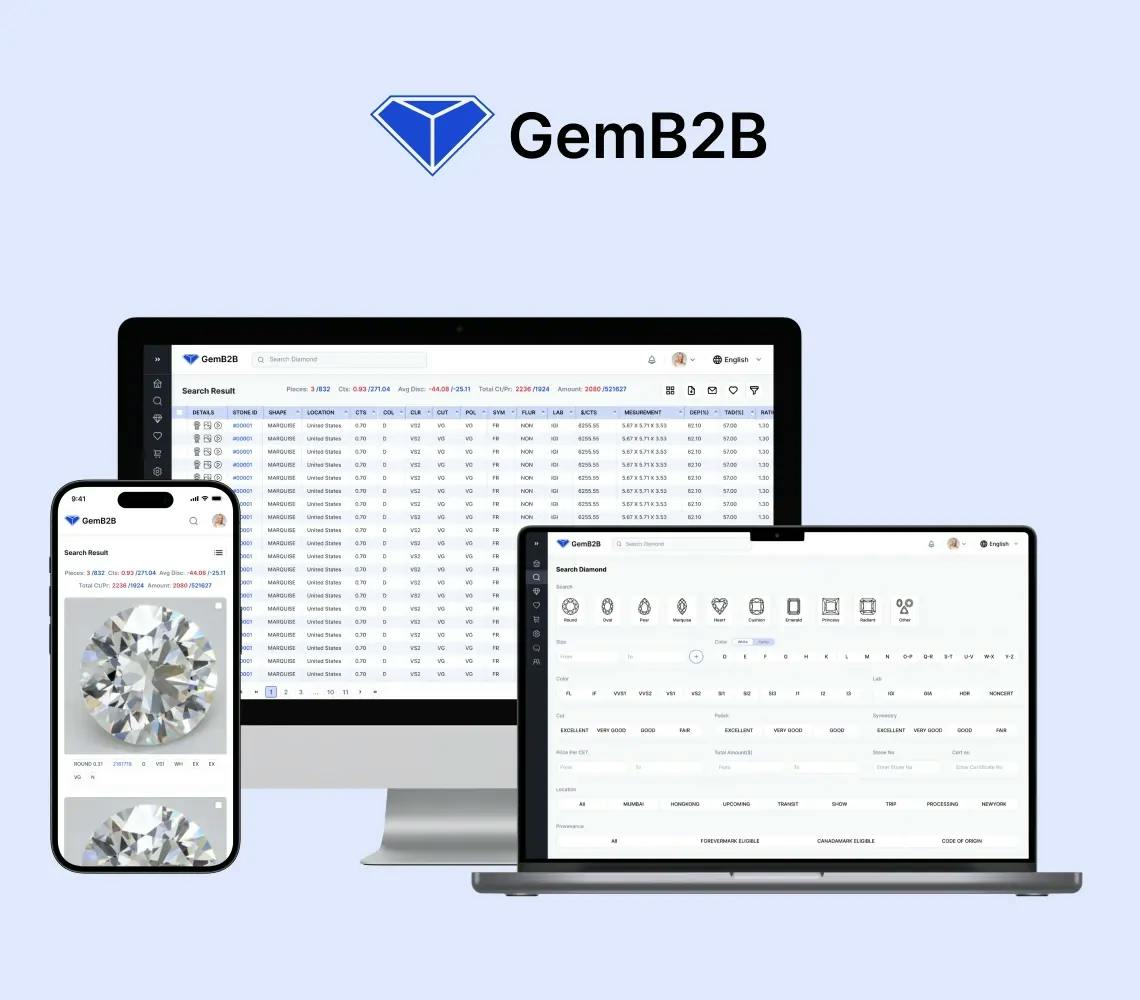
  • Diamond B2B Portal and Diamond CRM Development

    B2B Diamond CRM Portal With ERP Synchronisation

    Gem is a B2B diamond trading portal with inventory sync to client ERP systems, 4 platforms (web, mobile, backend, cloud), and enterprise security.

    Key Outcomes

    6+ Month
    Delivery Timeline
    4 Platforms
    Web, Mobile, Backend, Cloud
    ERP Sync
    Inventory Synced with Client ERP
    B2B
    Diamond Trading
  • HotelGuruz: CMMS Software Delivered in 45 Days - Live on App Store & Google Play

    HotelGuruz: CMMS Software Delivered in 45 Days - Live on App Store & Google Play

    HotelGuruz Redefines Hotel Operations with a CMMS Solution that Simplifies Maintenance, Asset Management, Reduces Costs & Unites Hotel Teams under One Centralized Platform.

    Key Outcomes

    45-Day
    Delivery Timeline
    $180-$350
    Saved Per Room / Year
    iOS + Android
    Native Apps
    Hospitality
    CMMS Platform
  • Property Management Software Solutions

    Property Management Software Solutions

    We built a custom property platform with CRM-style tenant management, maintenance requests, automated rent collection, and financial reporting across role-based panels.

    Key Outcomes

    12-14 Week
    Delivery Timeline
    15-20 hrs
    Rent Reconciliation Saved
    3 Portals
    Tenant, Landlord, Admin
    5 Layers
    Security: Encryption to Rollback

Get More Insights from SolGuruz Experts

View All Blogs

ERP Services That Run Alongside Odoo Development

Odoo work usually sits inside a wider ERP programme, and these are the services that run next to it.

You are hereOdoo ERP Development

Frequently Asked Questions

Quick answers to the questions our clients and prospects ask most. If yours is not here, our team is one click away.

Jay Nandwana Technical Business Consultant at SolGuruz

Jay NandwanaSenior Technical Business Consultant

Need advice tailored to your project?

FAQs cover the common ground. For decisions specific to your tech stack, timeline, and team, talk to Jay and the team, who have shipped what you are planning.

Odoo ERP development is the work of configuring, extending, and connecting the Odoo platform so it matches how a business operates. It covers configuring the standard apps, custom module development in Python, integrations through the Odoo API, and data migration.

For teams with twenty-plus users, Community plus targeted development often works out cheaper than Enterprise's per-user subscription, while Enterprise suits operations that want official support and the advanced modules out of the box. Community is free and self-hosted, with core apps including sales, inventory, CRM, and manufacturing. Enterprise adds full accounting, Studio, advanced manufacturing apps, service apps such as Helpdesk, Field Service, and Planning, mobile apps, and official support. Both run the same open-source core, so custom development applies either way.

Not for standard use. Configuration covers workflows, approval chains, user roles, and reporting views without code. Coding starts when a workflow sits outside what the standard apps model, at which point a custom module gets built in Python.

The main one is that heavy customization makes upgrades harder. Each modified module needs reviewing against every new Odoo release. Operations with workflows far outside the standard model sometimes find a purpose-built system cheaper over five years, which is the route our custom ERP software development page covers.
Cost tracks with module count, customization depth, integration count, and user numbers. On Enterprise, the per-user subscription sits on top of the development work. Scope gets agreed before anything is quoted. Our breakdown of ERP implementation cost compares the platform route with a custom build.

Start by trying configuration, since it is faster and keeps upgrades simple. If a workflow needs data or logic no standard app holds, Odoo customization through a custom module is the right call.

No. We build custom Odoo modules in Python against the Odoo ORM, extend rather than modify the core, and hand over all code and documentation. Partner tiers are based on Enterprise licenses sold, customer retention, and functional certifications, and say little about engineering depth.

Modules built as extensions carry forward with a targeted port and a test pass for each new version, because core files stay untouched and the core updates independently. Odoo will not upgrade a database until its custom modules are ready for the target version, so that port is part of every upgrade plan. Modules that alter core behavior do not, and each one needs reworking against every release. The build approach decides this, not the platform.

Yes. Odoo exposes a documented external API over XML-RPC and JSON-RPC, and from Odoo 19 the newer JSON-2 API replaces both, so most connections are a mapping exercise. Systems with no interface of their own get connected through the database, scheduled file exchange, or a purpose-built service layer.

You do. Source code, configuration documentation, process maps, and design files are yours in editable formats from the first working day, so the system stays maintainable whoever runs it later.