





- Event Hub
Event Hub's Event Management App
How SolGuruz Built an Event Management App for Ticketing and Booking
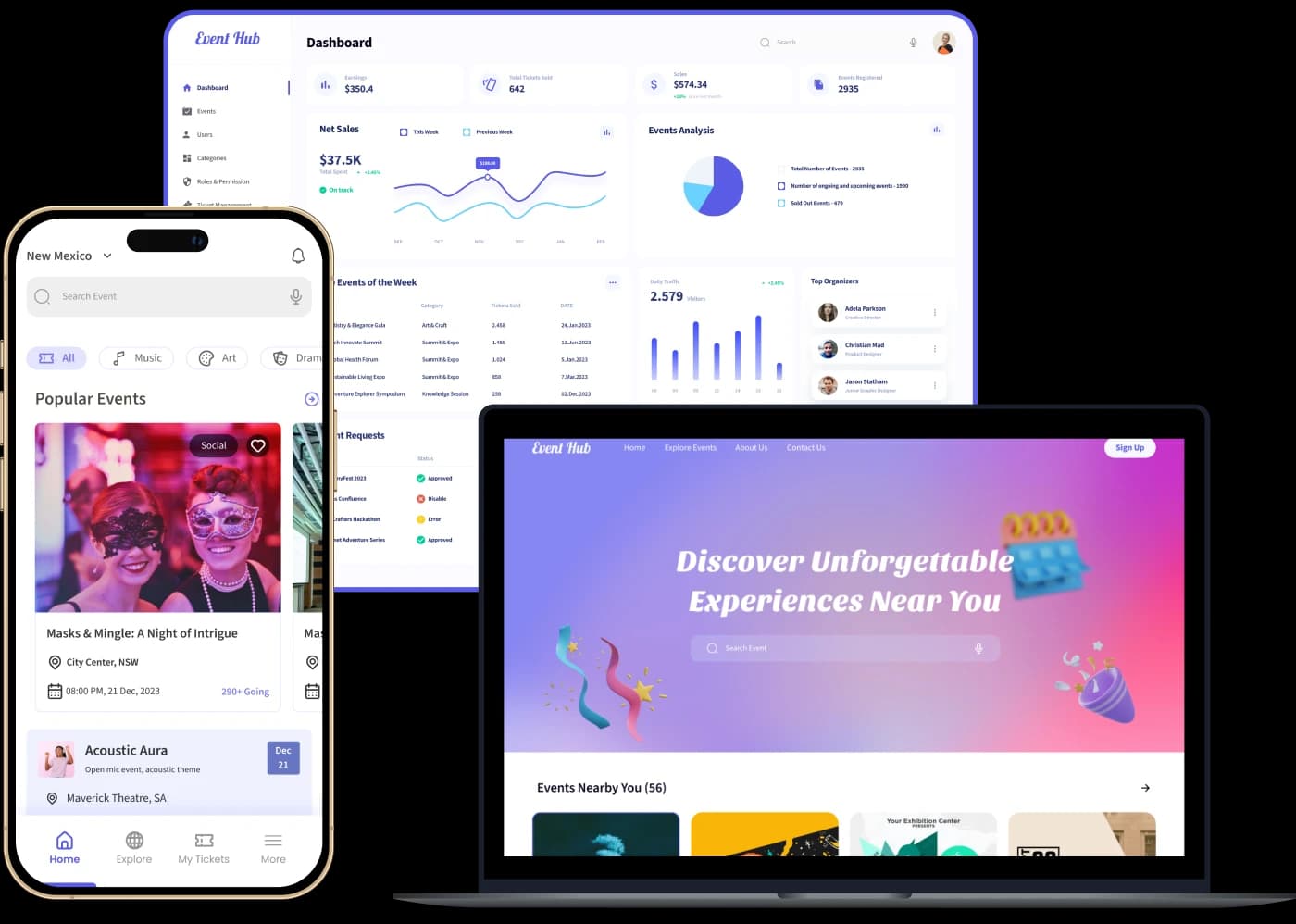
Event Hub is an event management app SolGuruz built to handle ticketing, registration, attendee engagement, and exhibitor management in one platform. It spans a customer mobile app for discovering and booking events and a web dashboard for organizers to manage sales, analytics, and operations. Built for both attendees and event organizers, the platform covers the full event lifecycle, from discovery and ticket purchase to on-the-day engagement and post-event insights.
About Event Hub
Event Hub is a custom event management, ticketing, and booking application built by SolGuruz. The platform handles end-to-end event operations, attendee registration with secure payment processing, ticket booking and confirmation, in-app messaging and live polls for engagement, exhibitor and sponsor profile management, content management for agendas and presentations, and event analytics for organizers across iOS (Flutter), Android (Flutter), responsive web, and a web admin panel.
Built on Flutter for mobile, React.js + Next.js for web, Node.js backend, AWS cloud infrastructure, OAuth 2.0 authentication, and PCI-DSS compliant payment processing.
The engagement covered UX/UI design, full-stack mobile and web development, backend APIs, CMS, cloud deployment, and quality assurance.
Project Snapshot
Project
Event Hub - Event Management, Ticketing & Booking Platform with attendee engagement, exhibitor management, and analytics
Industry
Events & Entertainment / Event Management Software / Ticketing Technology
Platforms
iOS App (Flutter) + Android App (Flutter) + Responsive Web + Admin Panel
User Types
Attendees, event organizers, exhibitors, sponsors, admin/operations team
Core Tech
Flutter + React.js + Next.js + Node.js + Firebase + AWS + OAuth 2.0 + Postman + Swagger + Figma
Key Capabilities
Attendee registration, secure ticket booking, in-app messaging, live polls and Q&A, personalized event schedules, exhibitor and sponsor profiles, lead capture, content management, event analytics, multi-platform admin panel
Built By
SolGuruz, Full-Stack AI Product Engineering Company (Ahmedabad, India). ISO 27001:2022 + 9001:2015 certified.
Project Overview
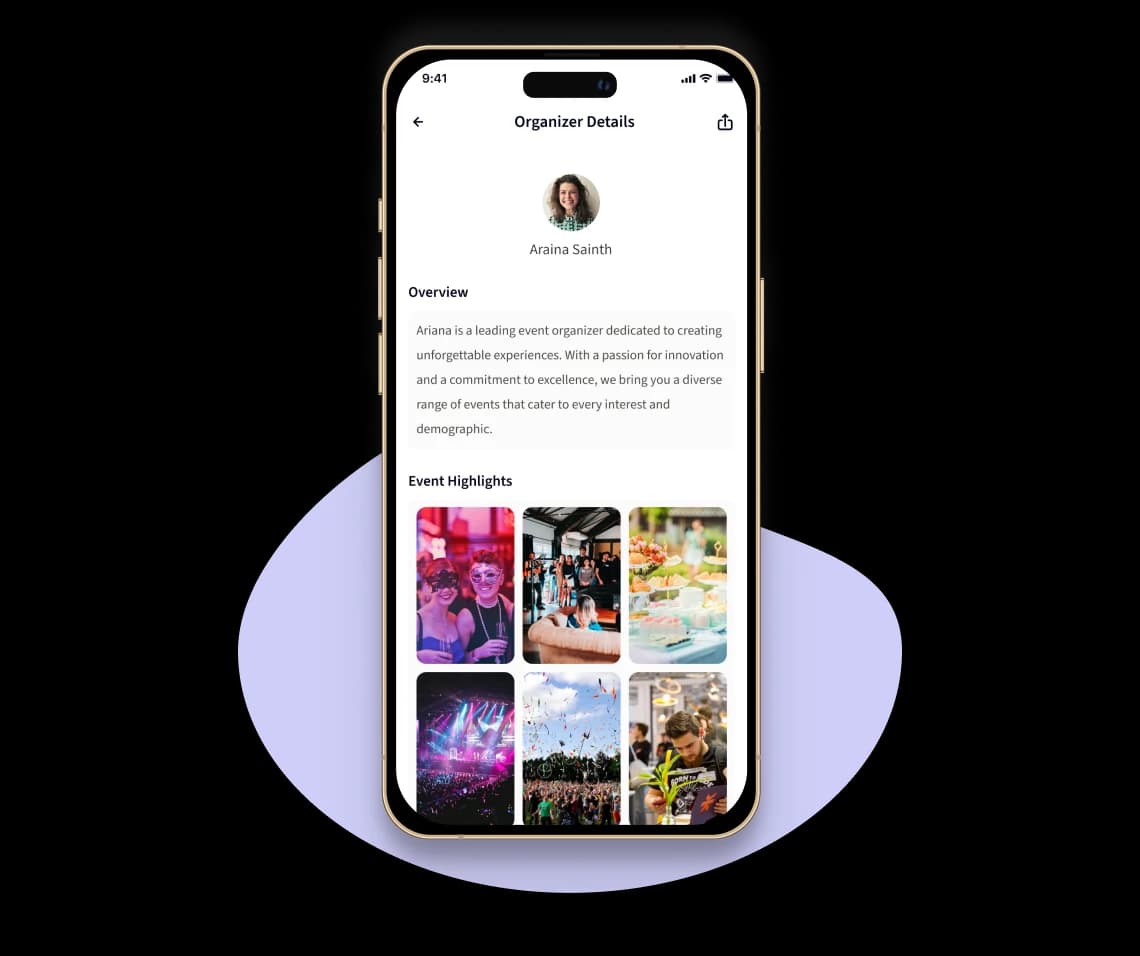
Event Hub is a unified event management platform built to serve attendees, organizers, and exhibitors within a single system. Attendees can discover events, book tickets, and engage during live sessions. Organizers manage registrations, communication, and in-event activities like polls, while exhibitors and sponsors capture leads and track ROI.
The platform addresses a common gap in event tech; most solutions focus on either ticketing (like Eventbrite, Ticketmaster) or engagement (like Whova, Hopin), but not both. Event Hub combines ticketing-grade registration, engagement-driven attendee features, and exhibitor-focused lead management in one scalable solution.
SolGuruz delivered the platform end-to-end, including product strategy, UX/UI design for all user roles, Flutter apps (iOS & Android), React.js + Next.js web and admin panel, Node.js backend, AWS infrastructure, and QA across 20+ devices.
What Is an Event Management App?
An event management app is a digital platform that orchestrates the full event lifecycle from pre-event discovery and registration, through ticketing and check-in, to in-event engagement and post-event analytics. The category is divided into four primary models:
Ticketing-first platforms
Optimized for ticket sales, registration, and payment processing (Eventbrite, Ticketmaster, Hopin Tickets)
Engagement-first platforms
Optimized for in-event experience, networking, live polls, and Q&A (Whova, Cvent Attendee Hub, Bizzabo)
All-in-one event management platforms
Cover ticketing, registration, engagement, exhibitor management, and analytics in one product (Cvent, Event Hub, Eventscase)
Hybrid / virtual event platforms
Specialised for online and hybrid event delivery with streaming, breakout rooms, and virtual networking (Hopin, RingCentral Events, Airmeet)
Event Hub is built as an all-in-one event management platform, where attendees, organizers, exhibitors, and admins each have workflows under one technical foundation.
How Does an Event Management App Work?
An event management application flows from discovery to post-event analytics across six stages:
Event Discovery & Selection
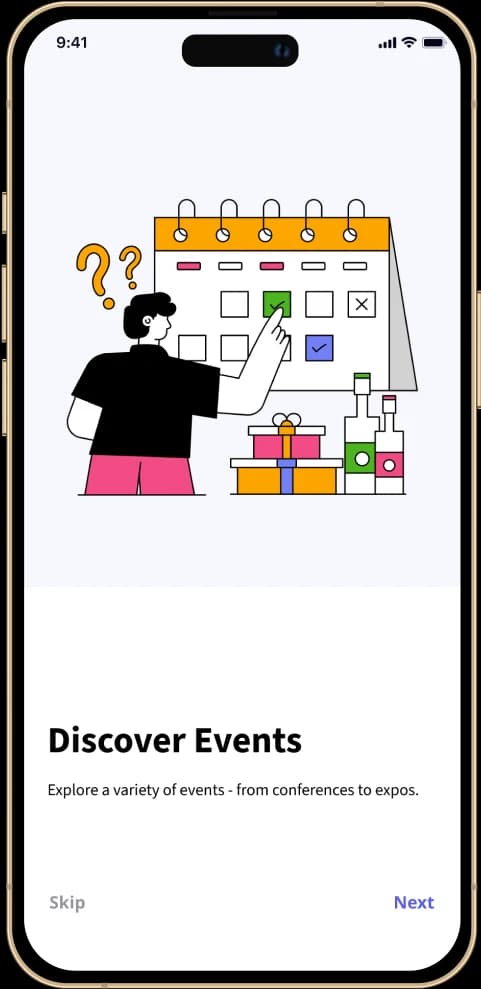
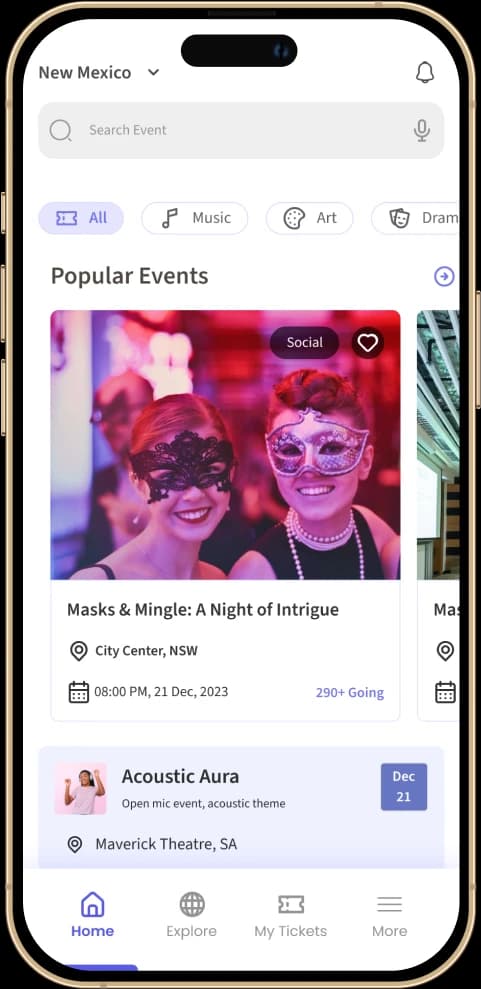
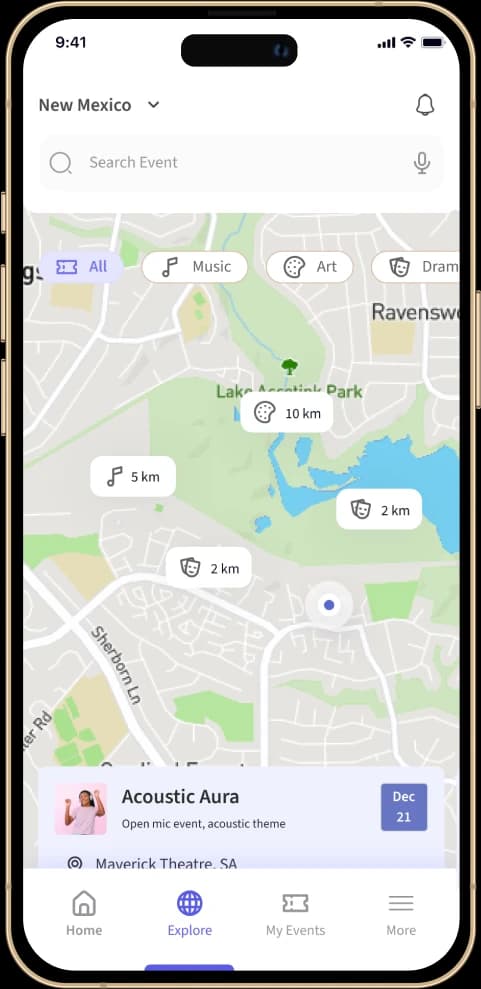
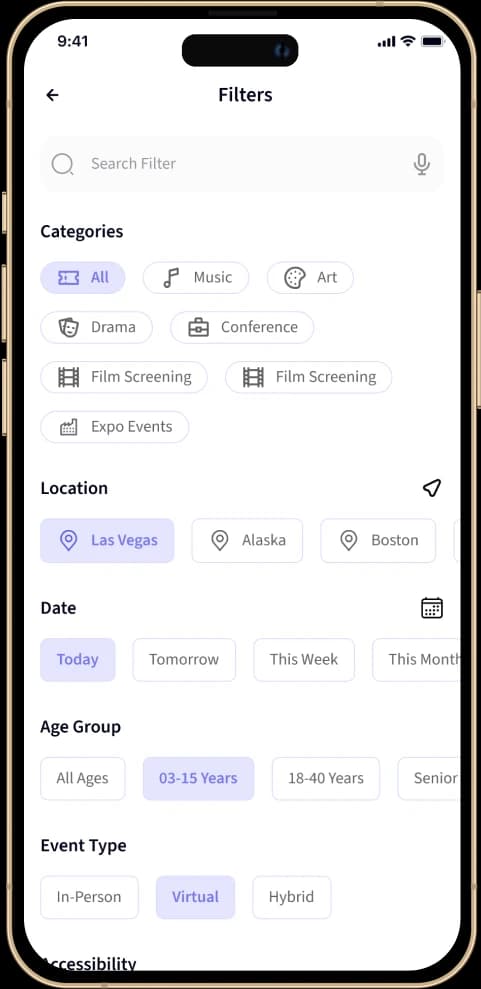
Attendees browse events filtered by location, date, category, and interest. The discovery UI surfaces popular events, recommended events based on interests, and events near the attendee's location. Map view shows events geographically. Selection opens the event detail page with full schedule, exhibitor list, and ticket options.
Registration & Ticket Booking
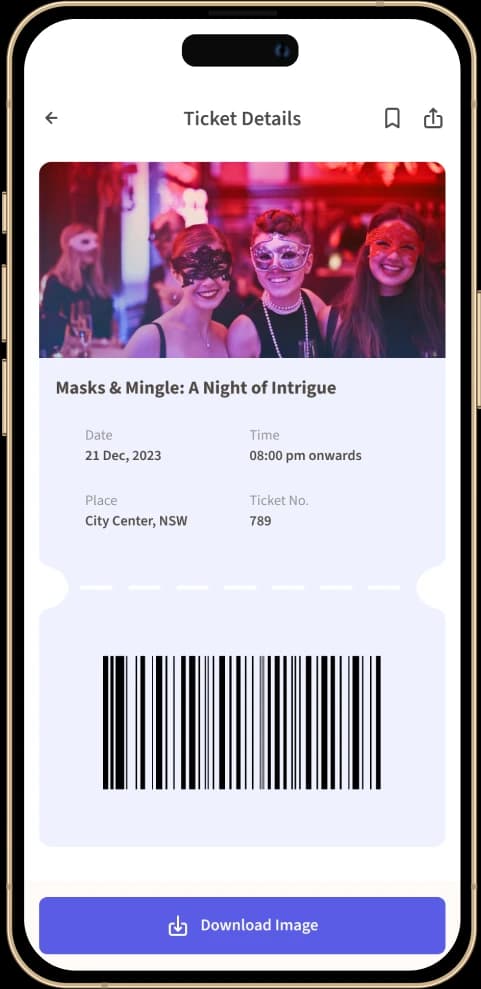
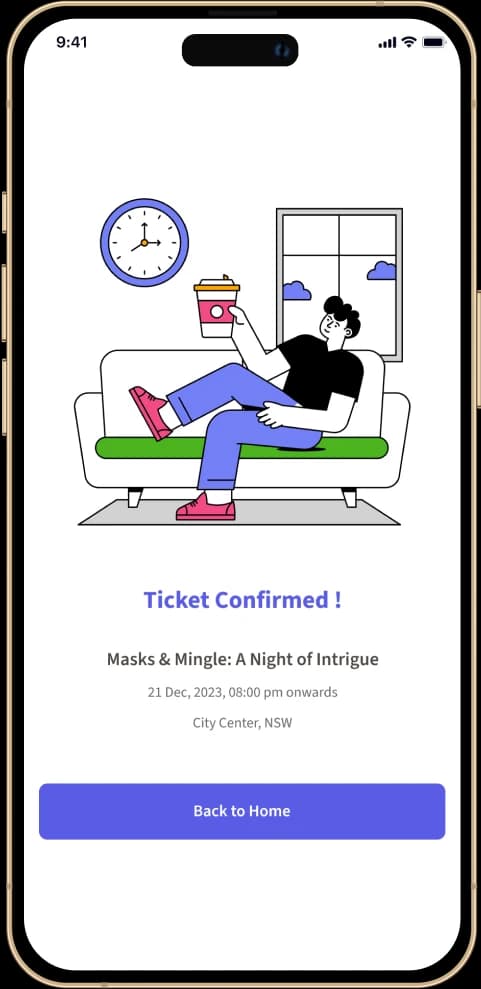
Attendees pick a ticket tier (general, VIP, early bird, group), enter contact details, and complete payment through a PCI-DSS compliant gateway. Confirmation email and PDF ticket arrive within seconds. Group bookings handle multi-attendee registration in one transaction with discount tier rules.
Pre-Event Engagement
Attendees access personalized event schedules, save sessions to their calendar, message other attendees, browse exhibitor profiles, and receive event reminders. Push notifications fire on key updates (schedule changes, speaker additions, promo codes).
Check-In & On-Site Operations
Attendees check in via QR code scan (PDF ticket or in-app wallet). Organizers monitor live check-in numbers, track no-shows, and reconcile head count against registrations. Late registration handles walk-ins with on-site payment.
In-Event Engagement
Live polls and Q&A sessions during sessions, in-app messaging between attendees, exhibitor lead capture (attendees scan booth QR codes to share contact info), and live announcements pushed to all attendees. Personalized agenda updates reflect schedule changes in real time.
Post-Event Analytics & Follow-Up
Organizers see registration trends, check-in rates, session attendance, engagement metrics, and feedback survey responses. Exhibitors get lead lists with attendee interactions and contact data. Sponsor ROI metrics track logo impressions and dedicated content views. Data exports flow into CRM and email marketing platforms for follow-up.
What Were the Challenges in Building Event Hub?
Event Hub development surfaced six structural challenges that any event app team faces when building a multi-user-type platform:

Balancing Feature Depth with UX Simplicity
Event organizers want every feature: ticketing, registration, exhibitor management, lead capture, polls, Q&A, networking, content management, analytics, and sponsor management. Attendees want a simple browse-and-book. Initial prototypes risked drowning attendees in organizer-grade complexity. The platform needed two distinct UX layers: attendee UX optimized for browse and book, organizer UX optimized for control and visibility, sharing the same data layer.

Reliable Multi-Platform Feature Parity
Attendees research events on the web, register on mobile, and check in at the venue with whichever device is in their hand. Saved tickets, registration history, payment methods, and personalized agenda must sync across iOS (Flutter), Android (Flutter), and the responsive web in real time. Any sync delay creates check-in friction at the door.

Payment Processing & PCI-DSS Compliance
Storing and processing card data triggers PCI-DSS Level 1 obligations. The platform required tokenized payment flows, 3D Secure authentication for European cards (PSD2 SCA), and refund processing for cancelled events or attendee changes. Group ticket discounts and promo codes layer additional complexity on top of the payment flow.
Real-Time Engagement at Scale
Live polls, Q&A, and in-app messaging need to handle hundreds or thousands of concurrent attendees during a single session without dropping messages or lagging vote counts. The backend needed event-driven architecture and a real-time database that scaled horizontally during peak event hours.
Exhibitor and Sponsor Lead Capture Workflows
Exhibitors expect modern lead capture, attendees scan booth QR codes, exhibitor profiles surface in attendee feeds, and post-event lead lists export cleanly into CRM systems. Sponsor ROI requires tracking logo impressions, dedicated session views, and engagement time. Without these, exhibitors won't pay sponsorship fees.
Data Integration with External Tools
Event Hub integrates with email marketing platforms (for confirmation and reminder emails), payment gateways, CRM systems (for lead and attendee data), and analytics tools (for cross-event reporting). Each integration has different API formats, rate limits, and authentication patterns. Adapter layers were required to keep the integration logic clean.
SolGuruz Event App Development Process - From Discovery to Post-Launch
Event Hub was delivered using SolGuruz 10-stage development lifecycle. The same process applies to any event management or ticketing app engagement, scaled by feature depth and integration complexity.
Discovery & Project Scoping
Stakeholder interviews to understand operational reality, typical event size, attendee types, ticketing model, exhibitor management requirements, and integration needs. Competitor teardowns across ticketing platforms (Eventbrite, Ticketmaster) and engagement platforms (Whova, Cvent, Bizzabo). Deliverable: discovery document, prioritized feature list, locked Phase 1 scope.
Requirement Analysis & Documentation
User stories and acceptance criteria for every workflow across attendee, organizer, exhibitor, sponsor, and admin roles. User flow diagrams for discovery, registration, ticket booking, check-in, in-event engagement, and post-event follow-up. Data flow diagrams for ticket lifecycle, payment processing, and integration adapters.
UX/UI Design
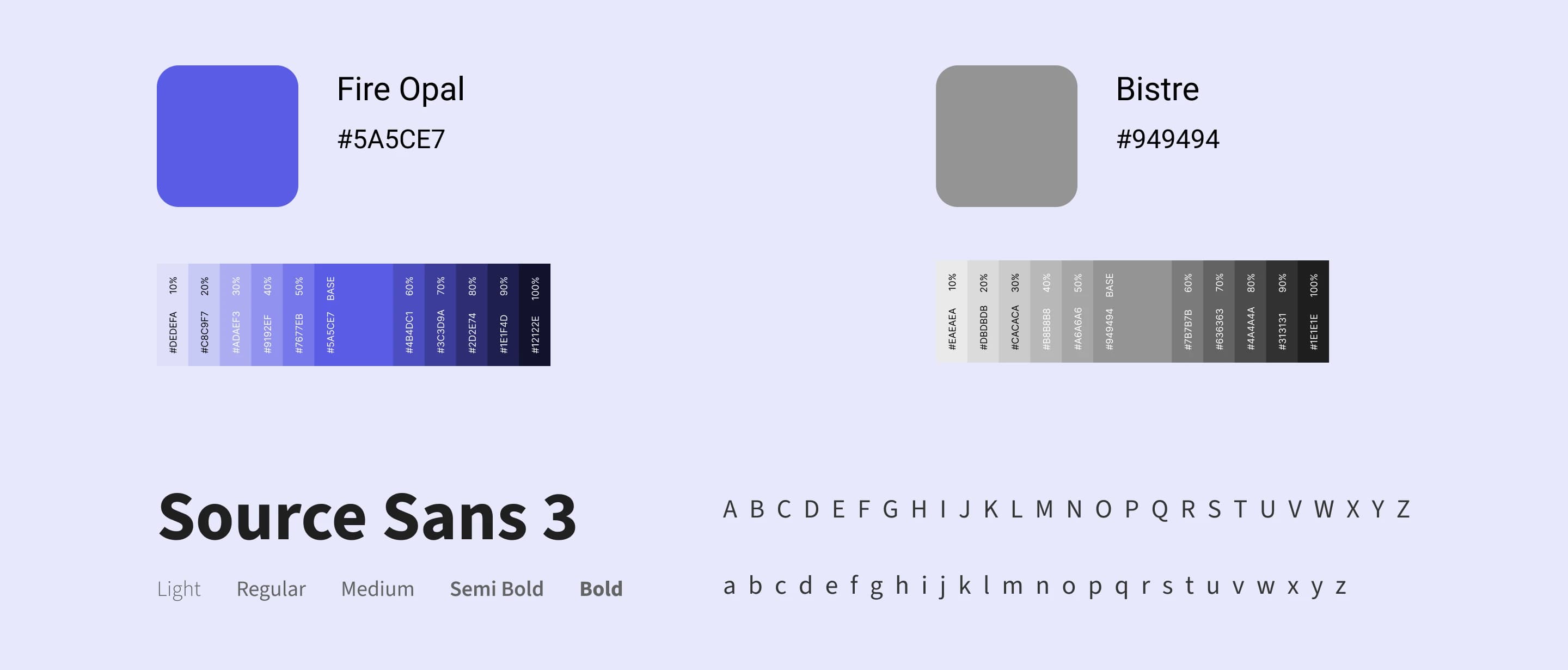
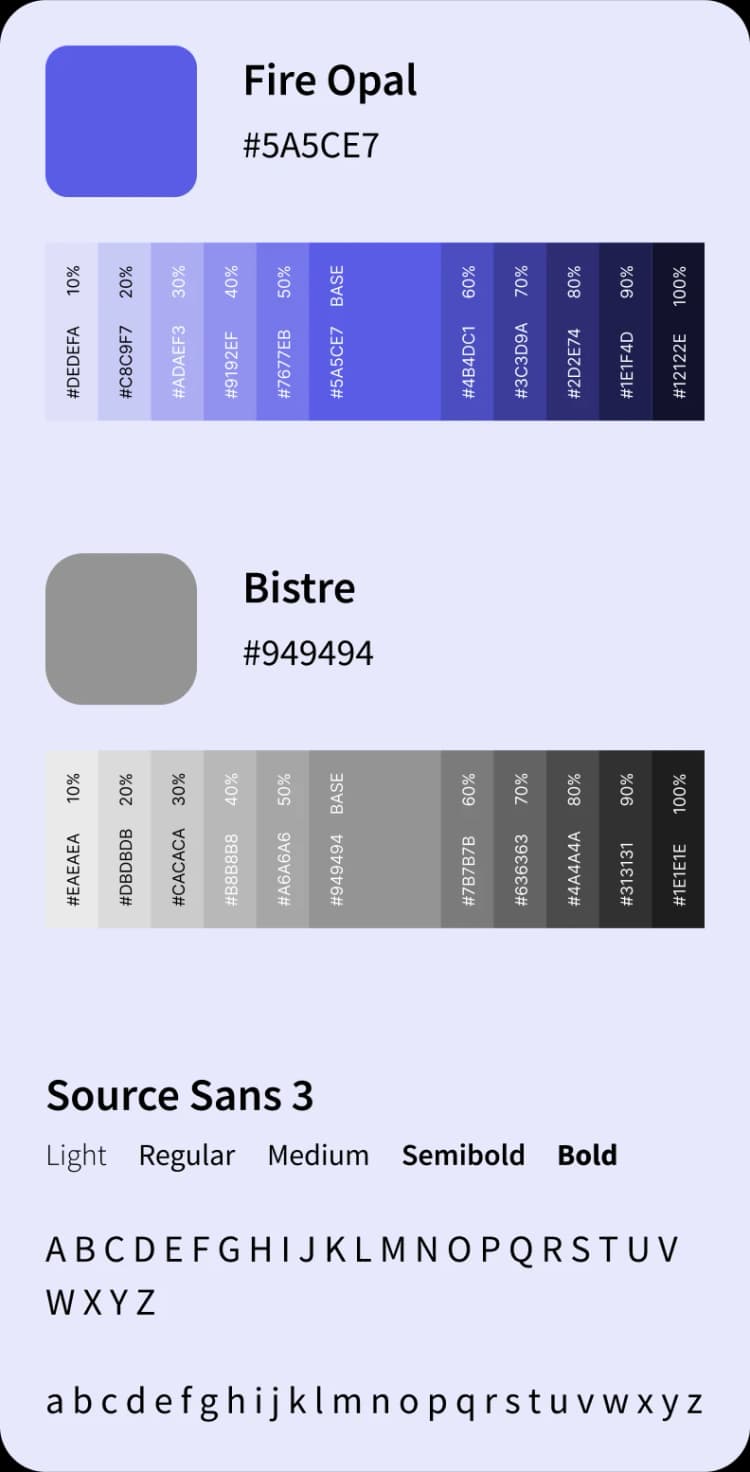
Information architecture, wireframes, interactive prototypes, and a full design system in Figma using Blue Lotus typography. Designed for four primary personas: the attendee discovering and booking tickets, the organizer managing the event, the exhibitor capturing leads, and the admin running operations. Distinct visual treatments for each user type while maintaining a consistent shared design language.
Architecture & Technical Planning
System design covering Flutter state management, web frontend (React.js + Next.js) architecture, Node.js backend API contracts, real-time engagement engine (Firebase), payment processor integration, and AWS infrastructure topology. Database schema for events, attendees, tickets, exhibitors, sponsors, payments, and analytics.
Mobile App Development
Flutter build for iOS and Android, single codebase with platform channels for native QR scanning, push notifications, and biometric authentication. Two app experiences, the attendee app and the organizer app, share the underlying SDK but have distinct UX flows.
Web Frontend Development (Parallel)
React.js and Next.js web platform with server-side rendering for SEO-critical event discovery pages. Component library aligned to the design system. Three interfaces: public event browsing, exhibitor portal, and admin dashboard.
Backend & API Integration Development
Node.js backend with adapter modules for payment processing, email marketing platforms, CRM systems, and analytics tools. RESTful APIs with Swagger documentation. Real-time engagement pipeline using Firebase for live polls, Q&A, and messaging.
Quality Assurance & Device Testing
Functional testing across 20+ device profiles covering iOS and Android, desktop browsers, and varying network conditions. End-to-end testing of registration, payment, check-in, and in-event engagement flows, including failure scenarios (payment decline, network drops mid-registration, concurrent ticket purchases for the last available seat). Independent security review against OWASP Mobile Top 10 and PCI-DSS requirements.
Launch & App Store Submission
Phased rollout: web admin panel launched first for organizer onboarding, then iOS and Android apps submitted to App Store and Google Play. ASO optimization for both stores. Privacy policy review for GDPR compliance.
Post-Launch Support & Iteration
2-week sprint cadence for performance fixes, UI refinements, and feature additions based on event organizer feedback and attendee usage patterns. Critical bugs are fixed within 24 hours, high-priority bugs within 72 hours. Quarterly performance reviews covering ticket sales conversion, check-in rates, engagement metrics, and exhibitor satisfaction.
Goal & Product Requirements
The goal was to design and build an event management platform that serves attendees, organizers, exhibitors, and sponsors under one technical foundation, with ticketing, engagement, and analytics delivered across iOS, Android, and web.
Specific Functional Requirements
- Attendee mobile app with event discovery (location-based, interest-filtered, map view), ticket booking, personalized agenda, in-app messaging, live polls, and offline access to confirmed tickets
- Web platform for desktop event browsing, registration, organizer dashboard, exhibitor portal, and admin panel
- Ticket booking with multiple tier types (general, VIP, early bird, group), promo code support, and group registration in one transaction
- PCI-DSS compliant payment gateway with 3D Secure authentication, tokenized card storage, refund processing, and split payments for multi-organizer events
- QR code-based check-in for fast venue entry
- Live polls, Q&A, and in-app messaging at scale
- Exhibitor and sponsor profile management with lead capture and ROI metrics
- Content management for event agendas, speaker profiles, presentations, and resources
- Event analytics covering registration trends, check-in rates, engagement metrics, and session attendance
- Admin panel for event organizers to manage registrations, configure ticketing, run analytics, and handle attendee support
- Email and SMS notification flows for booking confirmation, schedule updates, and event reminders
- Multi-layered security covering encryption, OAuth 2.0, AWS firewalls, source code obfuscation, automated backup, and PCI-DSS compliance
What Solutions Did SolGuruz Deliver?
SolGuruz delivered Event Hub as a complete multi-platform engagement covering design, mobile, web, backend, admin panel, and infrastructure. The solution had five core components:
Mobile Apps for Attendees & Organizers (iOS + Android)
Single Flutter codebase delivering native-quality performance on both platforms. Two distinct app experiences: attendee app (event discovery, ticket booking, personalized agenda, live polls, in-app messaging, QR check-in) and organizer app (registration management, live attendee monitoring, on-site check-in, push announcements). Push notifications, biometric login, offline access to confirmed tickets, and personalized agenda.
Responsive Web Platform
React.js and Next.js web platform with server-side rendering for SEO performance on event landing pages and discovery pages. Three interfaces: public event browsing (discovery, registration, ticket booking), exhibitor portal (profile management, lead capture, ROI metrics), and admin dashboard (event configuration, analytics, attendee support).
Backend & Real-Time Engagement Engine
Node.js backend handling user authentication, ticket booking orchestration, payment processing, live engagement event ingestion (polls, Q&A, messaging), notification dispatch, and analytics aggregation. Firebase real-time database powers live polls and Q&A at scale for a seamless event management web app experience. Integration adapters for email marketing, CRM, and analytics platforms. RESTful APIs documented in Swagger.
Admin Panel for Event Operations
Web-based admin dashboard for event organizers to configure events (ticket tiers, schedule, exhibitors, sponsors), monitor registrations and check-in in real time, run analytics on attendee behavior, manage attendee support tickets, and export data into CRM and email marketing platforms. Role-based access for event coordinators, finance teams, and exhibitor liaisons.
AWS Cloud Infrastructure & PCI-DSS Compliant Payment Processing
AWS-based infrastructure with EC2 for backend services, S3 for ticket PDF storage and exhibitor assets, CloudFront for global CDN distribution, RDS for relational event and registration data, and managed firewalls. PCI-DSS compliant payment processing with tokenized card storage. GDPR-compliant attendee data handling with consent capture and data portability flows.
We design, develop, and scale multi-platform event solutions with ticketing, engagement, and exhibitor modules. Tell us your scope and get a clear execution roadmap.


Key Features of Event Hub
Event Hub combines ticketing-grade registration, engagement-driven attendee features, and exhibitor-focused lead management in one platform. Below are the core capabilities that ship with the product.
Event Registration & Ticket Booking
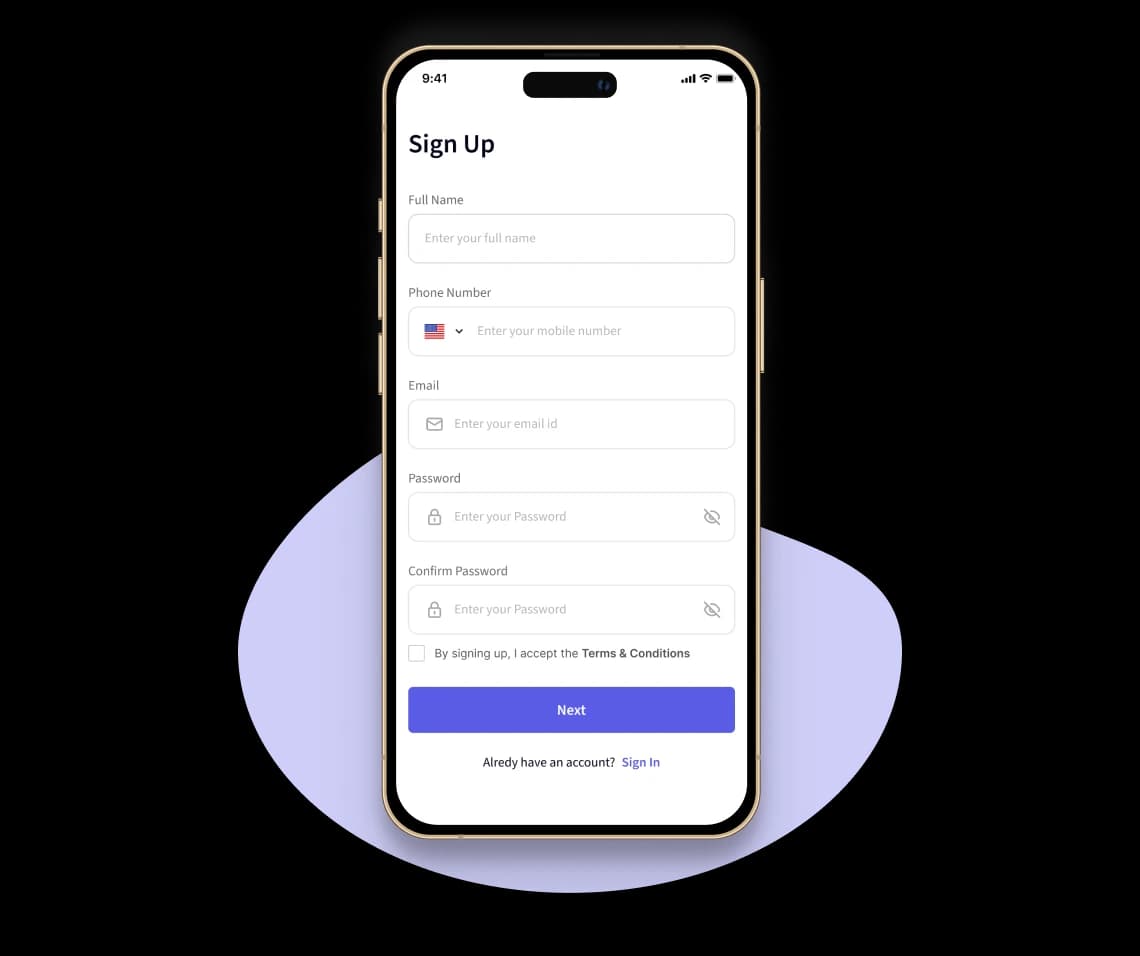
Customizable registration forms with conditional fields based on ticket tier. Multi-tier ticketing (general, VIP, early bird, group). Promo code support with automatic discount application. Group bookings handle multi-attendee registration in one transaction. Automated confirmation emails with PDF tickets within seconds of payment.
Live Polls, Q&A, and In-App Messaging
Real-time polls during sessions with live result visualization. Q&A submission with upvoting so the most popular questions surface. In-app messaging between attendees with privacy controls. Push notifications for replies and mentions.
Content Management for Agendas & Resources
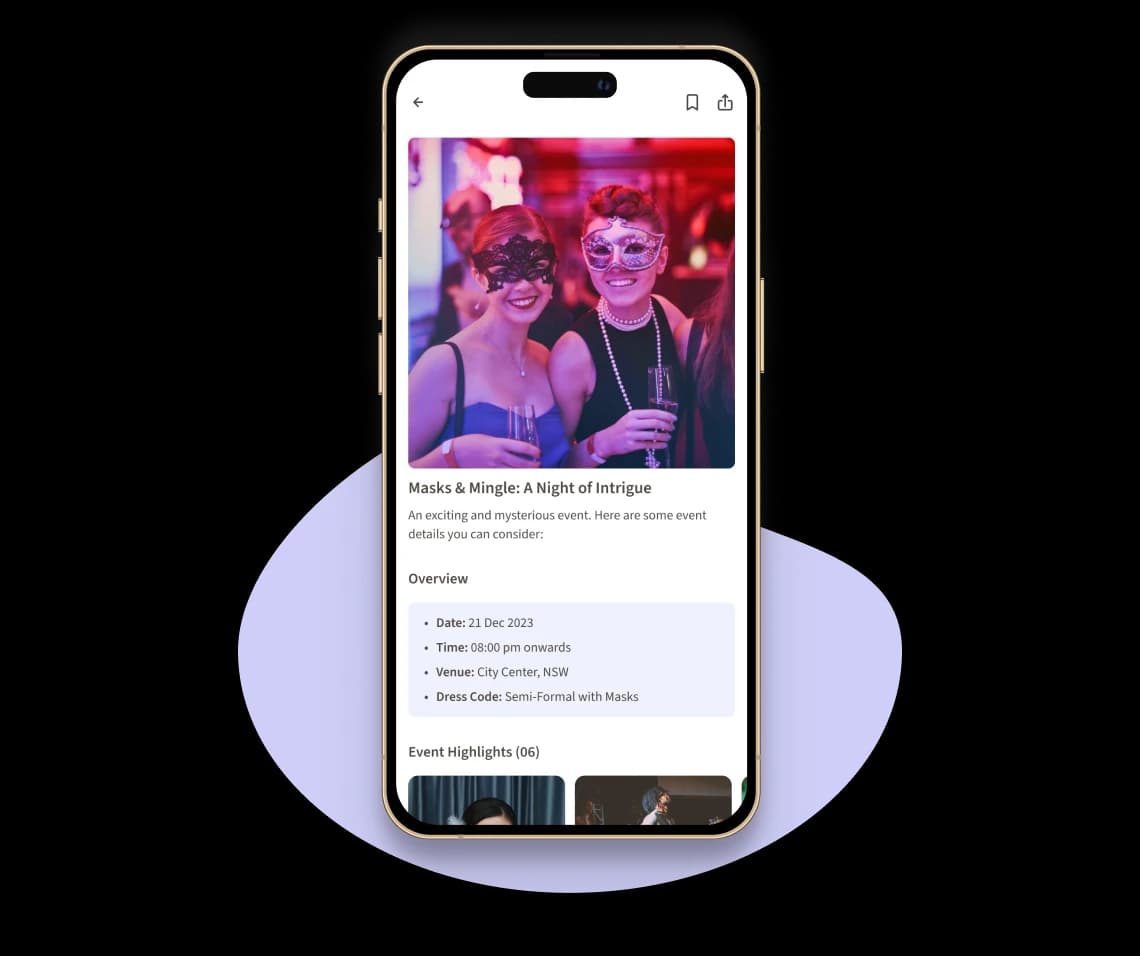
Centralized content management for event agendas, speaker profiles, presentations, downloadable resources, and event policies. Updates are pushed to all attendees instantly. Role-based content publishing for organizers, marketing teams, and content coordinators.
Exhibitor & Sponsor Profiles
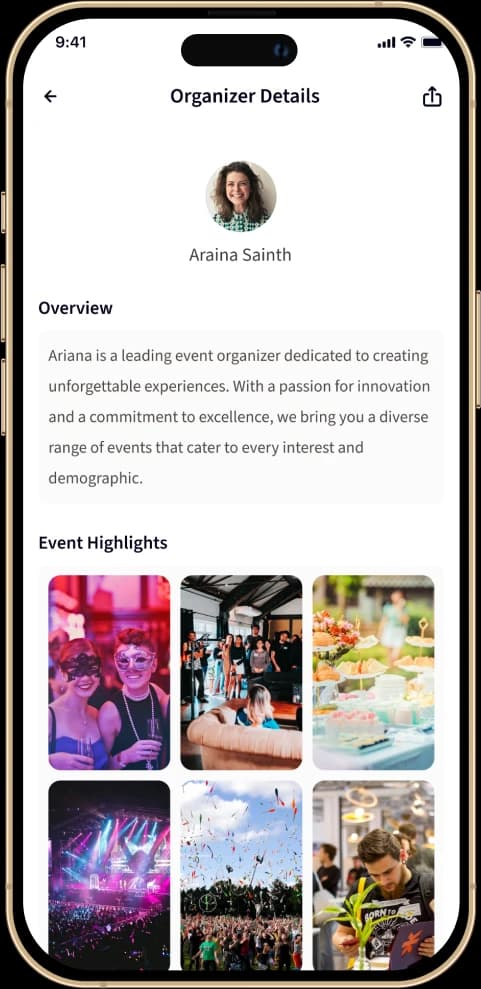
Dedicated exhibitor profiles with company description, booth location, product showcase, and lead capture. Sponsor logo placement across the app with impression tracking. Booth QR codes for fast attendee-exhibitor lead capture. Post-event lead lists with attendee interaction history.
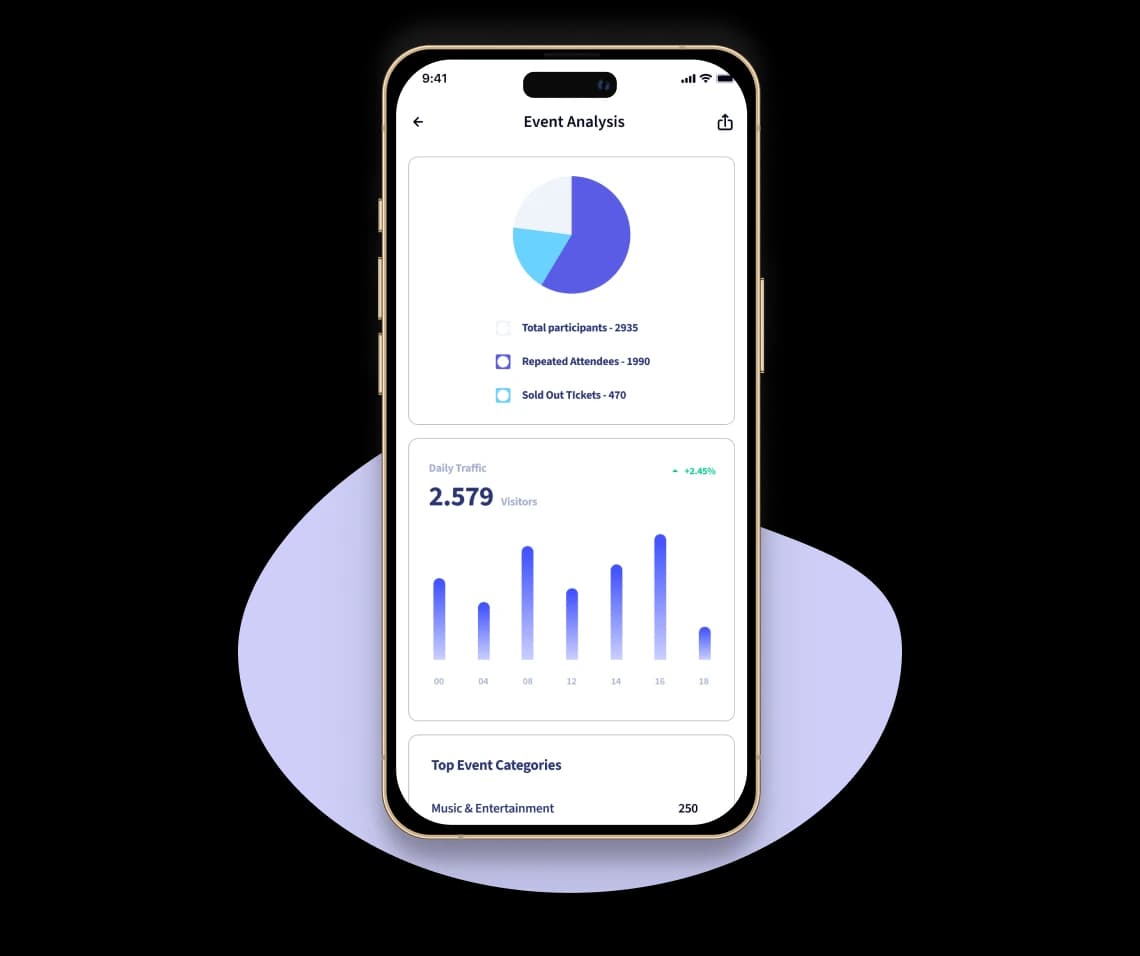
Event Analytics for Organizers
Registration trends with hourly and daily breakdowns. Check-in rates and no-show analysis. Session attendance tracking. Engagement metrics (poll participation, Q&A activity, messaging volume). Feedback survey responses with sentiment analysis. Exhibitor lead and sponsor ROI reports. Data exports for CRM and email marketing follow-up.
Secure Payment Processing
PCI-DSS compliant payment gateway with tokenized card storage. 3D Secure authentication for European cards (PSD2 SCA). Multi-currency support for international events. Refund processing for cancelled events or attendee changes. Split payments for multi-organizer events.
Personalized Event Schedule
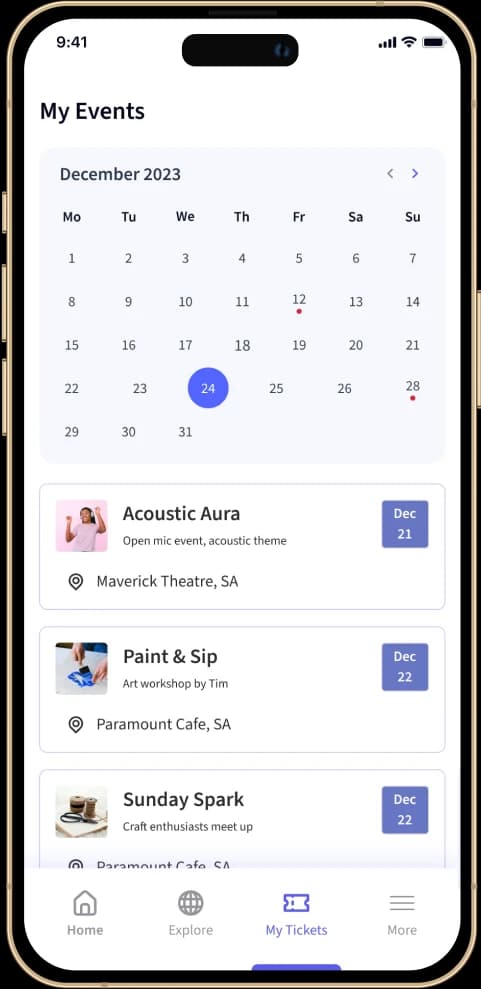
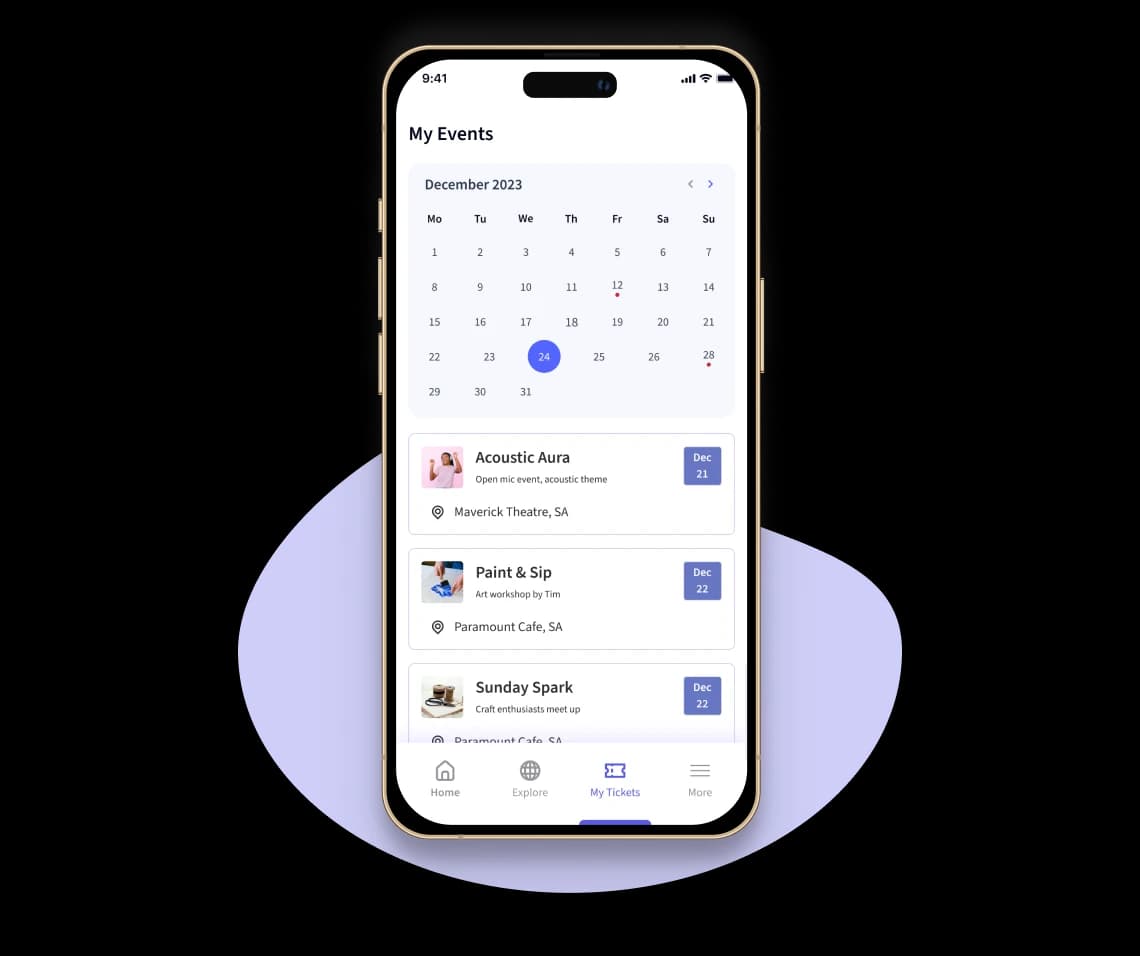
Attendees build personalized agendas by saving sessions to their schedule. Conflict detection warns when sessions overlap. Calendar export to Google Calendar, Apple Calendar, and Outlook. Schedule changes are pushed to attendees in real time.
QR Code Check-In
Fast venue entry via QR code scan from PDF ticket or in-app wallet. Live check-in dashboard for organizers. Walk-in registration handles on-site sales with on-the-spot payment. No-show tracking for accurate headcount reconciliation.
Event Discovery & Maps
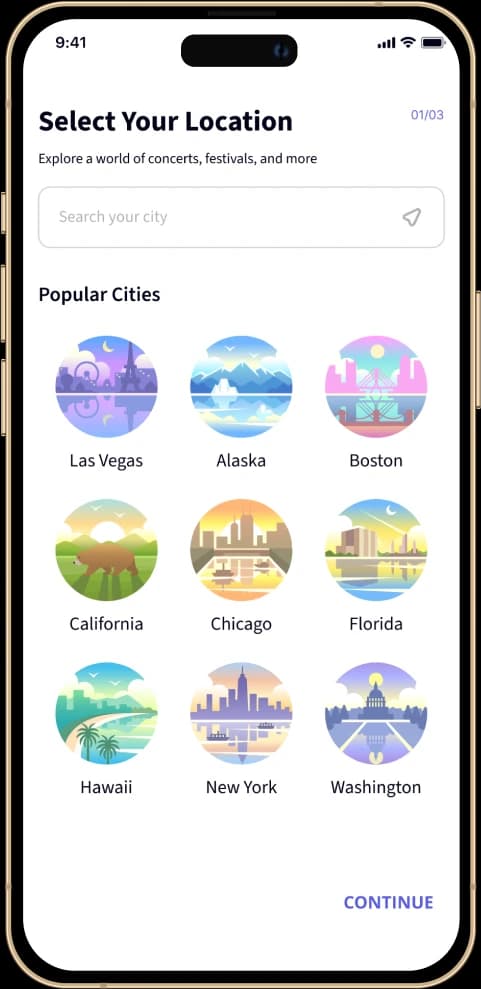
Location-based event discovery with a map view showing nearby events. Interest-filtered recommendations. Popular events surfaced based on registration volume and attendee ratings. Saved events list for events the attendee plans to attend.
Why Custom Event Management App vs Eventbrite or Cvent?
Eventbrite, Ticketmaster, Cvent, and Whova are excellent SaaS event platforms, but they're closed ecosystems; the brand is theirs, the data flows through their pipes, and customization is limited to configuration. A custom build like Event Hub gives the organizer brand ownership, data control, and the freedom to ship the specific features that matter for the audience. The decision to build vs license usually comes down to four structural factors:
Brand Ownership
Eventbrite-hosted events surface as Eventbrite-branded - the platform brand competes with the event brand for attendee attention. Custom builds put the organizer brand front and center on every screen, every email, every ticket. For events where brand experience is part of the value proposition, custom matters.
Data Control
Eventbrite owns attendee data and offers limited export. Cvent locks data behind enterprise-tier pricing. Custom platforms own all attendee data, registration history, engagement metrics, and exhibitor leads natively with full export and integration to whichever CRM, email marketing, or analytics tool the organizer prefers.
Feature Freedom
SaaS platforms ship the features the largest customer base needs. Custom platforms ship the features your specific event audience needs, niche engagement features, custom exhibitor workflows, sponsor-specific ROI dashboards, and integration with your existing operational stack.
Cost Economics at Scale
SaaS platforms charge per ticket sold, per attendee, or per event - economics that scale up with success. A custom build is a one-time engineering investment that scales without per-event marginal cost. For organizers running 50+ events per year or events with 10,000+ attendees, custom usually pays back in 2-3 years.

Security & Compliance Implemented
Event apps processing payment cards, personal attendee data, and exhibitor leads have a high security bar. SolGuruz implemented multi-layered security covering network, data, cloud, application, and endpoint layers.
Data Encryption
All attendee and event data is encrypted in transit using HTTPS with TLS 1.3 and at rest using AES-256 full-disk encryption. Ticket PDFs are encrypted before storage.
OAuth 2.0 Authentication
Token-based authentication with scope-based permissions across attendee, organizer, exhibitor, sponsor, and admin roles. Refresh token rotation for session security.
PCI-DSS Compliance
Tokenized payment card storage - the platform never stores raw PAN data. Ticket payment processing through a PCI-DSS Level 1 compliant gateway. 3D Secure authentication for European cards (PSD2 SCA).
AWS Firewall Rules
Configured firewalls on AWS instances and databases to allow controlled access. Admin endpoints require multi-factor authentication and IP allowlisting.
Source Code Obfuscation
Release builds of iOS and Android apps are obfuscated to make distributed binaries harder to tamper with or reverse-engineer.
Automated Backup & Rollback
Cloud instances take scheduled backups every 4 hours with automated rollback capability. Event and registration data are replicated across availability zones for high availability during live events.
GDPR Compliance
EU GDPR compliance for European attendee data. Right-to-erasure flows, consent capture at registration, data portability export, and breach notification procedures implemented.
Accessibility (WCAG 2.1 AA)
Web platform and mobile apps designed to WCAG 2.1 AA accessibility standards - keyboard navigation, screen reader support, sufficient colour contrast, and alternative text for visual content.
Competitive Analysis
Here's a high-level snapshot of the market research and competitor analysis we conducted during the project discovery phase, aimed at identifying opportunities, gaps, and strategic differentiators.

Ticketing-first SMB event platform with self-service event setup, payment processing, and basic attendee communications
Category leader for SMB ticketing. 280+ million tickets sold across 5 million events globally.
Eventbrite-branded experience competes with the organizer's brand. Limited engagement features. Per-ticket fee economics scale up with success.

Enterprise event management with full ticketing, engagement, exhibitor management, and analytics
Enterprise category leader. Customers include Fortune 500 corporations, large associations, and global conferences.
Heavy enterprise pricing model. Closed ecosystem with limited customization. Steep learning curve for smaller organizers.

Engagement-first event app with strong attendee networking, agenda, and in-event communication
Strong mid-market position with conferences, trade shows, and academic events.
Engagement-focused, weaker ticketing and registration. Whova-branded experience.

All-in-one event experience platform with ticketing, engagement, and analytics
Mid-market position with event marketing teams and B2B conferences.
Per-event pricing model. Closed ecosystem. Less proven for very large enterprise events.

Hybrid and virtual event platform with streaming, breakout rooms, and virtual networking
Category leader for virtual and hybrid events post-pandemic.
Hybrid/virtual focus is less optimized for in-person physical events. Custom branding limitations.

Event marketing platform with branded landing pages, registration, and CRM integration
Strong B2B event marketing position with sales and demand generation teams.
Marketing-first, less depth on in-event engagement and attendee networking.
Unique Value Proposition
Ticketing-first SMB event platform with self-service event setup, payment processing, and basic attendee communications
Company Advantage
Category leader for SMB ticketing. 280+ million tickets sold across 5 million events globally.
Company Disadvantage
Eventbrite-branded experience competes with the organizer's brand. Limited engagement features. Per-ticket fee economics scale up with success.
Unique Value Proposition
Enterprise event management with full ticketing, engagement, exhibitor management, and analytics
Company Advantage
Enterprise category leader. Customers include Fortune 500 corporations, large associations, and global conferences.
Company Disadvantage
Heavy enterprise pricing model. Closed ecosystem with limited customization. Steep learning curve for smaller organizers.
Unique Value Proposition
Engagement-first event app with strong attendee networking, agenda, and in-event communication
Company Advantage
Strong mid-market position with conferences, trade shows, and academic events.
Company Disadvantage
Engagement-focused, weaker ticketing and registration. Whova-branded experience.
Unique Value Proposition
All-in-one event experience platform with ticketing, engagement, and analytics
Company Advantage
Mid-market position with event marketing teams and B2B conferences.
Company Disadvantage
Per-event pricing model. Closed ecosystem. Less proven for very large enterprise events.
Unique Value Proposition
Hybrid and virtual event platform with streaming, breakout rooms, and virtual networking
Company Advantage
Category leader for virtual and hybrid events post-pandemic.
Company Disadvantage
Hybrid/virtual focus is less optimized for in-person physical events. Custom branding limitations.
Unique Value Proposition
Event marketing platform with branded landing pages, registration, and CRM integration
Company Advantage
Strong B2B event marketing position with sales and demand generation teams.
Company Disadvantage
Marketing-first, less depth on in-event engagement and attendee networking.
Project Outcome
Event Hub was delivered as a multi-platform engagement covering mobile, web, backend, admin panel, and infrastructure. Outcomes recorded post-engagement:
Multi-platform delivery
Completed across iOS, Android (single Flutter codebase), responsive web (React.js + Next.js), and admin dashboard.
Ticketing engine
Handles registration, multi-tier ticket booking, group bookings, promo codes, and PCI-DSS compliant payment processing.
Real-time engagement engine
Supports live polls, Q&A, and in-app messaging at scale during peak event sessions.
Exhibitor & sponsor management
Profile management with QR code lead capture and post-event lead list export.
Event analytics dashboard
Live for organizers covering registration trends, check-in rates, session attendance, and engagement metrics.
Multi-layered security
Implemented encryption, OAuth 2.0, AWS firewalls, source code obfuscation, automated backup, PCI-DSS, GDPR, and ISO 27001:2022 + 9001:2015.
Subscription tier model
Live with multiple pricing plans for different organizer segments.
Typography and Color Palette
We do required research based on available comparative market apps.
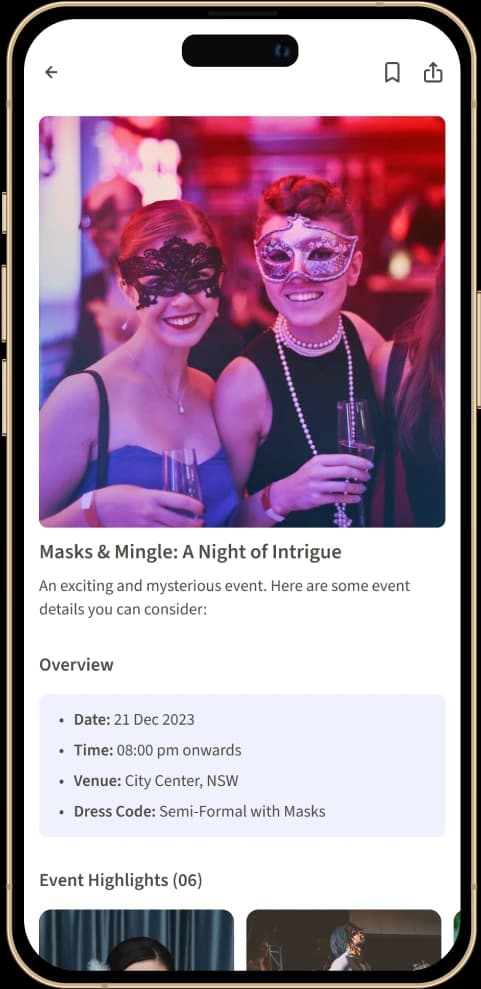
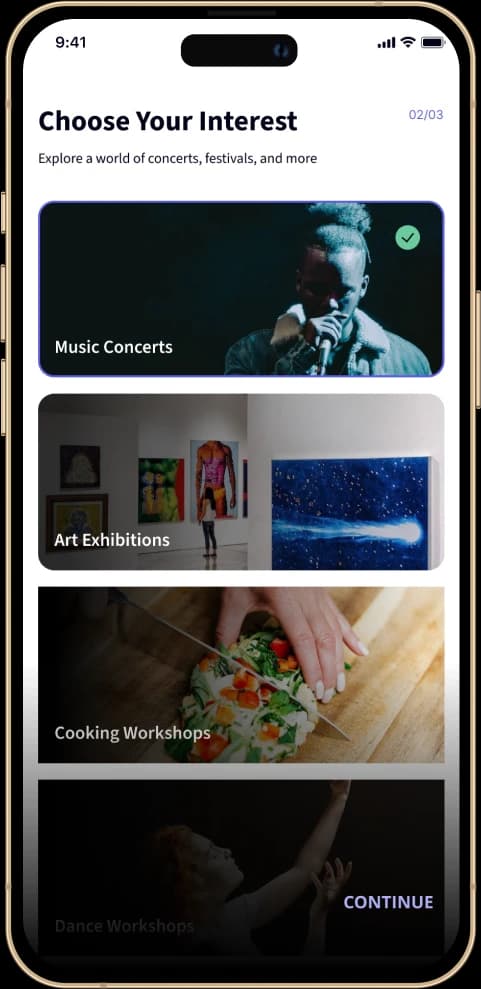
Mobile UI Screens
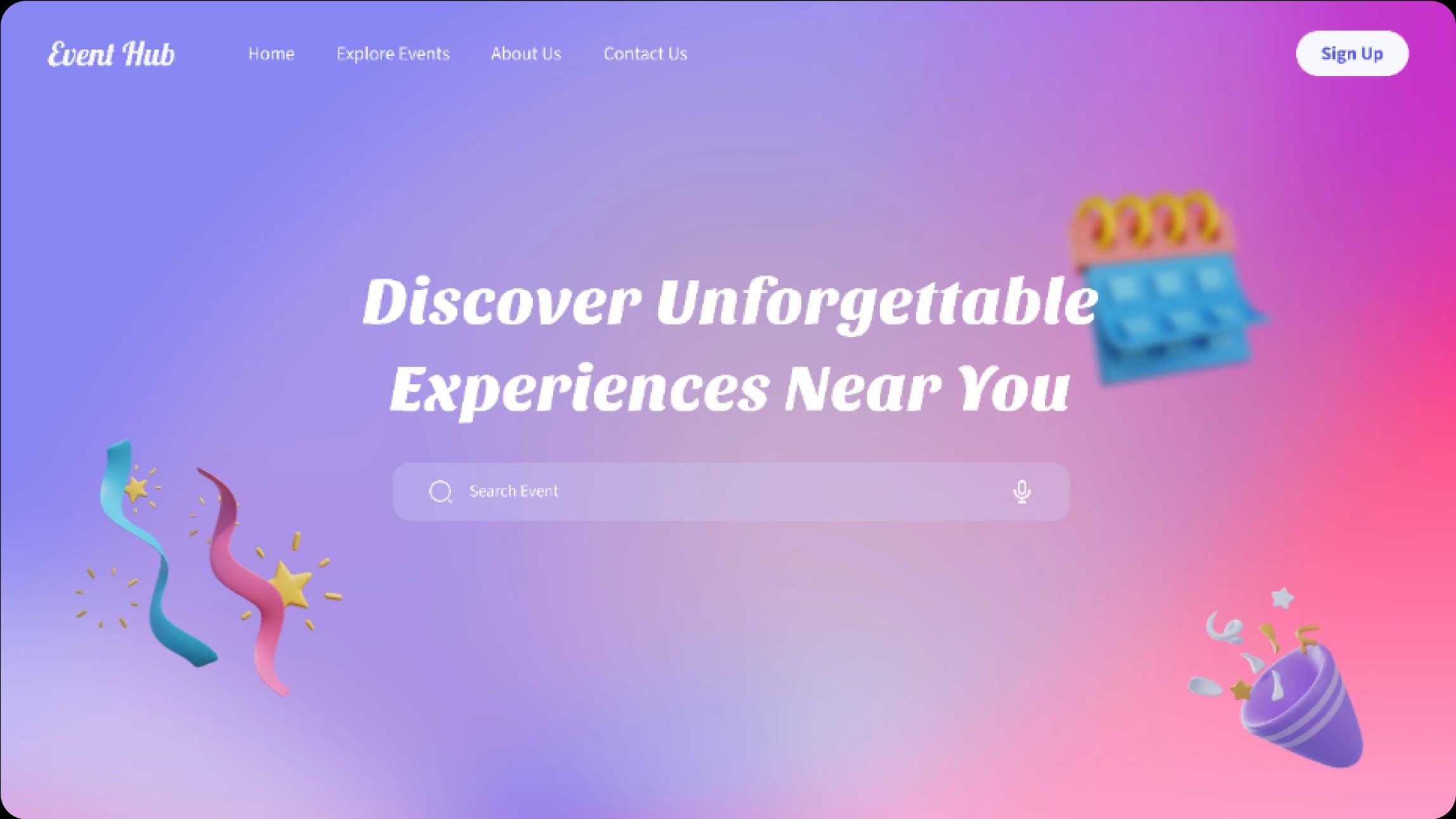
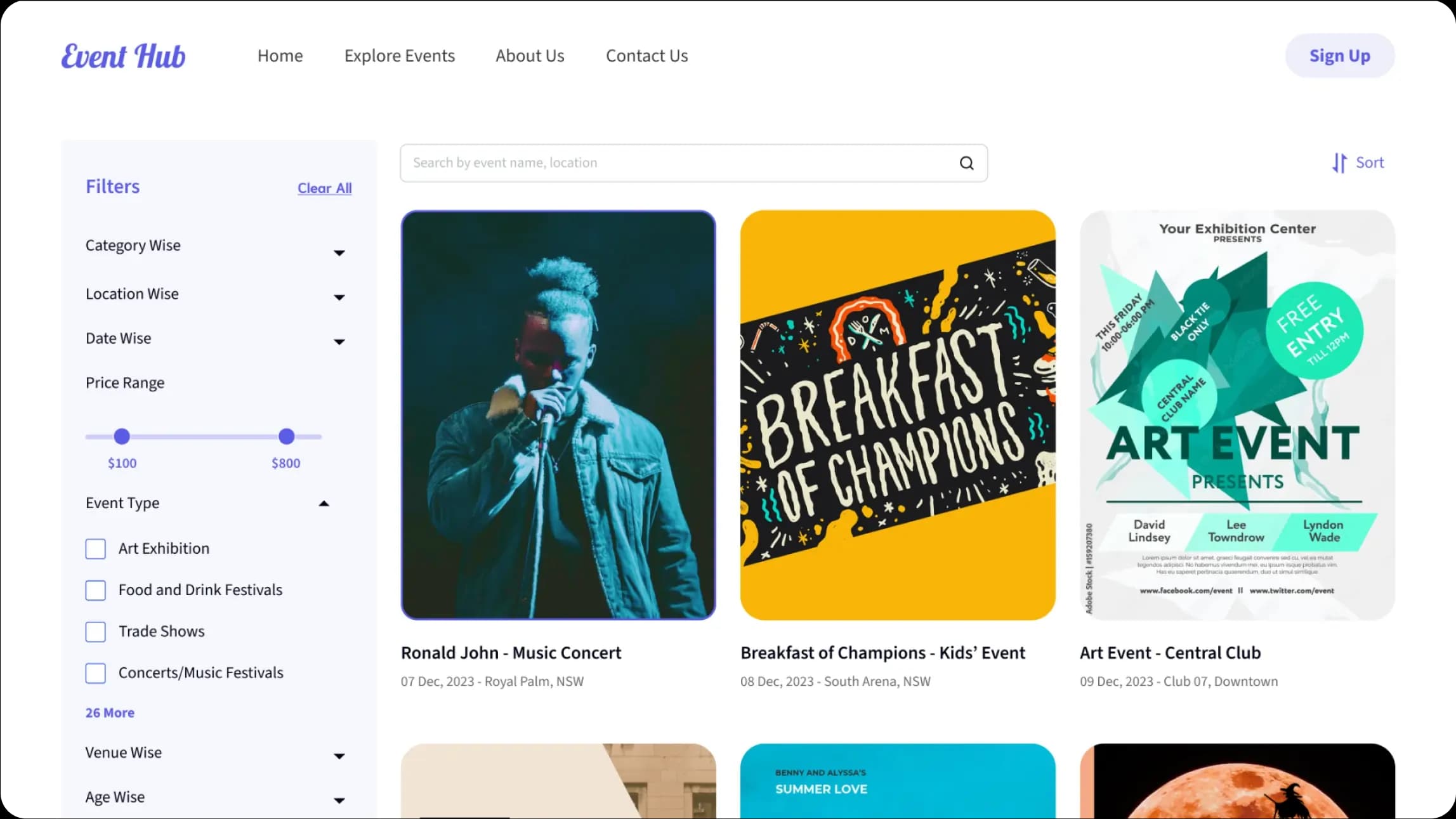
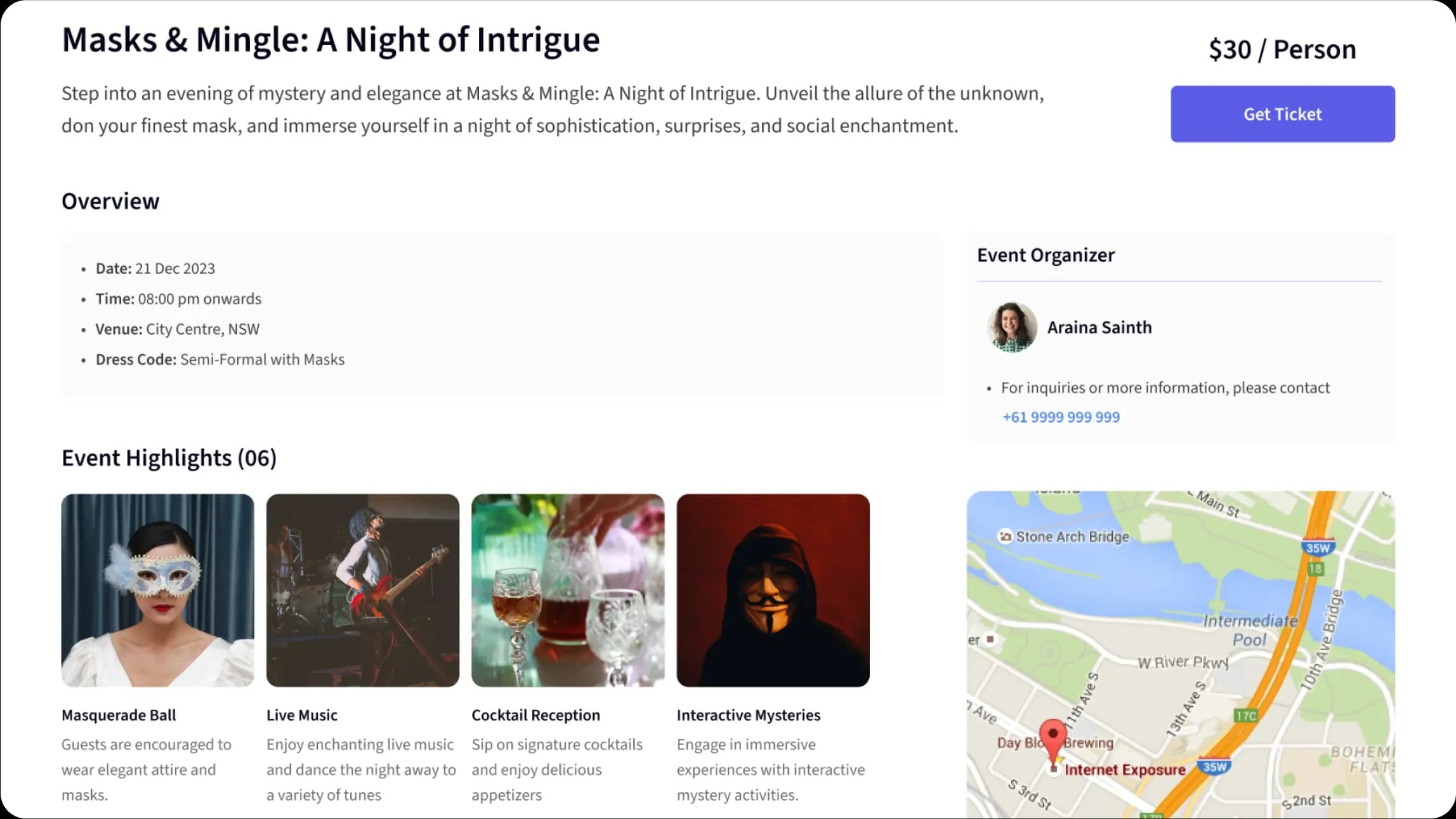
Web Design
Event Hub's web design seamlessly complements the mobile app experience. We create a visually appealing and informative website as a central hub for event information. It showcases event details, highlights key features of the app, and encourages visitors to register and download the app for the most interactive event experience.
Admin Panel
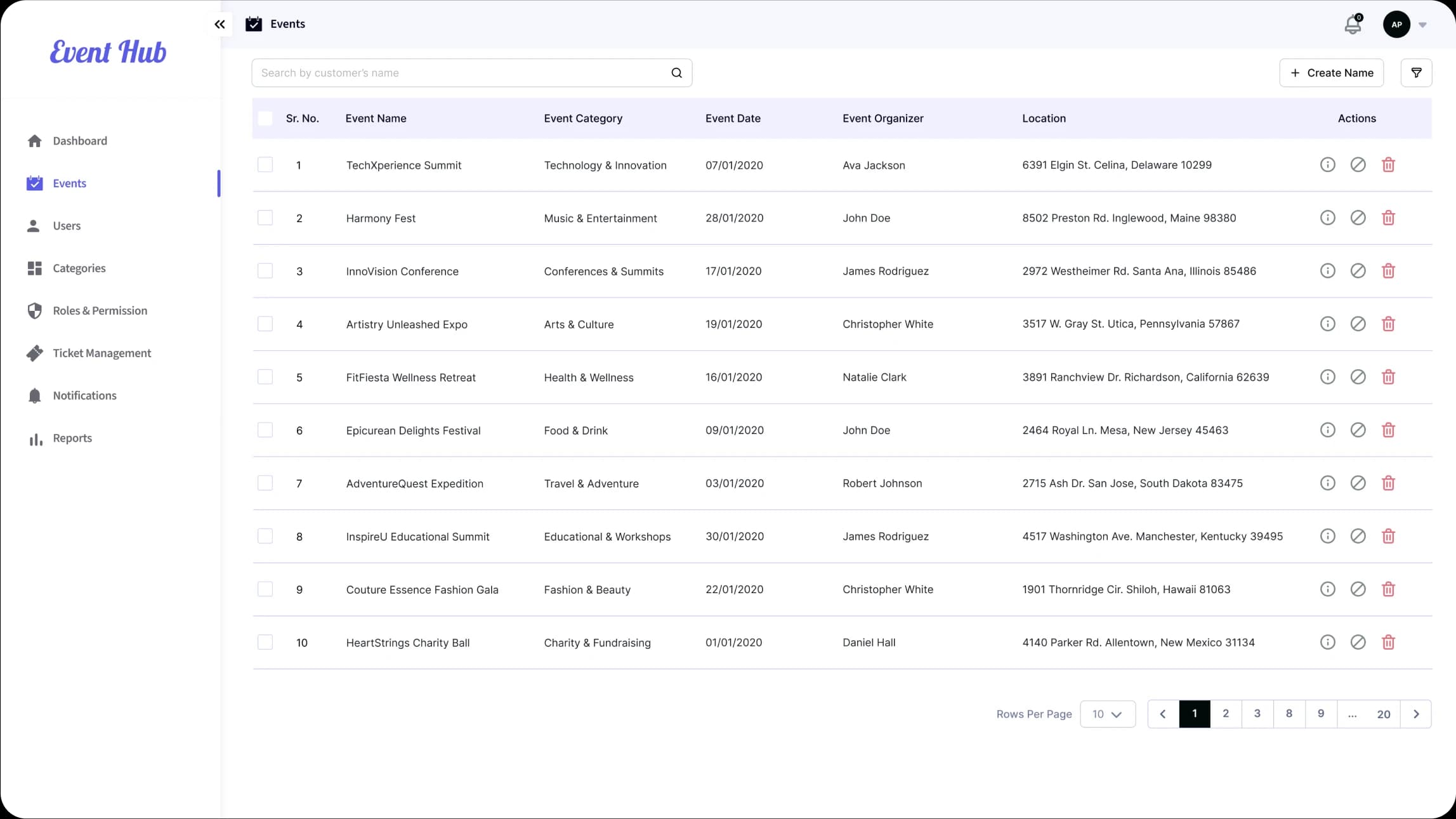
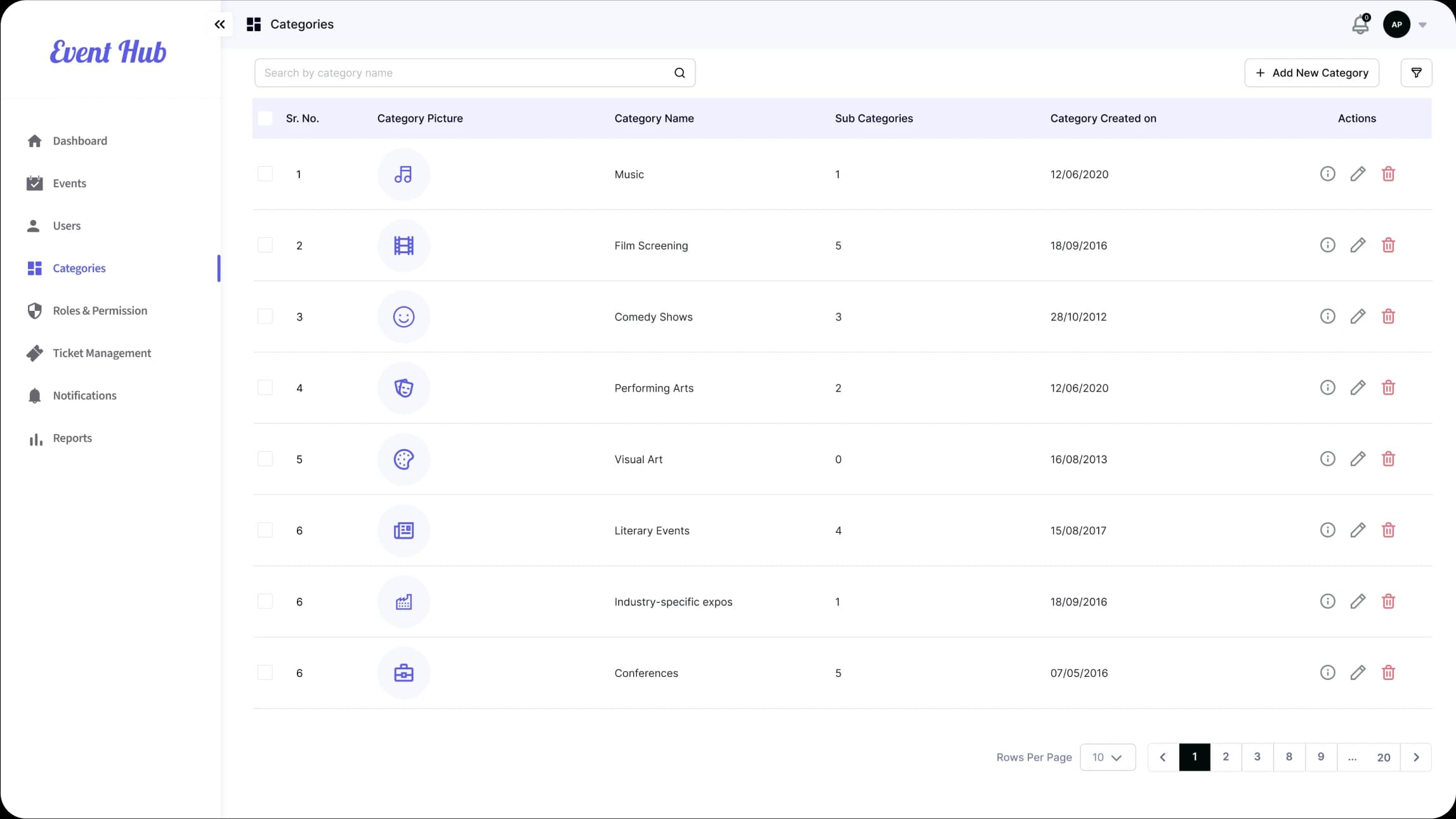
The admin panel of the Event Hub empowers you to transition from being an event organizer to becoming an event conductor. Run your event smoothly by utilizing a range of tools available to you. Handle registrations, create engaging experiences for attendees, and monitor everything as it happens in time. With Event Hub, you have the authority and command to coordinate an event.
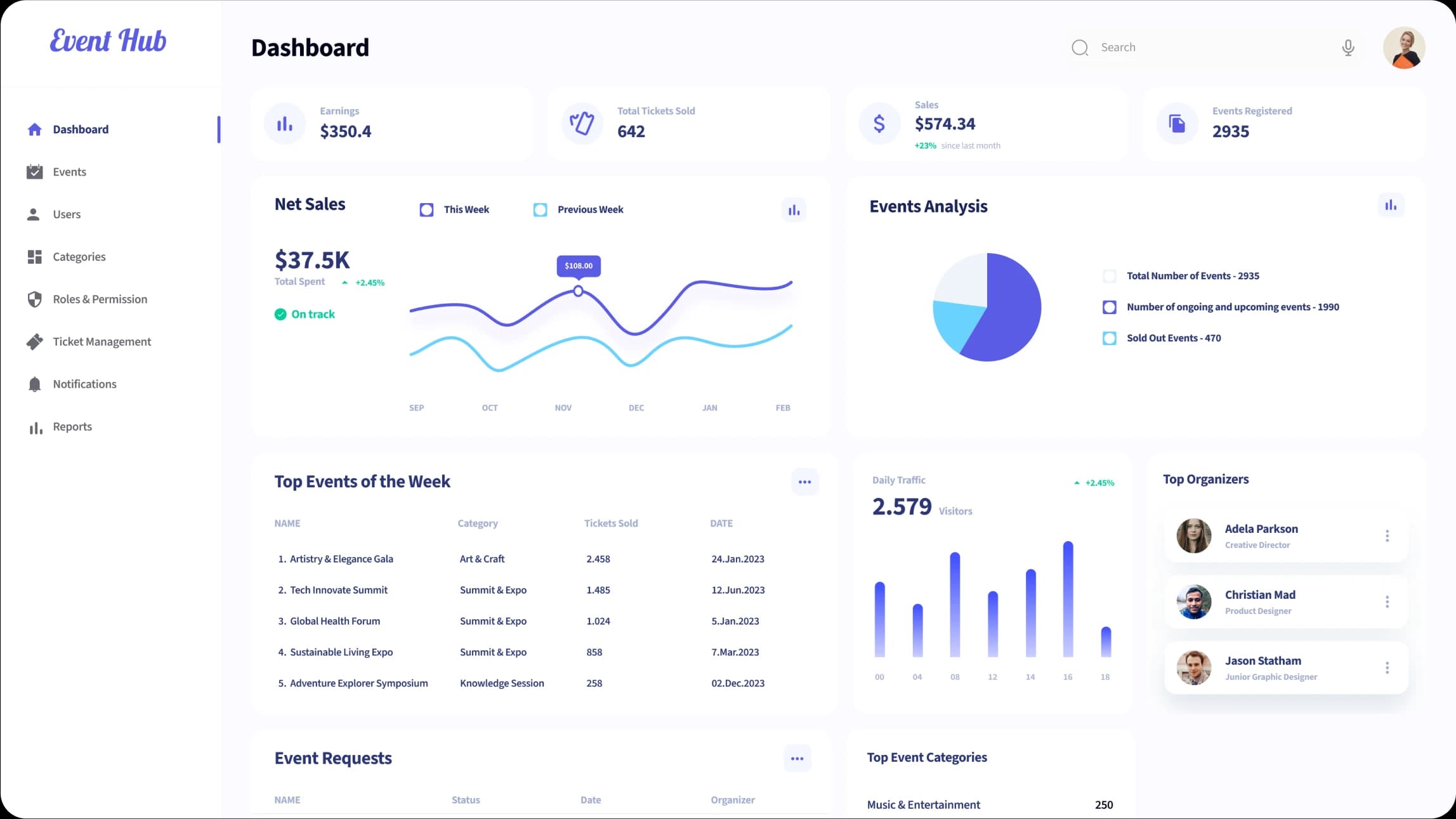
What Our Client Has To Say
A verified Clutch review from the Atlantic Kite Festival team after launching the event management platform.
Event Management Website & Mobile App Development for Annual Kite Festival
SolGuruz delivered a user-friendly app and website that streamlined event management, online ticket sales, and entry times, saving the client 30%-40% of the time previously spent on these tasks. The team excelled in project management, keeping everything on track and communicating clearly.

Summarized from Pratik Patel's Clutch review
Pratik Patel, Director, Atlantic Kite Festival
 Halifax, Nova Scotia, Canada
Frequently Asked Questions
Quick answers to the questions our clients and prospects ask most. If yours is not here, our team is one click away.
Need advice tailored to your project?
FAQs cover the common ground. For decisions specific to your tech stack, timeline, and team, talk directly to a senior engineer who has shipped what you are planning.
Event management app development builds platforms that manage the complete event lifecycle, including discovery, registration, ticketing, payments, and post-event analytics. It also covers in-event engagement features like live polls, Q&A, and messaging. These apps are typically delivered across iOS, Android, web, and admin dashboards for organizers.
Choose a company with proven experience in multi-user event platforms covering attendees, organizers, and exhibitors, not just ticketing. They should have expertise in PCI-compliant payments and real-time engagement features like live polls and messaging. A clear tech stack and strong case studies like Event Hub are key decision factors.
An MVP event app usually takes 14-18 weeks, while a mid-level platform with multiple user roles can take 22-30 weeks. A full-scale platform like Event Hub with exhibitors, real-time engagement, and analytics may take 28-42 weeks. Timelines vary based on feature complexity, integrations, and supported platforms.
Costs range from $50,000-$95,000 for MVP apps, $95,000-$180,000 for mid-scope platforms, and $180,000-$400,000+ for full-scale solutions. Pricing depends on the number of user roles, real-time features, payment systems, and integrations. Ongoing support and infrastructure also influence total cost.
Core features include registration, ticket booking, secure payments, QR check-in, schedules, and notifications. Advanced features include live polls, Q&A, exhibitor profiles, lead capture, and CRM integrations. A complete platform like Event Hub combines both core and advanced capabilities.
A modern event app uses Flutter for mobile apps, React.js + Next.js for web platforms, and Node.js for backend development. Firebase powers real-time engagement features like live polls and messaging, while AWS handles scalable infrastructure. This stack ensures performance, scalability, and cross-platform consistency.
Yes, we build high-performance event management app Android solutions using Flutter or native Kotlin. These apps support ticket booking, QR check-in, real-time notifications, and attendee engagement features optimized for all Android devices.
Yes, responsive web apps are built using React.js and Next.js to handle event discovery, registration, and admin operations. They support exhibitor portals, analytics dashboards, and SEO-optimized event pages. Web platforms ensure accessibility across devices with full feature parity.
Yes, UI/UX design covers multiple personas, including attendees, organizers, exhibitors, and admins. It includes information architecture, wireframes, prototypes, and design systems for consistency. Accessibility standards and cross-platform usability are also key considerations.
Event apps use PCI-DSS-compliant payment gateways like Stripe or Razorpay for secure transactions. They support multi-tier ticketing, promo codes, group bookings, and refunds. Users receive instant confirmations with digital tickets after successful payments.
Exhibitors get dedicated profiles with product showcases, booth details, and QR-based lead capture. Sponsors receive brand visibility, engagement tracking, and ROI dashboards. These features help maximize sponsorship value and post-event follow-ups.
Real-time engagement is powered by event-driven systems using Node.js and Firebase. It enables live polls, Q&A sessions, and messaging with instant updates. The system is designed to handle high concurrency during peak event sessions without lag.
Build beyond basic ticketing with a full-stack event system tailored for attendees, organizers, and sponsors. Get a detailed execution plan aligned with your business goals.
Related Projects
More Projects We Have Delivered
SolGuruz has shipped 102+ products across 14 industries. See other community and lifestyle platforms our team has built - football community app, music and podcast platforms, and wine delivery that demonstrate the same community-building, multi-vendor coordination, and consumer experience we brought to this event management app.

MI Football Social Community App Connecting Fans & Pubs on Matchday
MI Football Social Redefines Fan Connection with a Football Community App that Boosts Engagement, Enhances Interaction & Unites Fans under one Digital Platform
Key Outcomes
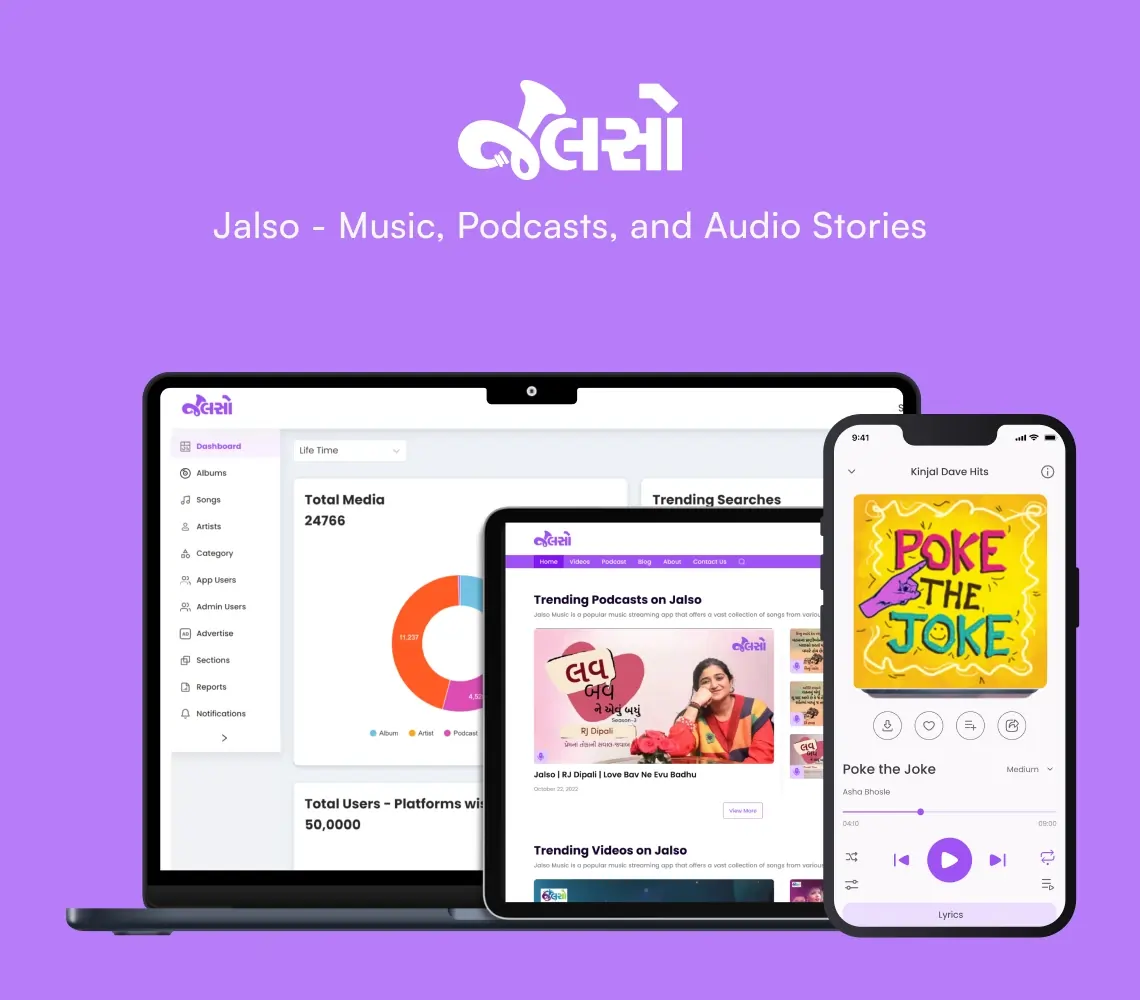
Music, Podcasts, and Audio Stories App
Jalso was designed as an overall audio streaming app offering online music streaming, Podcast streaming, video streaming, and audiobook streaming. From celebrities to common users, everyone loved the application and found it user-friendly and helpful for enhancing the importance of Gujarati music.
Key Outcomes

Wine Delivery App Solution
Explore how our wine delivery app solution transformed customer experience with simple ordering, swift delivery, and personalized recommendations.
Key Outcomes