




Online Gem B2B Marketplace Development
B2B Diamond Marketplace Case Study
Building a digital diamond trading platform that connects buyers and sellers through a secure, scalable B2B marketplace.
SolGuruz built for a diamond trading company headquartered in Antwerp, Belgium - the global capital of diamond trade. The platform handles end-to-end B2B diamond commerce: inventory management with ERP system synchronisation, multi-tier B2B pricing for verified buyers, diamond categorisation by 4 Cs (Cut, Color, Clarity, Carat), advanced search filters, secure payment processing for high-value transactions, and order tracking, forming a complete diamond trading app ecosystem.

Industry
Diamond Trading & Jewelry / B2B Commerce / Gemstone Marketplace
Platforms
Responsive Web Portal + iOS App (Flutter) + Android App (Flutter) + Admin Panel
Timeline
6+ Months
Tech Stack
Flutter + React.js + Next.js + Node.js + Firebase + AWS + OAuth 2.0 + Postman + Swagger + Figma
Project Overview
This case study covers a B2B diamond trading marketplace built for a company in Antwerp, the global hub of diamond trade, led by the Antwerp World Diamond Centre. The platform serves verified traders, jewellery manufacturers, and high-volume buyers with direct access to inventory at multi-tier pricing.
Most platforms like RapNet, IDEX Online, and Polygon are aggregators where suppliers compete on price. This solution takes a different approach. A custom marketplace where the client owns pricing, buyer relationships, and ERP-synced inventory. The trade-off is lower initial scale but complete control over data and experience.
SolGuruz delivered the platform end-to-end: product architecture, UX/UI for buyer and admin flows, a responsive web app (React.js + Next.js), mobile apps (Flutter), a Node.js backend with ERP sync, and AWS-based infrastructure.
What Is a B2B Diamond Marketplace?
A B2B diamond marketplace is a digital platform where verified diamond traders, jewelry manufacturers, and high-volume buyers can search, evaluate, and purchase diamonds directly from suppliers, typically operating on multi-tier pricing, wire transfer, or letter of credit settlement, and ERP-integrated inventory. The category is divided into four primary models:
Industry-wide diamond aggregators
List inventory from thousands of dealers in one searchable database (Rapaport / RapNet, IDEX Online, Polygon, Get Diamonds)
Custom brand-owned B2B marketplaces
A single diamond company's direct-to-buyer platform with their own inventory, pricing, and brand experience (this case study type)
Lab-grown diamond marketplaces
Specialise in laboratory-grown diamond trading, separate from natural diamond commerce due to regulatory disclosure requirements
Diamond exchange platforms
Facilitate peer-to-peer diamond trading between dealers with escrow and authentication services (VDB, Liquid Diamonds)
This case study covers a custom brand-owned B2B marketplace the Antwerp client's direct-to-buyer platform with their own inventory, multi-tier pricing for verified buyers, and ERP-synchronised stock management.
How Does a B2B Diamond Marketplace Work?
A B2B diamond trading marketplace flows from buyer verification to settled transaction across six stages:
Buyer Verification & Account Setup
Diamond commerce is not open commerce, buyers must be verified before accessing pricing or inventory. Verification typically includes business registration check, KYC documentation, AML screening, OFAC sanctions check (especially post-Russia diamond sanctions), and trade reference validation. Once verified, buyers receive tier-specific pricing and credit terms.
Inventory Browse with 4 Cs Filtering
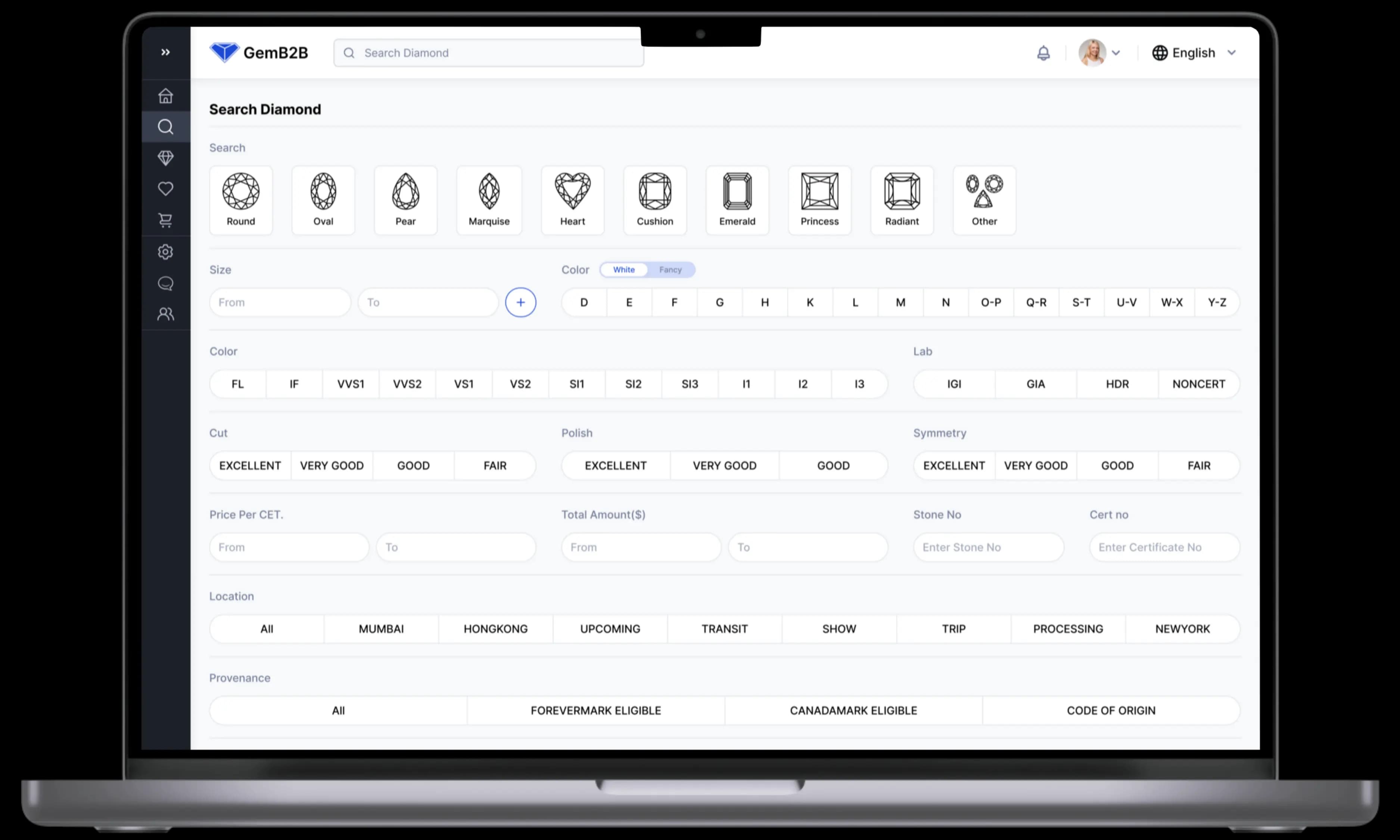
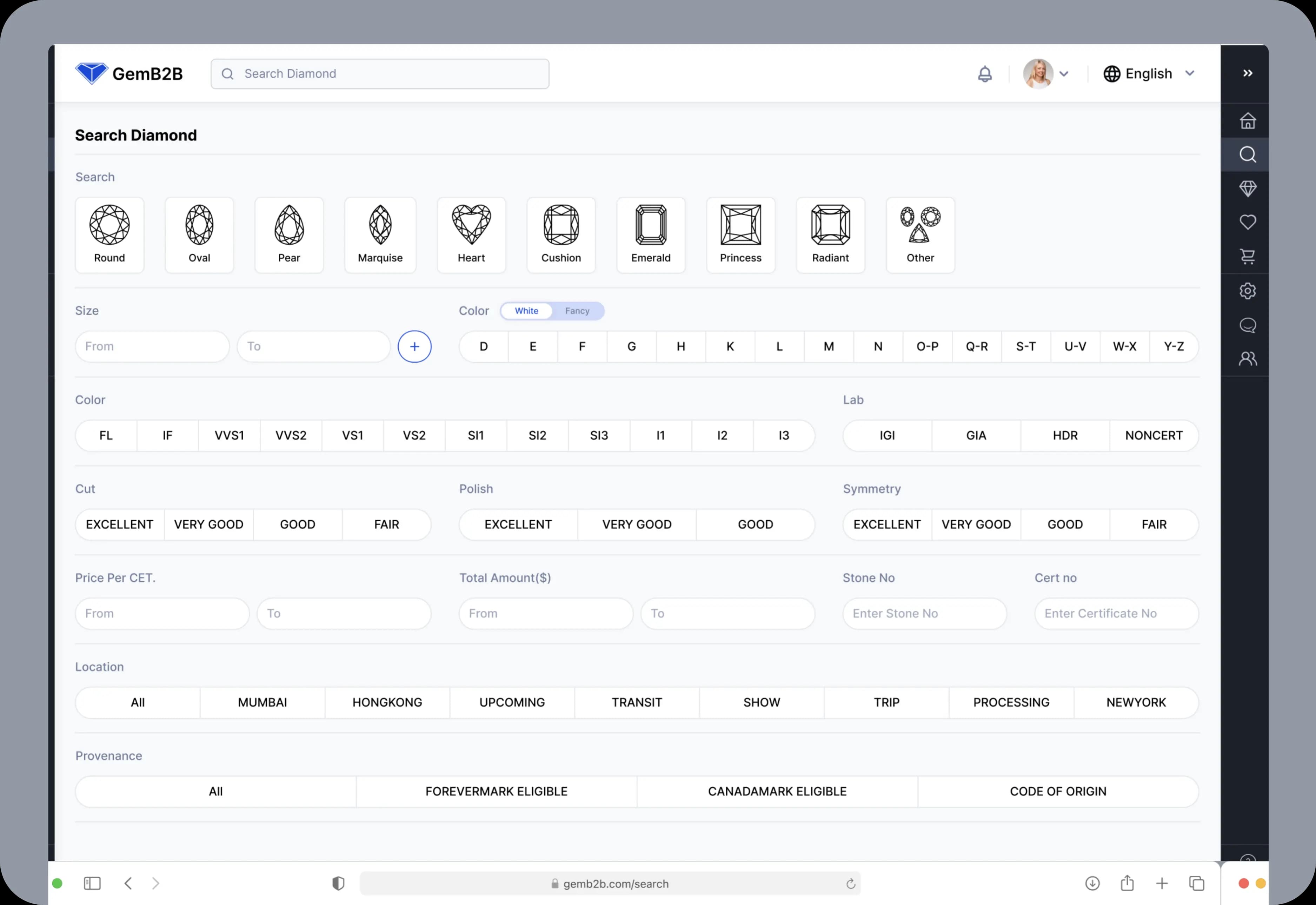
Buyers search the diamond catalog using industry-standard parameters, the 4 Cs (Cut, Color, Clarity, Carat), shape (round, princess, oval, emerald), origin certification, and price range. Each diamond record links to its grading certificate (GIA, IGI, HRD), high-resolution images, and Rapaport price benchmark for comparison.
Diamond Detail & Certification Verification
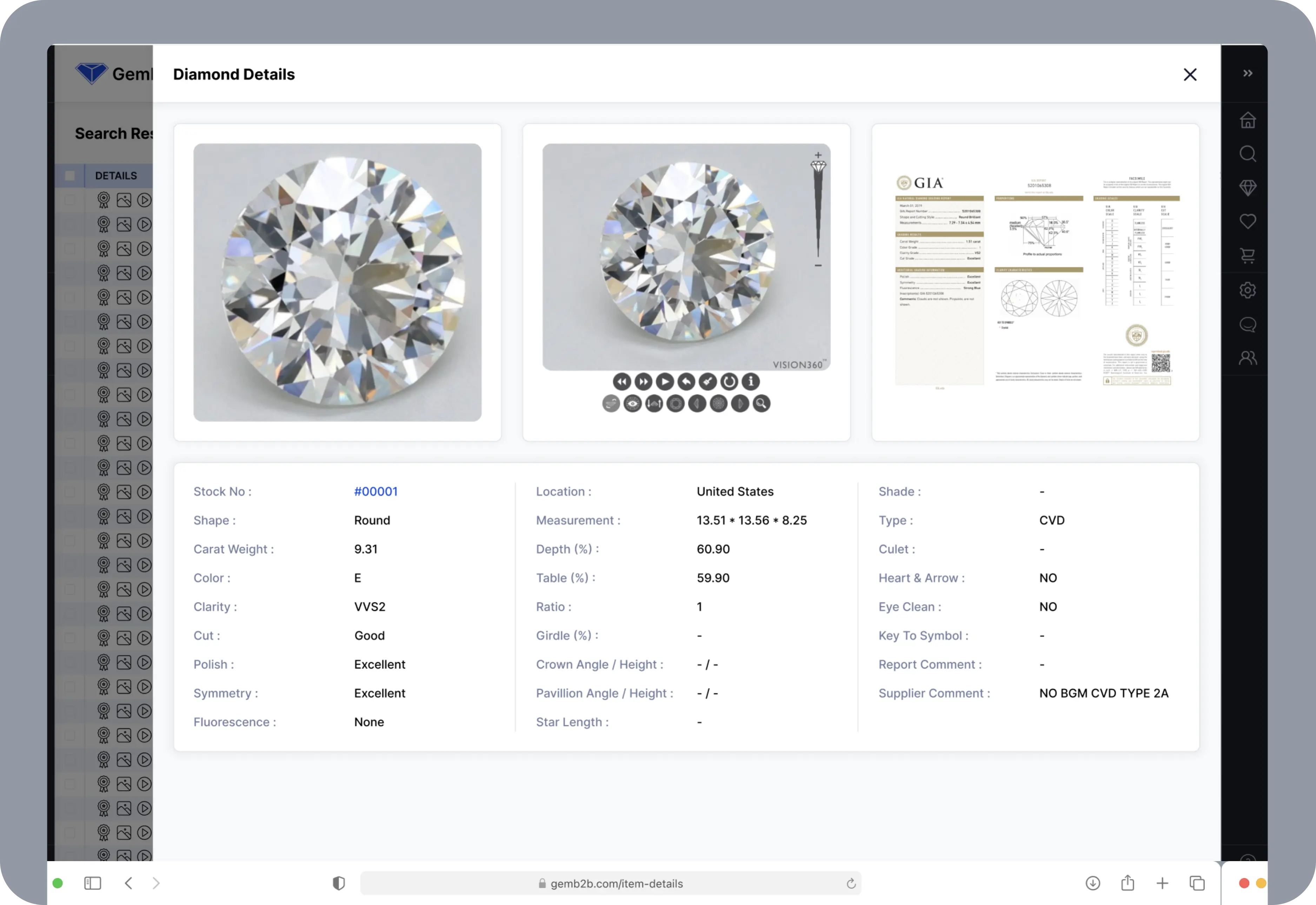
Diamond detail pages show full grading certificate data, 360-degree imagery or video, fluorescence, polish, symmetry, and fluorescence ratings. Certificate authenticity verifies via direct API integration with grading laboratories. Buyers can request additional photography or third-party verification before committing.
Quote Request & Multi-Tier Pricing
B2B diamond pricing is not list-price commerce verified buyers see tier-specific pricing based on volume history, payment terms, and trade relationship. High-value diamonds typically route through quote-and-negotiation flow rather than instant checkout. The platform tracks quote history, expiry, and negotiation rounds.
Order Placement & Payment Processing
Order placement triggers a multi-step settlement workflow: buyer confirms order, seller acknowledges allocation, payment routes through wire transfer or letter of credit (rarely card payment for high-value diamonds), and Kimberley Process documentation generates for cross-border movement. Multi-currency support handles US Dollar, Euro, and other settlement currencies.
Inventory Sync & Order Fulfillment
Once payment clears, the diamond is allocated to the buyer in the ERP system, removed from public inventory, and shipped with full Kimberley Process and customs documentation. Order tracking covers customs clearance, shipping, and delivery confirmation. Post-sale data flows back to the ERP for financial reconciliation and tax reporting.
Why Did the Antwerp Client Need a Custom B2B Diamond Marketplace?
The client identified four operational gaps that off-the-shelf B2B diamond platforms couldn't solve:
ERP Inventory Synchronisation Without Manual Re-Entry
The client's diamond inventory lives in their ERP system every stone has a unique identifier, certificate number, location, status, and pricing history. Industry aggregators require uploading inventory through CSV imports or manual entry, which creates two sources of truth and data drift. A custom build let the Antwerp client maintain a single source of truth in their ERP and sync to the marketplace automatically, enabling a scalable diamond B2B marketplace architecture.
Brand-Owned Buyer Relationship
Industry aggregators like RapNet and IDEX put their own brand front and center the buyer experience is the platform's, not the supplier's. Brand-owned marketplaces let the Antwerp client surface their own brand on every screen, every quote, every confirmation. For an established Antwerp diamond company building long-term buyer relationships, brand control matters.
Multi-Tier B2B Pricing for Verified Buyers
Industry aggregators show standard list pricing visible to all buyers. B2B diamond commerce works on tier pricing, a long-term high-volume buyer pays differently than a new occasional buyer. Custom platforms support this natively with verified buyer tiers, payment-term-based pricing, and negotiation workflows.
Compliance Workflow Built In
B2B diamond trading requires Kimberley Process Certification Scheme documentation for cross-border movement, OFAC sanctions screening (especially post-Russia diamond sanctions enacted 2024), KYC for high-value buyer verification, and customs paperwork. Off-the-shelf marketplaces handle this generically; a custom build implements the exact compliance workflow the Antwerp client's legal team requires.
What Solutions Did SolGuruz Deliver?
SolGuruz delivered the B2B diamond marketplace as a complete multi-platform engagement covering design, web, mobile, backend, ERP integration, and infrastructure. The solution had five core components:
Web Portal for Verified B2B Buyers
Responsive React.js + Next.js web platform serving as the primary buyer interface. Server-side rendering for SEO performance on diamond detail pages and category landing pages. Component library shared across buyer-facing portal, admin dashboard, and inventory manager interface.
Native Mobile Apps (iOS + Android via Flutter)
Single Flutter codebase delivering native-quality performance on iOS and Android. Buyers access inventory, request quotes, track orders, and receive push notifications for quote updates and order milestones. Biometric login for fast app re-entry. Offline access to quote history and recent orders for when buyers travel internationally.
Backend & ERP Synchronisation Engine
Node.js backend handling user authentication, buyer verification workflow, inventory orchestration, quote management, payment processing, and notification dispatch. Dedicated ERP synchronisation layer pulls real-time inventory updates from the client's ERP system and pushes order events back maintaining a single source of truth for diamond inventory across both systems.
Admin Panel for Inventory & Order Management
Web-based admin dashboard for the client's sales team, inventory managers, and operations admins. Inventory configuration (categorisation, pricing tier rules, certificate management), buyer tier management, quote approval workflow, order tracking, and analytics on buyer behavior and conversion funnel.
AWS Cloud Infrastructure & Multi-Layered Security
AWS-based infrastructure with EC2 for backend services, S3 for diamond imagery and certificate storage, CloudFront for global CDN distribution, RDS for relational inventory and order data, and managed firewalls. Multi-layered security covering encryption (HTTPS with TLS 1.3 in transit, AES-256 at rest), OAuth 2.0 authentication, AWS firewall rules, source code obfuscation, and automated backup. Compliance-ready architecture for Kimberley Process documentation and OFAC sanctions screening.
Skip guesswork. Get a clear breakdown of tech stack, ERP integration approach, feature roadmap, and cost estimate tailored to your business model.


About the Project
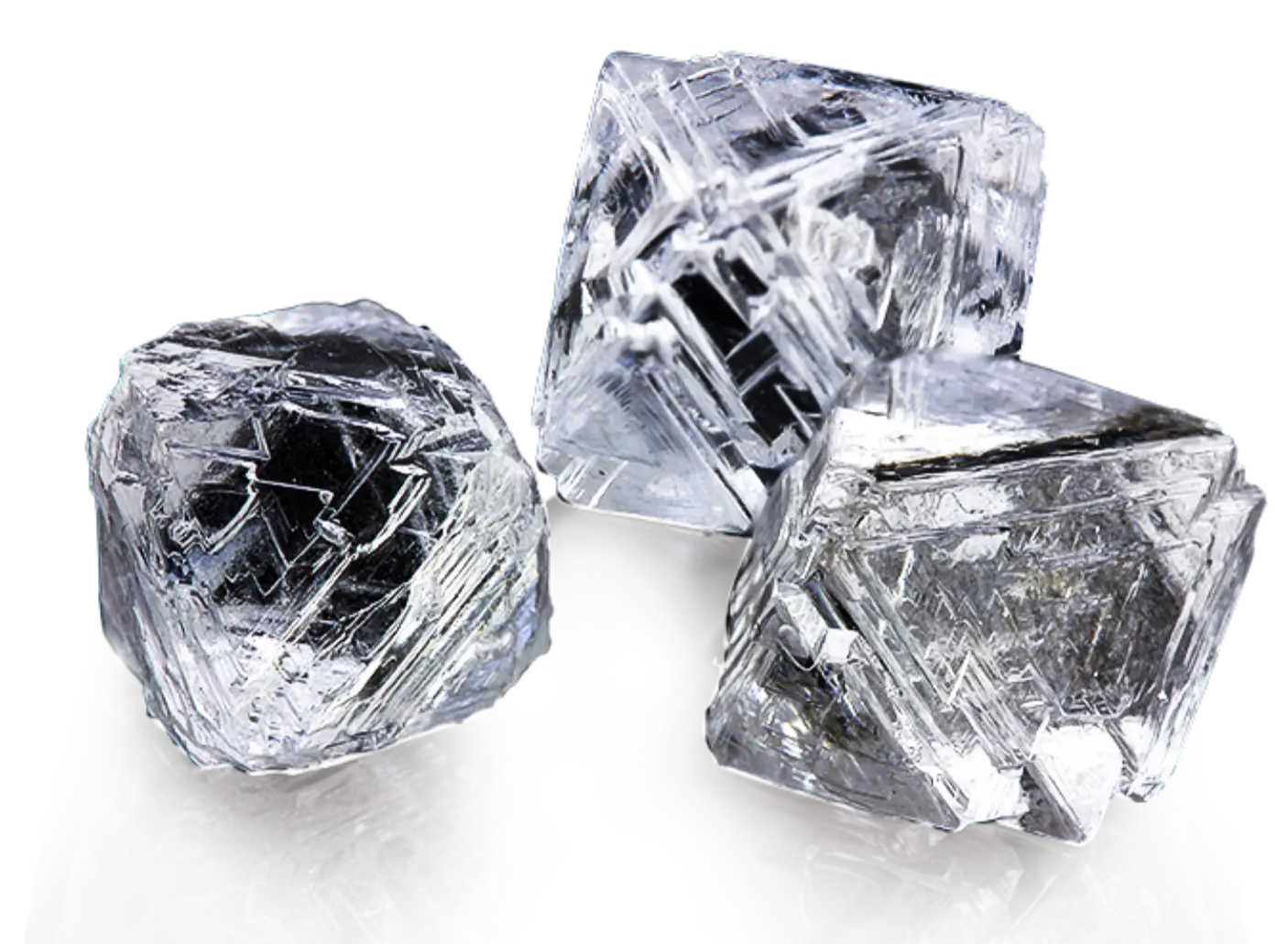
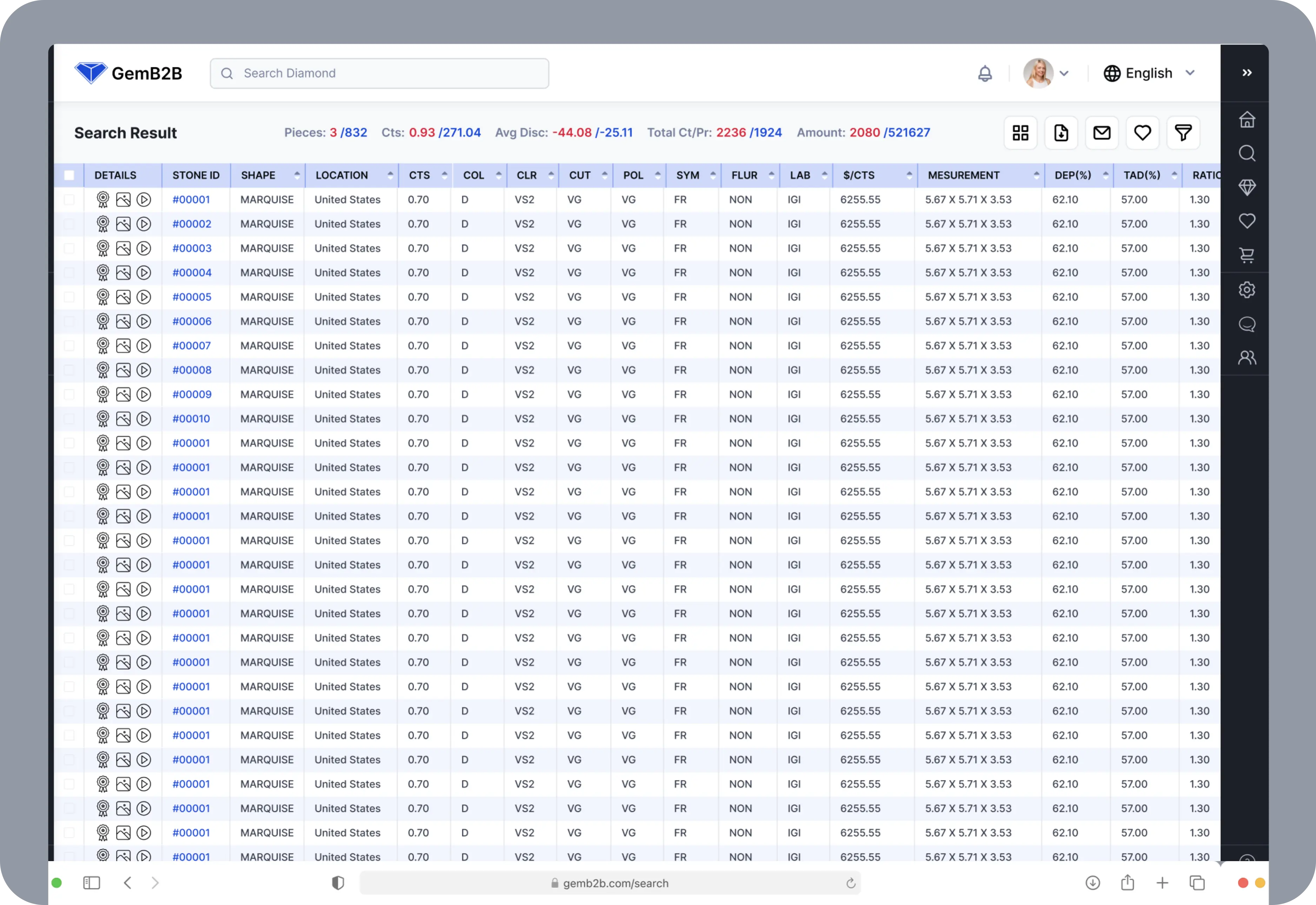
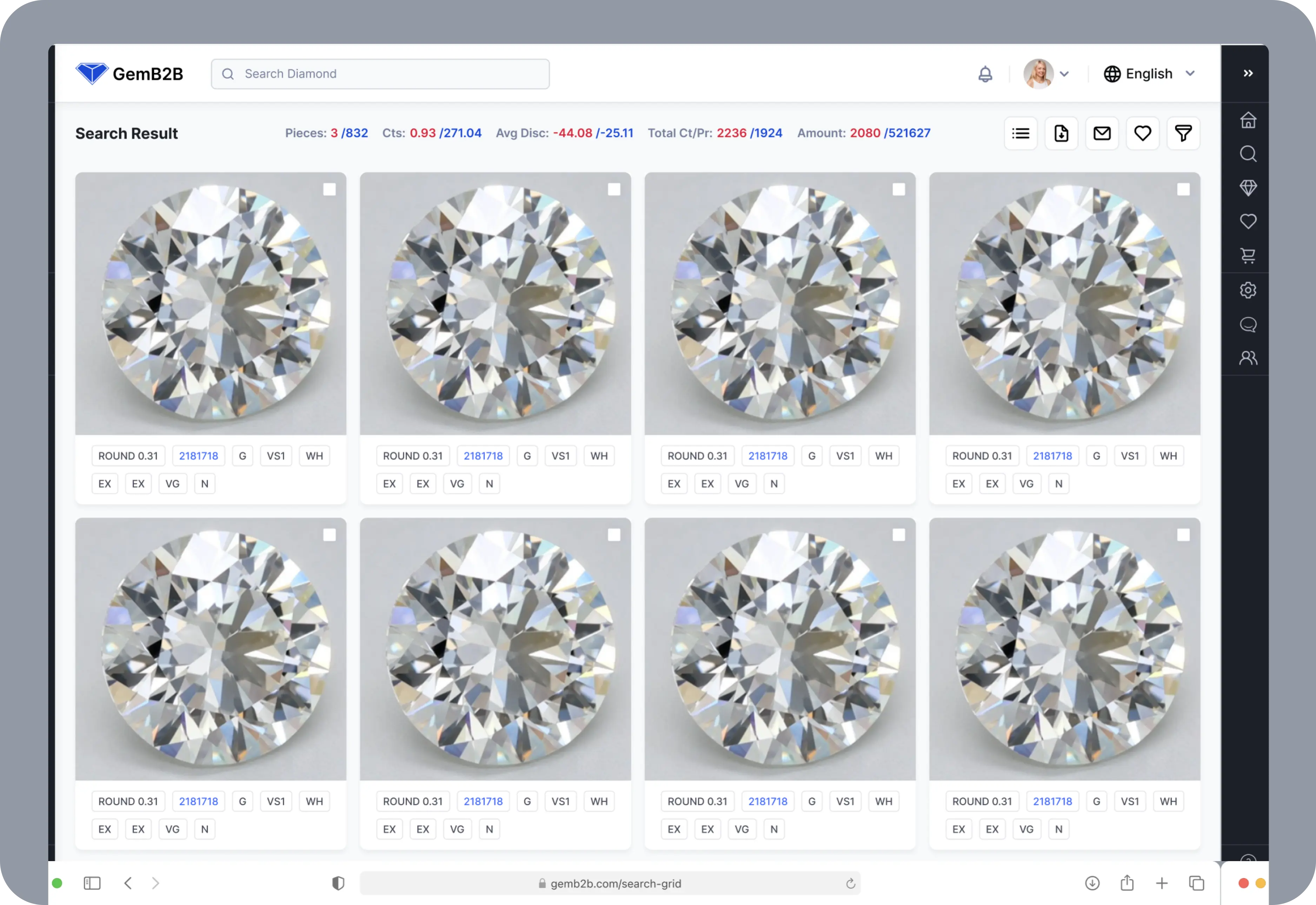
Our client deals in high-quality diamonds for which they wanted to build a seamless B2B diamond marketplace for selling diamonds to verified traders and manufacturers. We provided an elegant and efficient platform that helps them sell their diamonds faster with a visually appealing effect. We utilized maximum visual and creative ideas to showcase the client's diamond collection with full 4 Cs categorisation, certificate linking, and advanced filtering. We aimed to deliver their end users a secure online purchasing experience using robust backend infrastructure, ERP sync, and compliance-ready architecture.



The Challenges
Our development team encountered several challenges while building the robust B2B diamond marketplace platform: Complex inventory management - the client dealt with different types, shapes, and certifications of diamonds, requiring sophisticated stock and inventory management with real-time ERP sync. Advanced search and filtering for buyers evaluating high-value purchases with complex criteria (4 Cs parameters, certificates, price ranges, origin). Buyer verification and tier-based pricing logic. Security and authentication for high-value transactions. Compliance with Kimberley Process, OFAC sanctions screening, KYC/AML requirements, and multi-currency payment processing.


The Solution
Our team developed a robust inventory management architecture that allows the client to tag, categorize, and display each diamond separately with detailed specifications (4 Cs, certificate numbers, origin, high-resolution imagery, 360-degree views). Advanced multi-parameter search with saved search functionality and push notifications for matching diamonds. Real-time ERP integration for bi-directional inventory sync. Tiered buyer verification with automated KYC/AML/OFAC screening. Multi-tier pricing logic synced from ERP. Quote request and negotiation workflow. Secure payment processing supporting wire transfer, letters of credit, and multi-currency settlement with FX rate locking. Mobile-first design for buyers managing high-value transactions on the go.

SolGuruz Involvement
Here is how our development team emphasized UX/UI design and full-stack development of the B2B diamond marketplace and ERP integration architecture.
Product Architecture & UX/UI Design
Our team conducted stakeholder interviews, competitor teardowns (RapNet, IDEX Online, Polygon), and user research across 4 personas: B2B buyer, sales team, inventory manager, admin. We designed information architecture, wireframes, interactive prototypes, and a full design system in Figma. Distinct visual treatments per persona sharing a cohesive design language. Usability testing ensured smooth navigation of complex diamond search and quote workflows.
Full-Stack Development & ERP Integration
React.js + Next.js web portal with server-side rendering for SEO. Flutter mobile apps (iOS + Android) with biometric login and offline access. Node.js backend with dedicated ERP synchronisation layer, real-time inventory sync, quote management, and multi-currency payment processing. AWS infrastructure with EC2, RDS, S3, CloudFront. OAuth 2.0 authentication, encryption (TLS 1.3 in transit, AES-256 at rest), AWS firewalls, source code obfuscation, automated backup, and compliance-ready architecture for Kimberley Process + OFAC screening.
SolGuruz B2B Diamond Marketplace Development Process - From Discovery to Launch
This case study was delivered using SolGuruz 10-stage development lifecycle, scaled for diamond industry compliance overhead and ERP integration complexity.
1
Stage 01 - Discovery & Diamond Industry Scoping
Stakeholder interviews to understand operational reality inventory volume, buyer base size, ERP system in use, compliance scope, multi-currency settlement needs. Competitor teardowns across industry aggregators (RapNet, IDEX Online, Polygon, Get Diamonds) and brand-owned diamond platforms. Deliverable: discovery document, prioritized feature list, locked Phase 1 scope.
2
Stage 02 - Requirement Analysis & Documentation
User stories and acceptance criteria for every workflow across verified buyer, sales team, inventory manager, and admin roles. User flow diagrams for buyer verification, inventory browse, quote request, order placement, payment, and fulfillment. Data flow diagrams for ERP synchronisation and Kimberley Process documentation.
3
Stage 03 - UX/UI Design
Information architecture, wireframes, interactive prototypes, and full design system in Figma. Designed against four primary personas the verified B2B buyer evaluating high-value purchases, the sales team managing buyer relationships, the inventory manager configuring stock and pricing, the admin running operations. Distinct visual treatments per persona sharing the same design language.
4
Stage 04 - Architecture & ERP Integration Planning
System design covering Flutter state management, web frontend (React.js + Next.js) architecture, Node.js backend API contracts, ERP synchronisation layer, payment processor integration, and AWS infrastructure topology. Database schema for users, buyers (with verification status and tier), diamonds (with full 4 Cs and certification data), quotes, orders, and audit logs.
5
Stage 05 - Web Portal Development
React.js + Next.js web portal with server-side rendering for diamond detail pages and category landing pages. Component library aligned to the design system. Three interfaces: verified buyer portal, sales team dashboard, admin panel.
6
Stage 06 - Mobile App Development (Parallel)
Flutter build for iOS and Android, single codebase with platform channels for biometric authentication, native push notifications, and image gallery performance optimisation.
7
Stage 07 - Backend, ERP Sync & Payment Integration
Node.js backend with adapter modules for ERP synchronisation, payment processing, certificate authentication APIs, and notification dispatch. RESTful APIs documented in Swagger. Real-time inventory sync between ERP and marketplace database.
8
Stage 08 - Quality Assurance & Compliance Testing
Functional testing across 20+ device profiles covering iOS and Android, desktop browsers, and varying network conditions. End-to-end testing of buyer verification, quote-to-order, payment, and ERP sync flows. Independent security review against OWASP Top 10. Compliance verification for Kimberley Process documentation and OFAC sanctions screening.
9
Stage 09 - Launch & App Store Submission
Phased rollout: web admin panel launched first for inventory configuration and buyer onboarding, then iOS and Android apps submitted to App Store and Google Play. Privacy policy review for GDPR compliance (Belgium / EU jurisdiction).
10
Stage 10 - Post-Launch Support & Iteration
2-week sprint cadence for performance fixes, UI refinements, and feature additions based on buyer and sales team feedback. Critical bugs fixed within 24 hours, high-priority within 72 hours. Quarterly performance reviews covering buyer onboarding rate, quote-to-order conversion, average order value, and ERP sync accuracy.
Solution We Provided
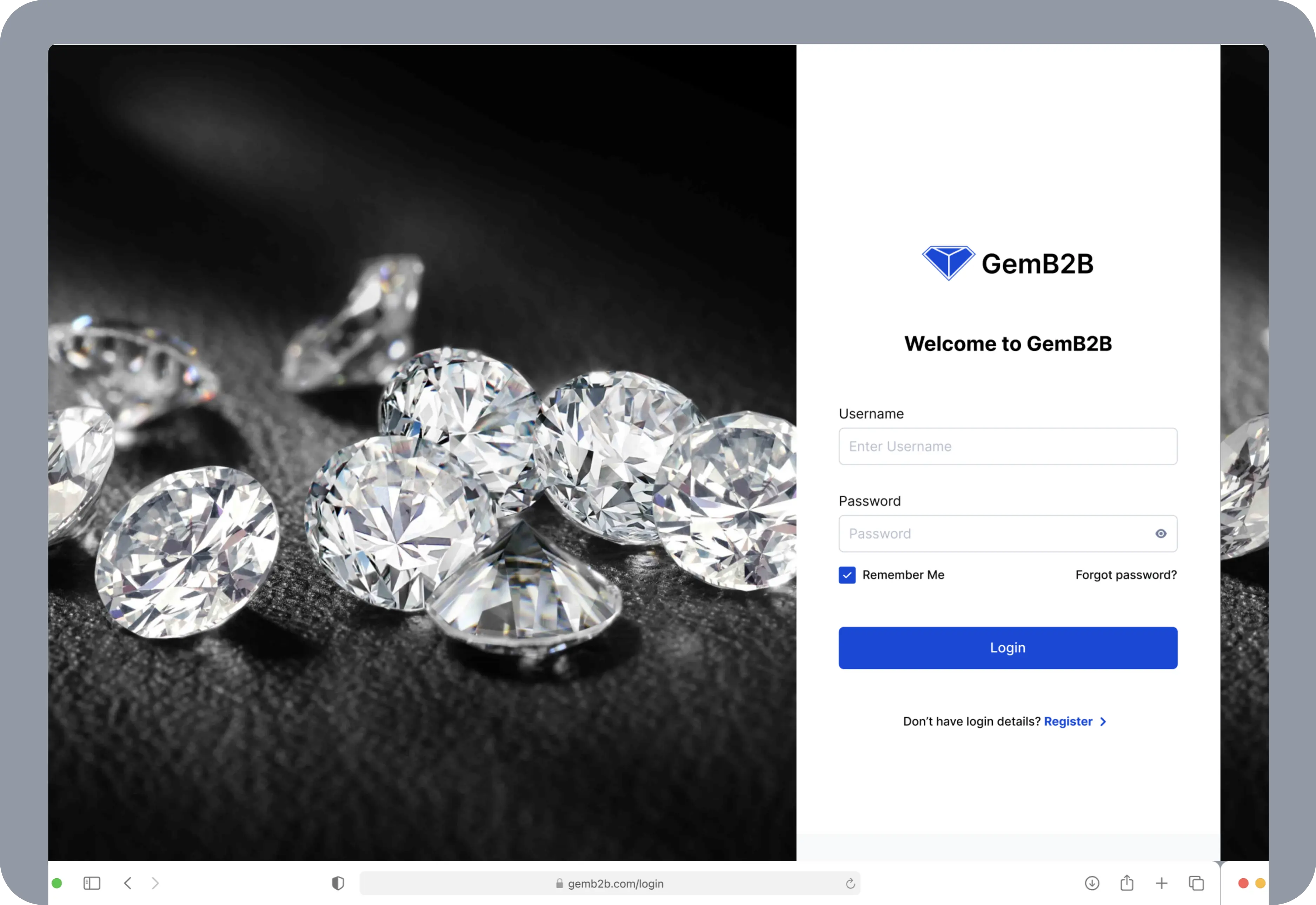
Here is precisely how the client's B2B diamond marketplace displayed the different categories of diamonds and gems after going live. Here are the results from a smooth user registration process to robust backend development:

Tirth Patel
Sr. Business Analyst, SolGuruz | CRM Specialist
The core of this system is not the marketplace UI, it's the synchronization engine. We engineered a real-time ERP integration layer that handles inventory updates, pricing tiers, and order flows without duplication or lag. Everything else sits on top of that foundation.
Direct insight from the SolGuruz team that built this B2B diamond marketplace
B2B Diamond Marketplace Development Cost & Timeline in 2026
Based on this engagement and other diamond commerce builds, here are the B2B diamond marketplace development costs in 2026 across three common scope tiers:
MVP B2B Diamond Catalog
Tier 1
Buyer Verification
Single-tier verified buyers, basic KYC
Platforms
Web-only
ERP & Compliance
Manual inventory upload, single payment flow, basic compliance
Timeline
16-20 weeks
Cost Range
$60,000-$110,000
Mid-Scope B2B Diamond Marketplace (this case study tier)
Tier 2
Buyer Verification
Multi-tier verified buyers, full KYC, OFAC screening
Platforms
Web + iOS + Android (this case study scope)
ERP & Compliance
ERP sync, quote management, multi-tier pricing, Kimberley Process documentation
Timeline
24-32 weeks
Cost Range
$110,000-$220,000
Full-Scope Diamond Trading Ecosystem
Tier 3
Buyer Verification
Multi-tier verified buyers + dealer-to-dealer trading + escrow
Platforms
Web + iOS + Android + Trading floor integration
ERP & Compliance
Real-time ERP sync, RapNet API integration, escrow, multi-currency settlement, full Kimberley Process + OFAC + AML automation
Timeline
32-48 weeks
Cost Range
$220,000-$500,000+
ERP Inventory Synchronisation - The Strategic Differentiator
ERP inventory synchronisation is the single most important architectural decision in B2B diamond marketplace development. It separates serious B2B platforms from generic e-commerce templates pretending to handle diamonds. Implementation covers four layers:
Key Features Built
Why an Antwerp Diamond Company Needed a Custom B2B Diamond Marketplace
Antwerp is the global diamond trade capital, where 80% of rough diamonds and 50% of polished diamonds pass through every year (Antwerp World Diamond Centre). Building a B2B diamond commerce platform for an Antwerp client carries specific market context that off-the-shelf platforms don't serve:
Security & Compliance Implemented
B2B diamond marketplaces processing high-value transactions (orders running $50K-$5M+), KYC documentation, and Kimberley Process records have a high security bar. SolGuruz implemented multi-layered security covering network, data, cloud, application, and endpoint layers.
Top B2B Diamond Marketplaces: Competitive Analysis
The 2026 B2B diamond commerce market is structured into three lanes: industry-wide aggregators, custom brand-owned marketplaces, and dealer-to-dealer trading platforms. Here is the 2026 positioning:
Platform
Strength
Market Position
Limitation

Strength
Market Leadership
Largest diamond trading platform globally with 1.5M+ diamonds listed and pricing benchmarks (Rapaport Price List)
Market Position
Industry Standard
Industry standard for diamond pricing and B2B inventory listing. Founded in 1978; digital platform since 1996.
Limitation
Aggregator Model
In an open aggregator model, every dealer competes on price. Generic UX. Subscription-based access. RapNet branding ahead of supplier branding.

Strength
Content & Analytics
Diamond trading platform with online inventory listings, pricing, news, and analytics. Strong India and Israel diamond bourse presence.
Market Position
Market Position
Major industry aggregator complement to RapNet. Strong in rough diamond reporting.
Limitation
Legacy Platform
Same aggregator limitations. Closed ecosystem. Less polished UX than newer platforms.

Strength
Network Features
Diamond trading network with B2B marketplace, broadcast messaging, and member networking
Market Position
Regional Strength
Established mid-size network. Strong in the North American jewelry retailer market.
Limitation
Network Limitations
Network model rather than direct commerce. Membership-based access. Limited mobile experience.

Strength
Modern UX
Newer diamond trading platform with a focus on transparent pricing and quality verification
Market Position
Growing Presence
Growing industry player with modern UX. Free for buyers.
Limitation
Scale Challenge
Smaller inventory than RapNet / IDEX. Building brand recognition.

Strength
Escrow Services
Dealer-to-dealer trading network with escrow services and member verification
Market Position
Specialised Market
Specialised dealer network. Strong in trade-only channels.
Limitation
Limited Reach
Member-only model. Not consumer-facing or direct-to-buyer. Specialised use case.
Project Outcome
The B2B diamond marketplace was delivered as a multi-platform engagement covering web, mobile, backend, ERP integration, admin panel, and AWS cloud infrastructure. Outcomes:
What Our Client Has To Say
A verified Clutch review from Kalpesh Zalavadiya, Managing Director of DiamNow, after we delivered the B2B diamond trading marketplace - covering the ERP-integrated catalog architecture, KYC workflows, and the multi-tier pricing engine that anchored the launch.
Custom Software Development, Design and App Development for B2B Diamond Platform
Since partnering with SolGuruz, the client has gained an all-encompassing solution to provide their customers. The team accomplishes their goals with agility, and internal stakeholders are particularly impressed with the vendor's comprehensive approach to support and maintenance.

Summarized from Kalpesh Zalavadiya's Clutch review
Kalpesh Zalavadiya, Managing Director, DiamNow
 Surat, India
Frequently Asked Questions
What is a B2B diamond marketplace?+
A B2B diamond marketplace is a platform where verified buyers trade directly with suppliers using real-time inventory and tier-based pricing. Transactions are high-value ($50K-$5M+), and access is restricted to approved businesses. It differs from eCommerce by using ERP-synced data, not static listings.
How do I choose a B2B diamond marketplace development company?+
Look for proven ERP integration, compliance expertise (KYC, AML, Kimberley Process), and cross-platform delivery. A clear tech stack and security certifications like ISO 27001 are strong indicators. Case studies with real implementations matter more than generic portfolios.
How much does B2B diamond marketplace development cost in 2026?+
Costs range from $60K-$110K for MVPs to $220K+ for full-scale platforms. Mid-level builds with ERP sync and mobile apps typically fall between $110K-$220K. Compliance features can add 15-20% to the overall cost.
How long does it take to build a B2B diamond marketplace?+
An MVP takes around 16-20 weeks, while mid-scale platforms need 24-32 weeks. Advanced ecosystems with integrations can extend to 32-48 weeks. ERP sync and compliance workflows usually take the most time.
How does ERP inventory integration work?+
ERP acts as the source of truth, syncing inventory with the marketplace in near real-time. Updates flow both ways: inventory to the platform and orders back to ERP. Data includes stone specs, pricing benchmarks, and certification details.
Can SolGuruz build a platform like RapNet or IDEX?+
Yes, but with a different approach to custom, brand-owned marketplaces. Instead of competing listings, you control pricing, buyers, and data. This gives better long-term value for established diamond businesses.
What payment infrastructure is required?+
Most transactions use wire transfers or letters of credit due to high order values. Platforms support multi-currency payments and FX rate locking at the quote stage. Compliance checks like OFAC screening run during each transaction.
How does buyer verification work?+
Buyers must complete KYC, AML checks, and business verification before access. This includes documents like licenses, tax IDs, and trade references. Verified buyers receive tier-based pricing and possible credit terms.
What compliance frameworks are required?+
Key frameworks include Kimberley Process, OFAC sanctions, KYC, and AML. GDPR and international trade regulations also apply to global platforms. Automation helps, but manual review is still needed in edge cases.
Custom marketplace vs RapNet or IDEX. What's the difference?+
Aggregators list your inventory alongside competitors with limited control. Custom platforms give full ownership of pricing, data, and buyer relationships. They require buyer acquisition but offer better long-term ROI.
We design and engineer high-value B2B platforms with real-time inventory, buyer verification, and secure transactions tailored to your workflow.
Related Projects
More Projects We Have Delivered
SolGuruz has shipped 102+ products across 14 industries. See other diamond industry software our team has built - B2B trading apps and diamond selling websites that demonstrate our specialized knowledge of gem trade workflows, inventory management, and marketplace dynamics.

Online B2B Diamond Selling Mobile App Solution
Explore a B2B Diamond Selling App Development case study. Discover how we delivered innovative features, enhanced user experience, and drove diamond business growth.
Key Outcomes
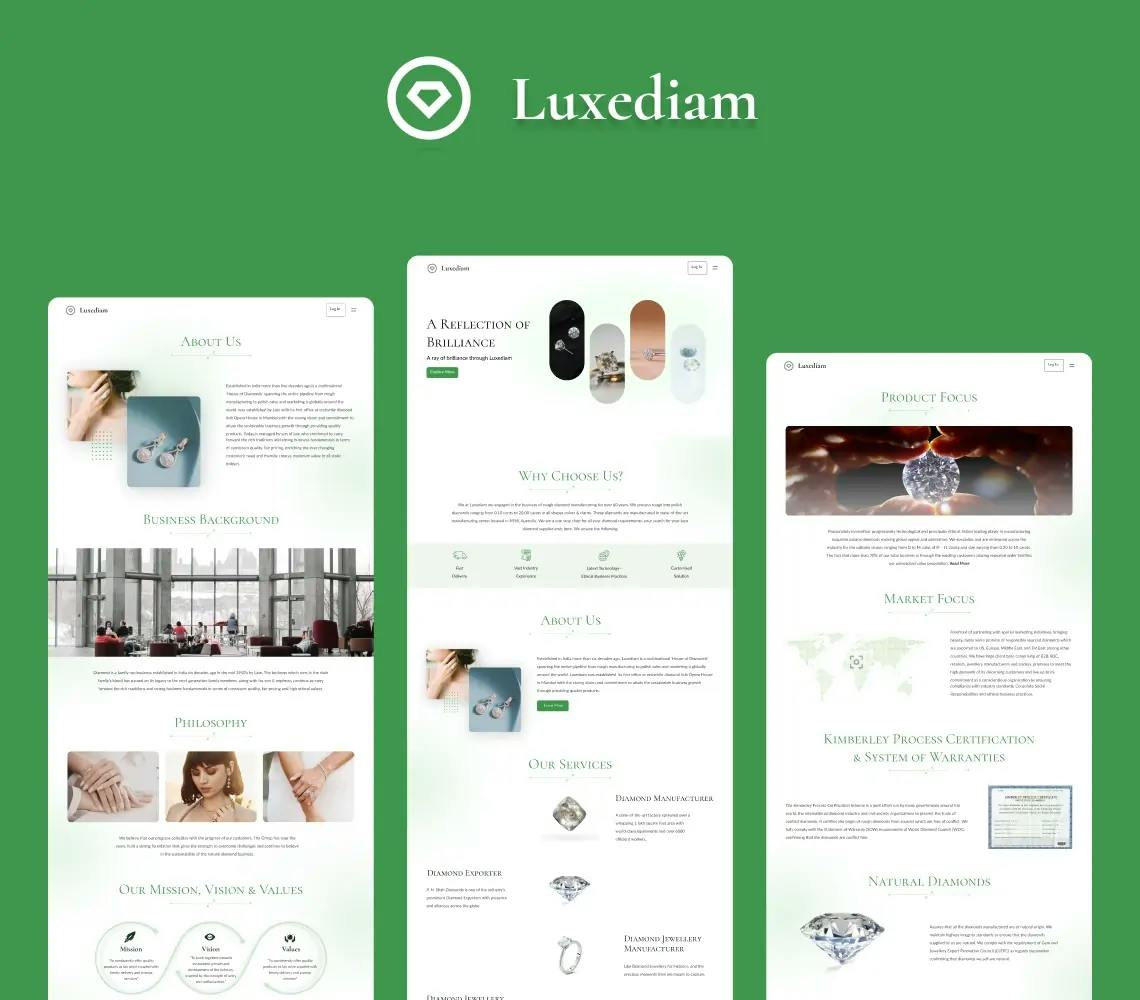
Diamond Website Development
Explore the journey from concept to success in online diamonds Jewellery selling through our case study on website development.
Key Outcomes