




10 Best Real Estate Apps of 2026: What Works and How to Build One Like It
This blog explores the 10 best real estate apps of 2026 and what makes them successful across buying, rentals, commercial, and agent platforms. You’ll discover the key features and business models behind leaders like Zillow and Redfin. If you’re planning to build a real estate app, this guide helps you choose the right niche and compete strategically.

Summarise with AI
Short on time? Let AI do the work. Get the key points.


Quick Answer: What Are the Best Real Estate Apps?
The best real estate apps in 2026 are Zillow, Realtor.com, Redfin, Trulia, Apartments.com, LoopNet, Xome, Homes.com, Homesnap, and Propertybase. Each serves a different segment – from home buying and renting to commercial real estate and agent productivity. The app you should build depends on which segment you want to serve.
Here’s the thing about real estate apps. The market looks crowded. Zillow has over 200 million monthly users. Redfin raised hundreds of millions in funding. Apartments.com is backed by CoStar.
But none of that should stop you from building one.
Because the best real estate apps in 2026 aren’t competing on the same ground anymore. They’re competing on niche, features, speed, and user experience. And that’s exactly where a custom-built platform has an edge.
I’ve broken down 10 of the top real estate mobile apps – what they do well, what features drive their success, and what a developer or startup founder should take away from each one. If you’re thinking about building a real estate app, this is your research starting point.
Table of Contents
What Makes a Real Estate App Successful?
Before we get into the list, it’s worth knowing what separates the apps people actually use from the ones nobody downloads twice.
The top real estate apps share a few things in common:
- Fast, accurate property search with smart filters
- High-quality photos, videos, and virtual tours
- Real-time listing updates – stale data kills trust
- Mortgage calculators and neighborhood data in one place
- Clean mobile-first design that works on any device
- Easy agent contact or direct transaction tools
For any business partnering with a real estate app development company, these features are not optional; they are foundational. A professional development team focuses on data accuracy, performance optimization, and seamless user experience rather than just adding surface-level features.
Keep these in mind as we go through the list. They come up again and again.
10 Best Real Estate Apps of 2026
Let’s now talk about each real estate application that made a great buzz in 2026 and before, and therefore, they are on our list here.
1. Zillow – The Market Leader
Zillow is the benchmark. Over 200 million monthly users, 135 million property listings, and a Zestimate algorithm that’s become the default reference point for home valuations in the US.
What makes it work: Zillow owns the user’s entire journey. You can search listings, save favorites, get mortgage pre-approval, schedule tours, and connect with agents – all without leaving the app. That end-to-end experience is hard to replicate but sets the standard.
What to build from this: If you’re building a buying/selling app, Zillow proves that the winning formula is depth of listings plus a clean user experience. The data is everything. Your MLS integrations and listing quality matter more than your feature count.
Best for: Home buyers and sellers in the US market.
2. Realtor.com – The MLS Powerhouse
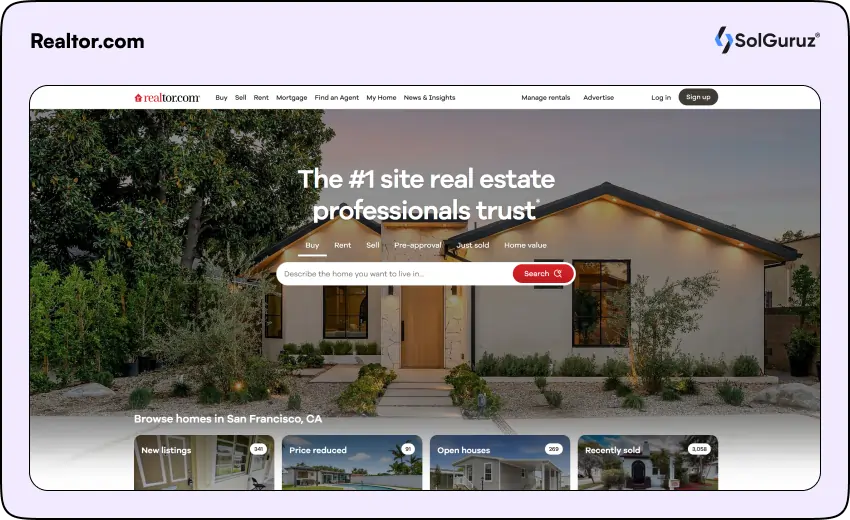
Realtor.com pulls directly from the National Association of Realtors database, which means its listings are among the most accurate and up-to-date you’ll find anywhere. For renters and buyers who are tired of seeing sold properties still listed as available, this matters a lot.
What makes it work: Trust and accuracy. The app shows when a listing was last updated, includes noise surveys for neighborhoods, and provides school data that parents actually want. It’s not flashier than Zillow – it’s just more reliable.
What to build from this: Data accuracy is a competitive advantage. If you’re building a real estate app and can ensure cleaner, faster-updating data than your competitors, users will come back to you over the bigger platforms.
Best for: Renters and buyers who prioritize listing accuracy.
3. Redfin – The Agent-Hybrid Model
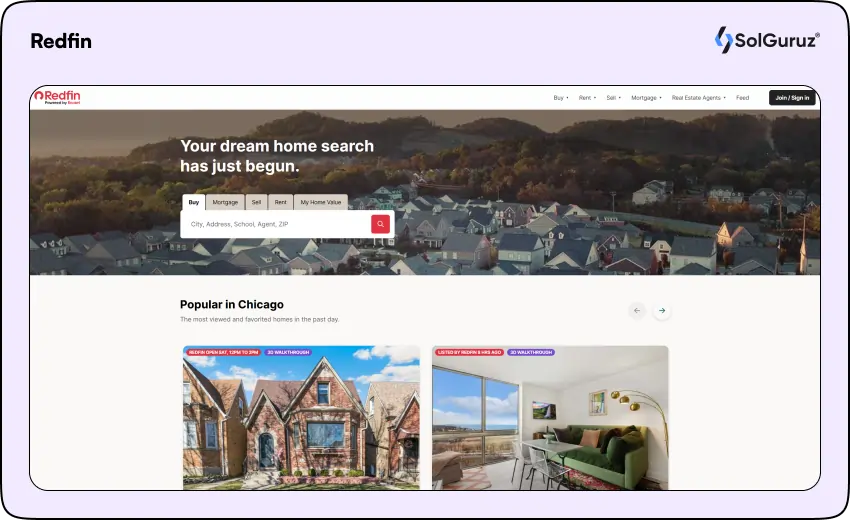
Redfin is interesting because it’s both a real estate app and a brokerage. Users can search listings and then book a Redfin agent who charges a lower commission than traditional brokers. That business model lives inside the app.
What makes it work: The valuation tool. Redfin’s estimated home values are widely considered more accurate than Zillow’s Zestimate because they use a wider range of data points – comparable sales, local assessments, and pricing trends over time.
What to build from this: Your app doesn’t have to be just a marketplace. Redfin proves you can build a full-service real estate business inside a mobile platform. If you’re building for agents or brokerages, consider how your app can make them more efficient – not just visible.
Best for: Cost-conscious buyers who want agent support but lower fees.
4. Trulia – The Neighborhood Intelligence App
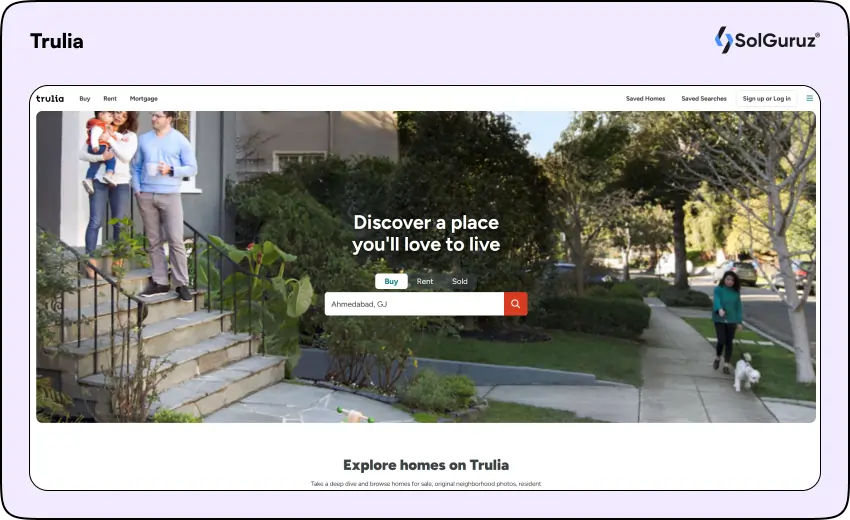
Trulia’s strongest feature isn’t property search. It’s neighborhood data. The app shows you crime rates, school ratings, commute times, what neighbors say about parking and walkability, and local demographics – all layered onto the property search experience.
What makes it work: Context. Buying a home isn’t just about the property. Trulia figured out early that buyers care as much about the street as the house. The draw-on-map search feature (where you literally draw the area you want to search on the map) is also genuinely useful.
What to build from this: If you’re building a real estate app for a specific city or region, hyper-local data is your edge over national platforms. Neighborhood scoring, safety data, and commute integrations can make your platform the go-to for your market.
Best for: Home buyers who prioritize location and neighborhood research.
5. Apartments.com – The Rental Specialist
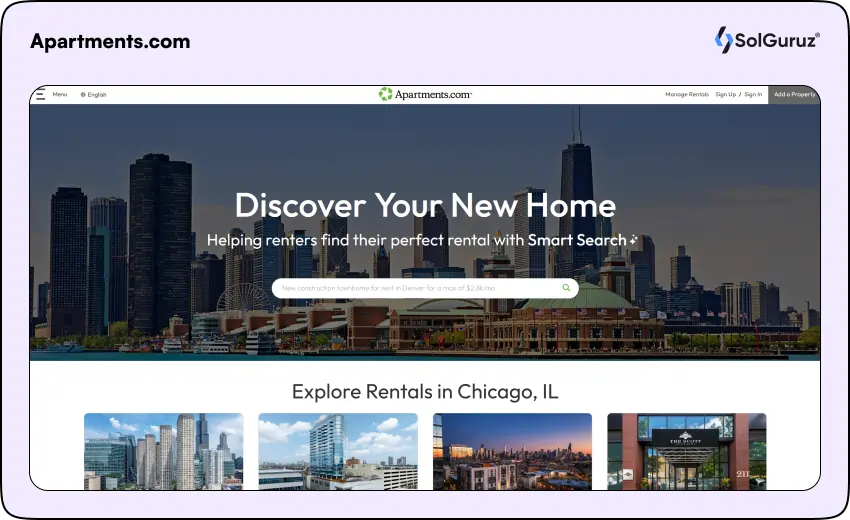
Apartments.com is the largest rental-specific platform in the US, with over 1.1 million listings covering apartments, townhomes, condos, and single-family rentals. The CoStar Group’s research team provides high-quality photos and verified data for each listing.
What makes it work: The ‘Apply Now’ button. Renters can submit applications directly through the app, which removes friction from the rental process. For landlords, this means more qualified leads with less back-and-forth.
What to build from this: For rental apps specifically, reducing the friction between ‘I’m interested’ and ‘here’s my application’ is the key conversion metric. In-app applications, digital lease signing, and tenant screening integrations are the features worth prioritizing.
Best for: Renters looking for apartments and landlords managing listings.
6. LoopNet – Commercial Real Estate’s Dominant Platform
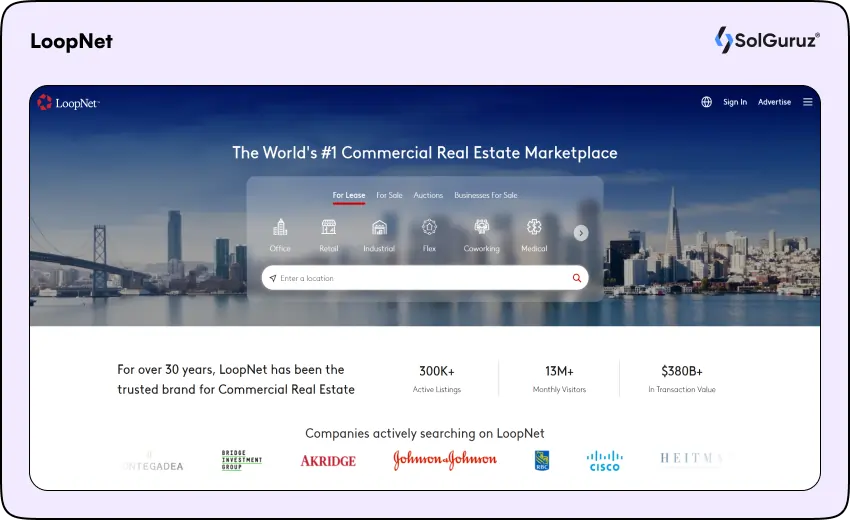
Commercial real estate has different needs than residential, and LoopNet owns that space in the US. It lists office buildings, retail spaces, industrial properties, and investment opportunities – with detailed financial data that residential apps don’t offer.
What makes it work: Investment data. LoopNet listings include cap rates, NOI figures, lease terms, and broker investment highlights. This is information that commercial buyers and investors need before they pick up a phone. Putting it in the listing reduces the time to first contact significantly.
What to build from this: Commercial real estate is an underserved market in most countries outside the US. If you’re thinking about regional expansion or a B2B real estate platform, the LoopNet model – detailed financial data + search + broker connections – is a strong template.
Best for: Commercial property buyers, sellers, and investors.
7. Xome – The Auction-First Platform
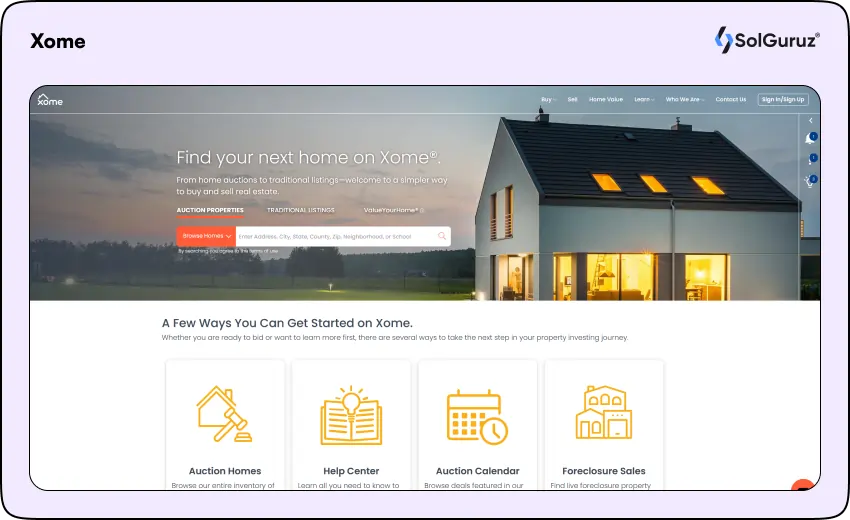
Xome specializes in foreclosures, short sales, and bank-owned properties. Its auction functionality is built directly into the app, which means users can bid on properties in real time – including getting outbid notifications via push.
What makes it work: The auction model creates urgency and engagement that traditional listing apps don’t have. Users come back repeatedly to track bids, which drives retention metrics that most real estate apps struggle with.
What to build from this: Gamification and urgency mechanics work in real estate. If your target market includes investors or bargain hunters, an auction or bidding feature can significantly increase the stickiness of your platform.
Best for: Investors and buyers looking for discounted properties.
8. Homes.com – The Up-and-Coming Challenger
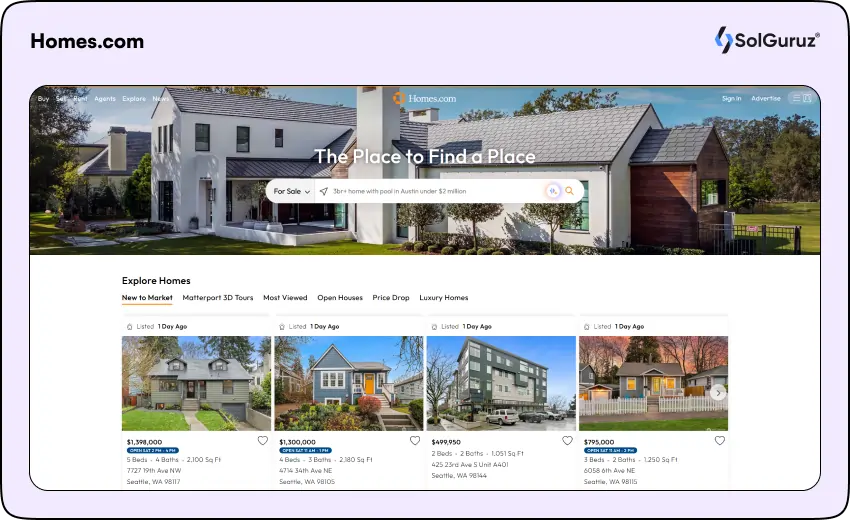
Homes.com is CoStar’s answer to Zillow, and it’s growing fast. The platform focuses on connecting buyers directly with listing agents rather than selling leads to third parties, which agents prefer. The app includes detailed property history, neighborhood reports, and school zone overlays.
What makes it work: The agent relationship model. Homes.com positions itself as the platform that works for agents, not against them. That’s a smart positioning play in a market where Zillow’s Flex program has frustrated many brokerages.
What to build from this: Your business model shapes your product. If you’re building a platform that needs agent adoption, consider how the app serves agents’ business goals – not just buyers’ search needs. Agent tools, lead management, and showing schedulers built in can drive supply-side adoption.
Best for: Buyers who want direct agent connections without lead-selling middlemen.
9. Homesnap – Built for Real Estate Agents
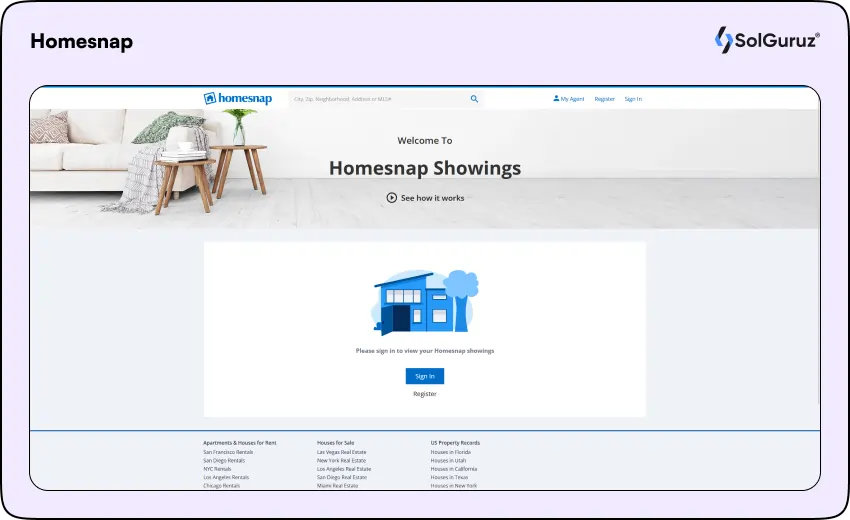
Homesnap is primarily an agent tool, though consumers can use it too. Agents use it for real-time MLS access on mobile, client sharing, and collaboration. The camera feature lets you point your phone at any house and pull up its listing data instantly.
What makes it work: Agent workflow. Homesnap is designed around how agents actually work – they’re mobile, they’re showing homes, they need quick information access. The UI reflects that. It’s not trying to be Zillow.
What to build from this: Agent-facing real estate apps are an underexplored segment. If your target users are real estate professionals rather than consumers, your design priorities change completely. Speed, MLS connectivity, and client communication tools matter more than consumer-facing search filters.
Best for: Real estate agents who need mobile MLS access and client tools.
10. Propertybase – The CRM-First Platform
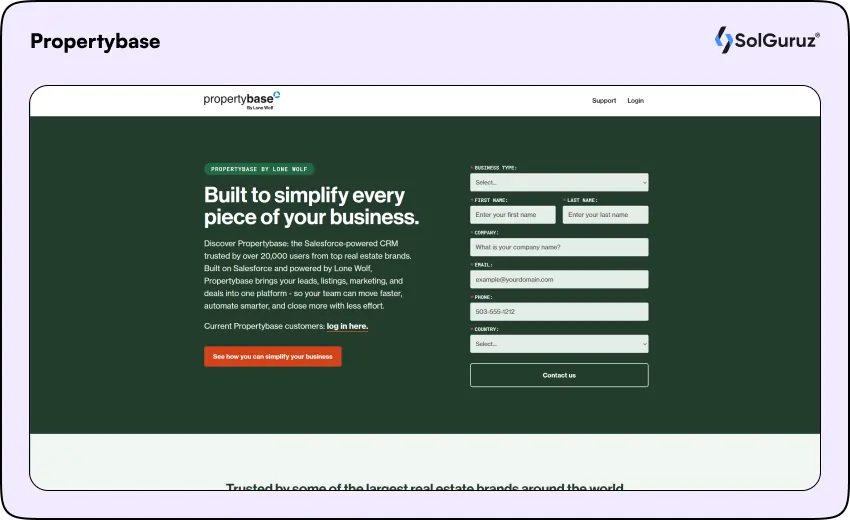
Propertybase is a real estate CRM that also functions as a listing and marketing platform. It’s built for brokerages and teams who need to manage leads, track client interactions, automate follow-ups, and run marketing campaigns – all from one place.
What makes it work: It solves the problem agents actually lose sleep over: lead management and follow-up. Most real estate apps help users find properties. Propertybase helps agents convert the leads that those apps generate.
What to build from this: Real estate CRM is a legitimate product category on its own. If you’re building B2B, a CRM purpose-built for real estate – with MLS integration, lead scoring, and automated outreach – is a viable and underserved market in many regions.
Best for: Real estate brokerages and teams managing large lead volumes.
What Type of Real Estate App Should You Build?
Based on the 10 apps above, the real estate app market breaks into five clear segments. Each has different technical requirements, different business models, and different user expectations.
| App Type | Who It Serves | Key Features Needed | Examples |
| Buying/Selling | Home buyers, sellers, agents | MLS integration, valuation tools, mortgage calculator | Zillow, Redfin, Homes.com |
| Rental | Renters, landlords, property managers | In-app applications, payment, and tenant screening | Apartments.com |
| Commercial | Investors, business owners, brokers | Financial data, lease terms, and map tools | LoopNet |
| Auction/Investment | Investors, bargain hunters | Bidding engine, push alerts, and financial modeling | Xome |
| Agent CRM | Real estate brokerages, teams | Lead management, MLS access, automation | Propertybase, Homesnap |
How to Build a Real Estate App: Where to Start
Once you know which type of app you’re building, the development process follows a clear path. Here’s how we approach it at SolGuruz:
1. Define your user segments and core use case. Who uses the app? Buyers, renters, agents, or investors? The answer changes everything from your MLS strategy to your UX design.
2. Map out your listing data source. MLS integrations, IDX feeds, or proprietary listings? Data quality is your product’s foundation.
3. Choose your core feature set for the MVP. Don’t try to build Zillow in year one. Pick the 3-5 features your target users can’t live without and build those first.
4. Build for mobile-first, then web. 76% of real estate searches happen on mobile. Your product experience lives or dies on the phone screen.
5. Plan your monetization model before you start building. Lead generation, subscription, commission, or advertising? This shapes which features you prioritize from day one.
Want a full feature breakdown?
Read our guide: Real Estate Mobile App Features – What to Build and Why, and How Much Does It Cost to Build a Real Estate App?
Wrapping Up
The best real estate apps in 2026 aren’t successful because they have the most features. They’re successful because they picked a clear user, solved a real problem, and built an experience people trust.
Zillow owns Home Search. LoopNet owns commercial. Apartments.com owns rentals. Propertybase owns the agent workflow. There’s still room in the market – especially if you’re targeting a specific city, a specific property type, or a specific user role that the big platforms underserve.
If you’re ready to build, the next step is figuring out what type of platform fits your business goal – and what a realistic budget and timeline looks like
FAQs
1. What is the most popular real estate app in the US?
Zillow is the most widely used real estate app in the US, with over 200 million monthly users. It leads in listing volume, brand recognition, and user engagement.
2. Can I build a real estate app like Zillow?
Yes, though the scope depends on your target market and feature set. You don't need to match Zillow's scale to build something successful. Most real estate platforms that succeed today do it by serving a specific niche better than the big players do.
3. How long does it take to build a real estate mobile app?
A basic MVP with property search, listings, and agent contact typically takes 12-20 weeks. A full-featured platform with MLS integration, mortgage tools, and in-app communication takes 6-12 months, depending on complexity.
4. What is the best real estate app for agents?
Homesnap is designed specifically for agents, giving them mobile MLS access, client-sharing tools, and property lookup via camera. Propertybase is the better choice for brokerages and teams that need CRM and lead management built in.

Satendra Bhadoria is the Co-Founder and Chief Operating Officer at SolGuruz, bringing over a decade of experience in large-scale operations and delivery management within the global BPO and services industry. Before co-founding SolGuruz, he managed large delivery teams supporting clients across the United States, Europe, and Australia. At SolGuruz, Satendra oversees delivery governance, quality frameworks, hiring and staffing models, offshore development center (ODC) setups, and client engagement practices. His day-to-day work revolves around execution discipline, process maturity, delivery reliability, and building team structures that scale effectively for both startups and enterprises. He is also actively engaged in domain-driven delivery initiatives, including real estate technology platforms, property workflow systems, and operations-focused digital solutions areas, where process clarity and dependable execution are critical for long-term growth. He also contributes as a core member of the Uttar Bharatiya Business Network (UBBN), engaging with business leaders and entrepreneurs on operational practices, collaboration models, software solutions, and sustainable growth strategies. This involvement keeps his perspective grounded in real business operations beyond software delivery.


From Insight to Action
Insights define intent. Execution defines results. Understand how we deliver with structure, collaborate through partnerships, and how our guidebooks help leaders make better product decisions.
 How we Work
Want to Build a Real Estate App?
We've built real estate platforms for clients across the US, UK, and India. Let's talk about your idea.

Strict NDA

Trusted by Startups & Enterprises Worldwide

Flexible Engagement Models

1 Week Risk-Free Trial
Real-World Examples of Our Expertise
Explore how real-world challenges were turned into opportunities with our success stories and case studies, showcasing impactful solutions and measurable results.
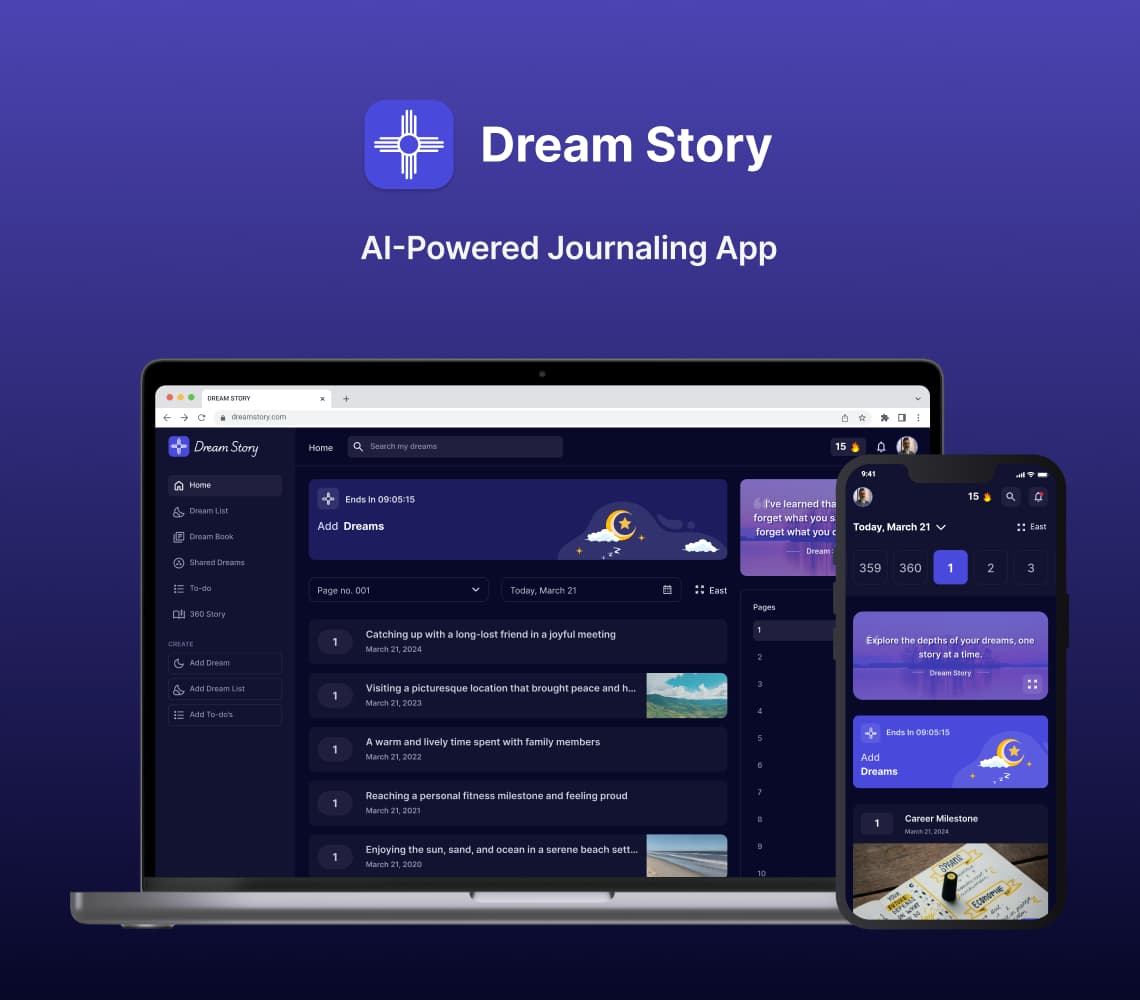
AI Journaling App Development Solution
Discover with us how we built Dream Story, an AI-powered journaling application that helps manage daily notes by capturing your thoughts and emotions. A one-stop solution for those who love noting down daily summaries!
Generative AI
Prompt Engineering
AI Integration
Mobile App
Flutter
Android
iOS
Web App
Desktop
Website
UI/UX
Backend
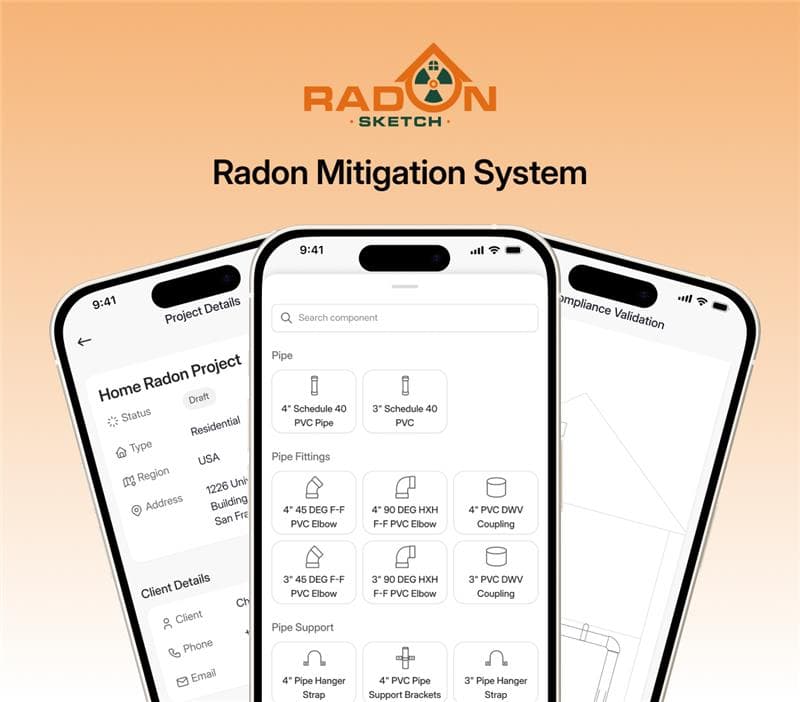
Radon Mitigation System for Mitigators And Enterprise
SolGuruz designed and developed RadonSketch, a smart radon mitigation system solution for mitigators and enterprises. It modernizes outdated workflows with automation, guided compliance, and a powerful visual builder - built end-to-end by our expert team.
Real Estate
UI/UX
MVP Development
Mobile App
Flutter
Android
iOS
Backend
Launch & Maintenance
Digital Transformation
Digital Marketing