

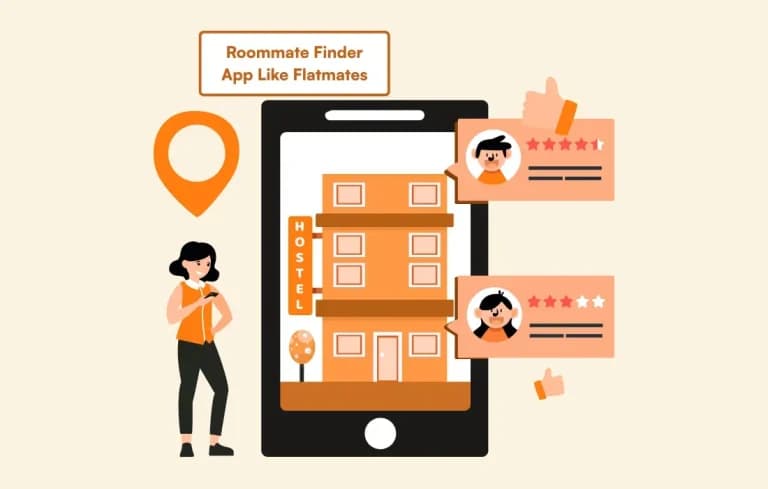
How to Build a Roommate Finder App Like Flatmates?
Thinking of creating your own roommate finder app? Learn how successful platforms like Flatmates work and what features matter. Get insights on the cost + how to plan your development roadmap to build smarter, faster, and within budget.

Summarise with AI


Rents in major cities have jumped 15–30% in the last two years, and nearly 1 in 3 urban millennials now prefer co-living to reduce costs and avoid living alone.
Add remote work + frequent relocation to the mix, and the demand for smart, safe roommate matching has exploded.
Platforms like Flatmates, which clocks over a million monthly searches and is one of the most trusted co-living marketplaces, prove one thing.
This market is not niche anymore. It’s mainstream.
And if you’re a founder thinking about building your own roommate-finder app, there has never been a better time.
Demand is high, supply quality is low, and users actively want platforms that help them find compatible, not just available, roommates.
And if you want to develop an app like Flatmates, this blog is best for you.
Table of Contents
Is There a Need for a Roommate Finder App Like Flatmates?
Absolutely. There is a crazy demand for roommate finder apps.
And this demand is not just among students.
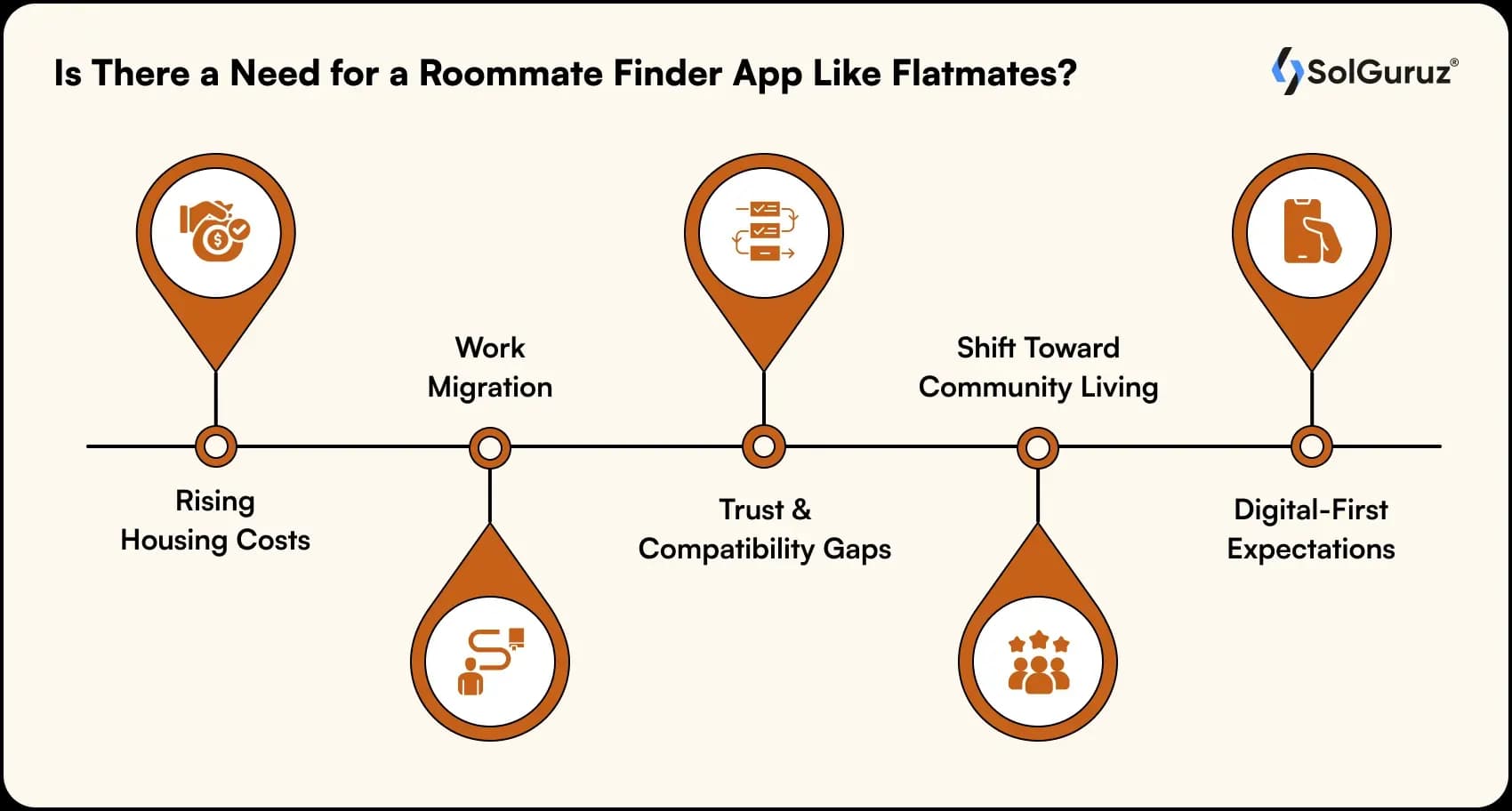
Young professionals and working nomads are opting for shared living.
Why? Because it is simply a smarter choice.
But here is the driving factor:
1. Rising Housing Costs
Urban housing has become costly. And this effect is worldwide.
Splitting rent and utilities is no longer just about saving money. It’s about maintaining a better standard of living without financial strain.
2. Work Migration
People are relocating more frequently. Majorly, it is for jobs and education.
Why? Because work setups have made it a necessity to move across cities or even countries.
This creates a constant demand for short-term and verified living arrangements.
3. Trust and Compatibility Gaps
Traditional listing platforms and Facebook groups often fail to provide trust or personality-based matching.
Modern users want more than just a room. They want compatibility, safety, and transparency.
4. Shift Toward Community Living
For younger generations, living with like-minded people is a preference.
And to cater to that need. There is a significant increase in options for co-living spaces.
This shows a social shift toward community and connection.
5. Digital-First Expectations
Gen Z and millennials expect everything to be app-based. That includes dating apps, food delivery apps, and of course, a roommate-finding app.
The convenience of verified listings, AI-based matches, and secure chat systems makes platforms like Flatmates an obvious choice over outdated classifieds.
Must-Have Features in an App Like Flatmates
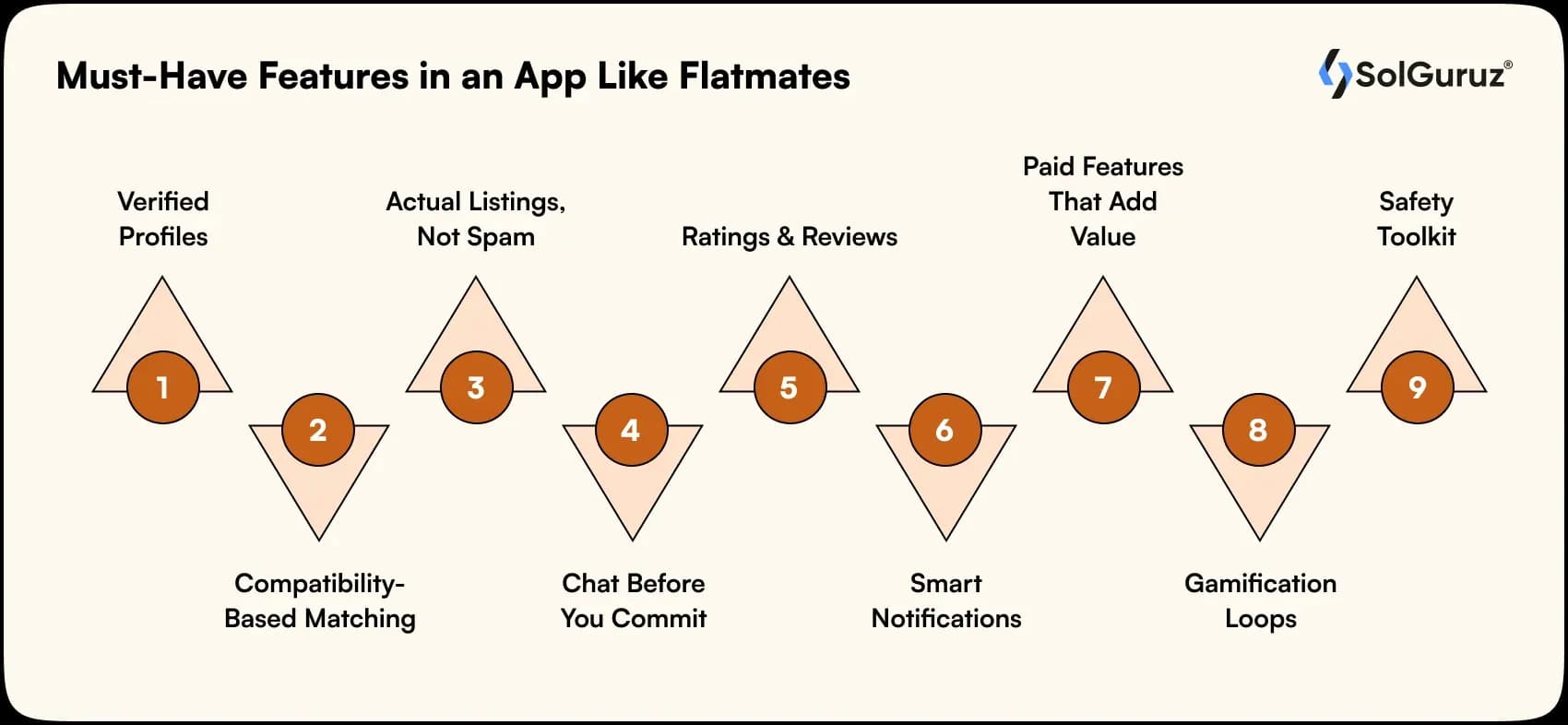
A roommate finder app isn’t about listings. It is all about trust.
If people don’t feel safe sharing their space with a stranger, they’ll never use your app twice. That’s why the real goal is to design features that solve the trust problem, not just replicate Flatmates.
Here’s what actually matters:
1. Verified Profiles (The Foundation of Trust)
No one wants to live with an unverified stranger.
Your app should verify user identities through phone, email, or government ID. And clearly show verified badges. This instantly filters out fake profiles and makes users feel safe interacting.
2. Compatibility-Based Matching
People don’t just want a roommate. They want the right roommate.
Go beyond filters. Use logic that matches users based on lifestyle traits, habits, and budget compatibility. Even simple questions like “Are you an early riser?” or “Do you work from home?” can improve matches dramatically.
For this, you can add lifestyle compatibility tags that help users decide. For example,
- Pet friendly
- Vegetarian/vegan
- Introvert/extrovert
- Smoking/drinking rules
Also, if you pitch in a match score which is AI-driven, it will be an amazing add-on.
3. Actual Listings, Not Spam
Most roommate apps die because of spammy or outdated listings.
Build a system that automatically hides inactive posts and nudges users to update availability.
Also, verified photos + clear location info make listings more trustworthy.
4. Chat Before You Commit
Once two users match, they should be able to chat safely within the app. No phone numbers needed.
In-app messaging keeps communication secure and lets you moderate toxic behavior if needed. Add quick replies or “conversation starters” to reduce friction.
5. Ratings & Reviews
After move-in, let users rate their roommates or landlords. It’s simple social proof. But it builds huge trust. Think of it as Airbnb-style credibility for shared living.
6. Smart Notifications
Notify users about relevant matches, room openings, or new messages. But keep it relevant.
Overdoing notifications kills engagement. Use them strategically to nudge action, not annoy.
7. Paid Features That Add Value
A “pay-to-see” model won’t work here.
Instead, offer premium plans that make sense. Like top placement for listings, advanced filters, or verified-only access. The monetization should improve the user experience, not gatekeep it.
8. Gamification Loops (Make Trust Feel Rewarding)
Small gamified wins can improve user behavior and boost profile completion rates. Examples:
- Profile Score (shows how complete a user’s profile is)
- Badges (verified badge, responsive user, great host, etc.)
- Streaks (daily engagement, listing updates, replies within 24 hrs)
Users love visible progress, and it improves platform quality overall.
9. Safety Toolkit (Critical for Trust & Brand Reputation)
You can borrow ideas from dating apps + Airbnb here:
- SOS / Emergency Share Location
- Background checks for premium users
- Report user + block user options
- Fraud detection for fake listings
The more users trust your app’s safety measures, the longer they’ll stay.
Detailed Process to Build a Roommate Finder App
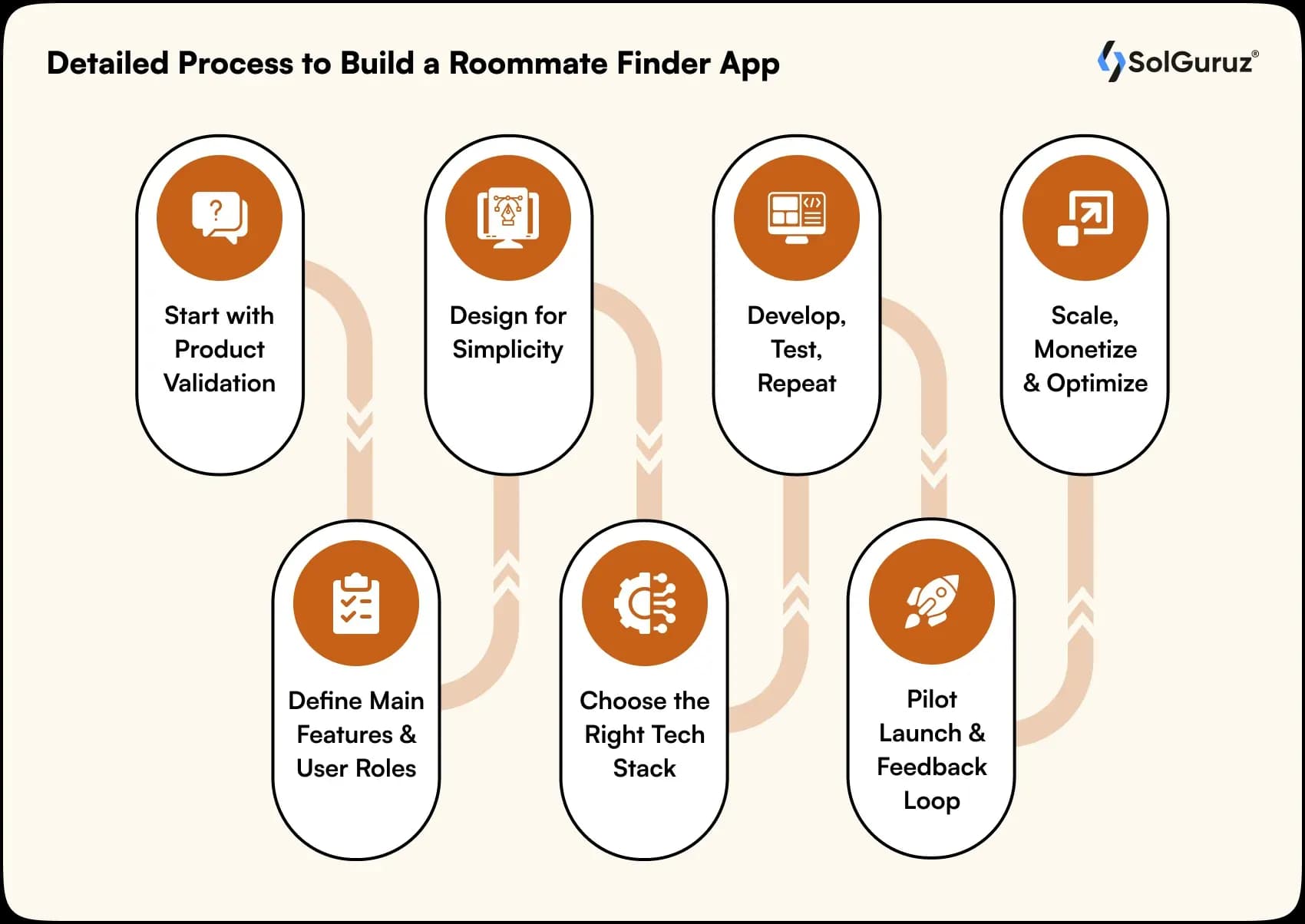
Building a roommate finder app like Flatmates isn’t about throwing features together.
It’s about structuring the entire product journey. All this in a way that avoids the usual pitfalls like weak UX or cluttered architecture.
Here’s how to do it right:
1. Start with Product Validation
Before writing a single line of code, validate your concept.
Talk to your target users and figure out what’s missing in current apps.
Do they struggle with spammy listings? Poor roommate matches? Slow responses?
Your findings here will shape the core product experience later.
2. Define Main Features & User Roles
Identify the main actors in your app:
- Room seekers
- Room owners
- Admins
Then, you need to prioritize the features that solve their pain points. Don’t overbuild.
At the MVP stage, focus on profile creation, listing, search + filter, chat, and verification.
Everything else can come later once you have got enough traction.
3. Design for Simplicity
The UX should feel effortless.
Users should find a listing or roommate match within 3–4 taps, not 12.
Keep navigation simple and actions clear. This is what separates apps that survive from those that get deleted on day two.
Keep it human. Design around comfort and trust. You can use real photos, friendly copy, and strong identity cues (verification, trust icons, reviews).
4. Choose the Right Tech Stack
For MVPs, Flutter or React Native works best. You get iOS and Android apps with a single codebase.
Backend? Node.js or Django, paired with Firebase or AWS for hosting and authentication.
For location and maps, integrate Google Maps API.
And if you’re planning to add AI-based matching later, start capturing behavioral data early.
Scalability tip: Structure your backend for modular updates. This helps when you want to add features later.
5. Develop, Test, Repeat
Break development into agile sprints.
- Sprint 1: Auth + Profiles
- Sprint 2: Listings + Search
- Sprint 3: Chat + Notifications
- Sprint 4: Verification + Quality Assessment
Release early versions internally. Then collect feedback and improvise.
The first launch doesn’t need to be perfect; it needs to be usable.
6. Pilot Launch & Feedback Loop
Launch in a small region or community first. Kinda like one city or a university cluster.
Monitor engagement:
- How long do users stay?
- How many matches convert?
- What do they complain about most?
Use this data to refine onboarding and feature flow.
7. Scale, Monetize & Optimize
Once engagement is solid, start rolling out monetization. Offer verified listings or “featured roommate” plans.
At this stage, focus on stability, SEO, app store optimization, and growth marketing.
From here on, the product evolves based on user data instead of assumptions.
How Much Does It Cost to Build an App Like Flatmates?
I will be practical here. The cost depends on what exactly you’re building.
A simple roommate finder MVP with basic search and chat isn’t the same as a platform with AI matching, verification layers, and subscription logic.
But here’s what you can expect if you’re building something on the lines of Flatmates:
|
Version |
What’s Included |
Approx. Cost |
Timeline |
| MVP | Core features: user profiles, listings, filters, chat, and verification | $20K – $35K | 2–3 months |
| Growth Stage App | Adds reviews, notifications, an admin panel, and stronger matching logic | $40K – $65K | 3–4 months |
| Full-Scale Product | Includes AI roommate matching, payments, premium listings, analytics, and scalability setup | $70K – $100K+ | 5–6 months |
Most startups begin with the MVP. They test traction, raise early feedback, and scale later with real usage data.
That approach saves time, money, and plenty of rework.
We Can Help You Build an App Like Flatmates
If you have made it this far, you probably already see the opportunity.
The roommate finder market ain’t saturated.
It is quite under-evolved.
That is why a smart build makes all the difference.
At SolGuruz, we have helped startups and real estate businesses design and develop mobile apps.
Let’s talk about your idea and see how we can bring your roommate finder app to life.
FAQs
1. How does a roommate finder app actually work?
It’s basically a two-sided marketplace. One side lists rooms, the other looks for them. The app handles matching, messaging, and verification in between. What separates a good one from the rest is how well it handles trust. Verified users and active listings make meeting strangers feel safe.
2. How long does it really take to build something like Flatmates?
A small MVP with core features can go live in 10–12 weeks. A fully loaded version with reviews, premium plans, analytics, and AI matching takes around 5–6 months. The difference isn’t time. It’s how much you try to perfect things before you test them.
3. What should I absolutely get right in my first version?
Two things: trust and usability. If your onboarding feels confusing or your verification looks shady, users won’t even complete signup. Keep the design frictionless and the listings clean.
4. How do these apps make money (without annoying users)?
Monetize the serious intent. Offer free basic access, but charge for verified listings, premium visibility, or early access to top matches. You can also integrate partnerships with co-living brands or local agents. If done tastefully, it adds real value.
5. Should I build an MVP or go all in from day one?
Always start to lean. An MVP gets you feedback that no pitch deck ever will. If users don’t like your flow, your “perfect” premium plan won’t matter. Launch small, learn fast, scale what works.

Written by
Satendra Bhadoria
Satendra Bhadoria is the Co-Founder and Chief Operating Officer at SolGuruz, bringing over a decade of experience in large-scale operations and delivery management within the global BPO and services industry. Before co-founding SolGuruz, he managed large delivery teams supporting clients across the United States, Europe, and Australia. At SolGuruz, Satendra oversees delivery governance, quality frameworks, hiring and staffing models, offshore development center (ODC) setups, and client engagement practices. His day-to-day work revolves around execution discipline, process maturity, delivery reliability, and building team structures that scale effectively for both startups and enterprises. He is also actively engaged in domain-driven delivery initiatives, including real estate technology platforms, property workflow systems, and operations-focused digital solutions areas, where process clarity and dependable execution are critical for long-term growth. He also contributes as a core member of the Uttar Bharatiya Business Network (UBBN), engaging with business leaders and entrepreneurs on operational practices, collaboration models, software solutions, and sustainable growth strategies. This involvement keeps his perspective grounded in real business operations beyond software delivery.


From Insight to Action
Insights define intent. Execution defines results. Understand how we deliver with structure, collaborate through partnerships, and how our guidebooks help leaders make better product decisions.
 How we Work
Build an App Like Flatmates
We’ll help you plan features and build a gamified UX that drives daily engagement.

Strict NDA

Trusted by Startups & Enterprises Worldwide

Flexible Engagement Models

1 Week Risk-Free Trial