




Offshore Mobile App Development Guide: Cost, Risks & Best Practices [2026]
This guide breaks down offshore mobile app development for 2026 – covering real costs, hiring models, common risks, and practical best practices. Whether you are a startup or an established business, use this to plan your next offshore project with confidence.

Summarise with AI


Key Takeaway
- Offshore mobile app development can reduce costs by 60–75% compared to hiring in the United States, where hourly rates range from $120–$200, while top offshore destinations like India ($25–$50/hour), Eastern Europe ($40–$70/hour), and Southeast Asia ($20–$40/hour) deliver comparable technical expertise.
- India remains the most popular offshore app development country in 2026, producing over 1.5 million engineering graduates annually and offering deep expertise in iOS, Android, Flutter, React Native, Swift, and Kotlin, making it the first choice for startups and enterprises in the US, UK, Australia, and Europe.
- Successful offshore app development depends on risk management, not location. Companies that define scope early, use milestone-based delivery, protect IP with NDAs, and work with experienced offshore app development companies consistently achieve faster time-to-market (20–30%) and higher long-term product stability.
Your competitor just launched a mobile app in four months. It cost them roughly 60% of what your local agency quoted you. And the app works great.
How did they pull it off? Offshore mobile app development.
More companies are building apps with offshore teams today than ever before. And it is not just about saving money anymore. The right offshore partner brings speed, specialized talent, and a development process that matches the pace of modern product cycles.
But here is the thing – offshore app development is not without its problems. Communication gaps, timezone friction, quality concerns, and intellectual property risks are all real. Ignoring them leads to wasted budgets and missed deadlines.
This guide covers everything. We walk through what offshore mobile app development actually looks like in 2026, how much it really costs, the risks you should plan for, and the best practices that separate successful projects from failed ones.
Let us get into it.
Table of Contents
What is Offshore Mobile App Development?
Offshore mobile app development means hiring a software development team located in a different country to design, build, and maintain your mobile application. The team works remotely, usually from a region with lower labor costs, and collaborates with you through digital tools.
This is different from nearshore development (teams in nearby countries with similar time zones) and onshore development (teams in your own country). Offshore teams are typically located in regions like South Asia, Eastern Europe, or Southeast Asia.
The core idea is straightforward. You get access to experienced developers at rates that are significantly lower than what you would pay locally, while still getting a product that meets your quality standards.
At SolGuruz, we have delivered over 100 mobile applications for startups and businesses across the US, UK, Australia, and Europe through our offshore development model. We understand the operational side of this process from both ends.
Why Businesses Choose Offshore Mobile App Development in 2026
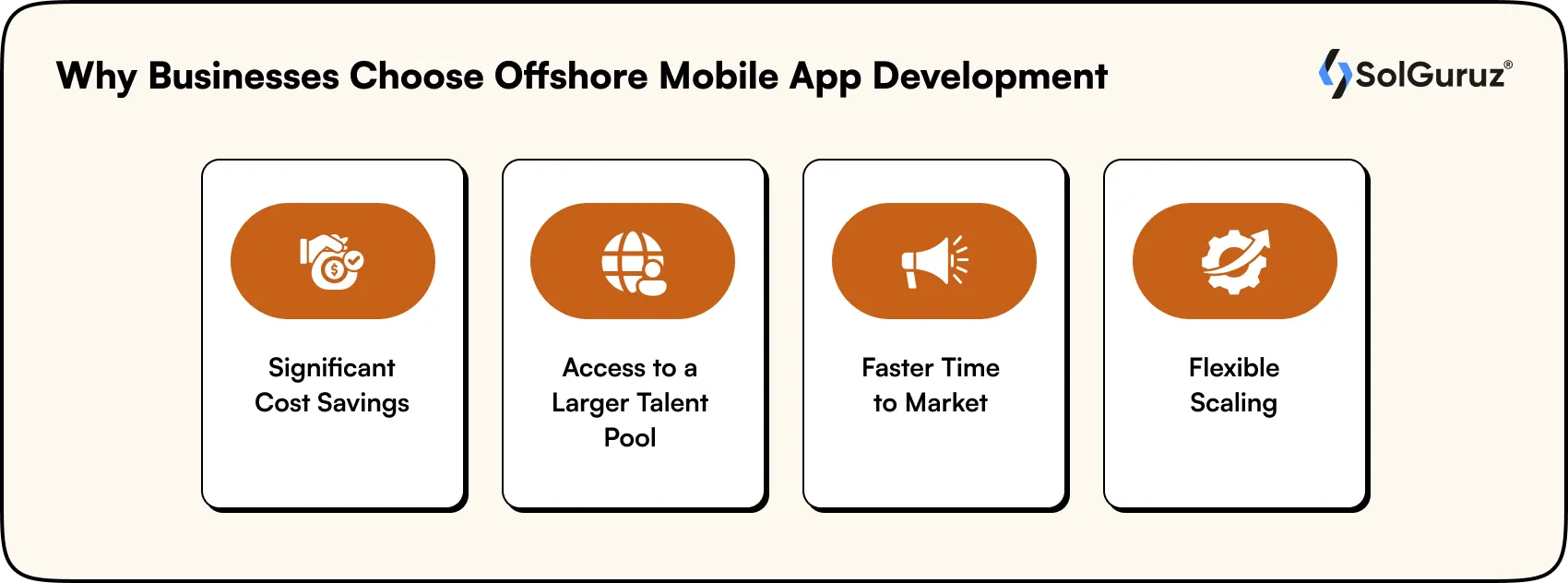
As mobile app development becomes more complex and competitive in 2026, businesses are rethinking how they build and scale their engineering teams. Offshore mobile app development has emerged as a strategic choice not just for cost efficiency but also for speed, flexibility, and access to global expertise.
Significant Cost Savings
The most obvious reason companies go offshore is cost. A senior iOS developer in the US charges $150-$200 per hour. The same skill level in India or Eastern Europe ranges from $25-$60 per hour. That’s a 60-75% reduction in development cost without compromising the technical outcome.
For a mid-sized mobile app that takes 1,200 development hours, you could save anywhere between $80,000 and $150,000 by working with an offshore team.
Access to a Larger Talent Pool
Hiring locally means competing with every other company in your city for the same small group of experienced developers. Offshore development removes that limitation. You get access to millions of skilled engineers worldwide.
Countries like India produce over 1.5 million engineering graduates every year. Many of these professionals specialize in mobile technologies like Flutter, React Native, Swift, and Kotlin.
Faster Time to Market
Offshore teams often work in dedicated sprints, giving your project 100% of their focus. Combined with timezone advantages (your offshore team works while you sleep), you can effectively run a near-continuous development cycle. That can shave weeks off your timeline.
Flexible Scaling
Need to ramp up from 3 developers to 8 for a product launch? An offshore partner can do that within days. Scaling an in-house team takes weeks or months of recruiting, interviewing, and onboarding.
Offshore Mobile App Development: Step-by-Step Process
Here is how a well-run offshore mobile app development project typically unfolds.
- Discovery and Requirement Mapping – You share your vision. The offshore team documents features, user stories, wireframes, and technical requirements.
- Architecture and Design Planning – The team designs the system architecture, database schema, API structure, and UI/UX mockups.
- Development Sprints – Work begins in 2-week sprints. Each sprint delivers a working piece of the app. You review and provide feedback at the end of every sprint.
- Testing and QA – Automated and manual testing runs throughout development. Bugs are logged, prioritized, and fixed within the same sprint when possible.
- Deployment and Launch – The app is deployed to the App Store and/or Google Play. The team handles store listing optimization, beta testing, and final release.
- Post-Launch Support – After launch, the offshore team continues with performance monitoring, bug fixes, feature enhancements, and ongoing maintenance. Many businesses choose to retain or hire mobile app developers on a dedicated basis for long-term support and scalability.
How Much Does Offshore Mobile App Development Cost in 2026?
Let us talk real numbers. The cost of building a mobile app offshore depends on four main factors: app complexity, platform, team location, and engagement model.
Cost by App Complexity
The table below provides a realistic cost estimate based on app complexity using average offshore rates in India.
| App Type | Hours | Offshore Rate (India) | Estimated Cost |
| Simple App (MVP) | 300-500 | $25-$40/hr | $7,500-$20,000 |
| Medium App | 500-1,200 | $30-$50/hr | $15,000-$60,000 |
| Complex App | 1,200-2,500+ | $40-$60/hr | $48,000-$150,000+ |
Complex apps typically include real-time features, third-party integrations, advanced UI/UX, security layers, or scalability requirements.
Cost by Region
Offshore mobile app development rates also vary significantly by region, driven by local talent availability, cost of living, and market maturity. The table below highlighted table compares average hourly rates across popular offshore development destinations.
| Region | Average Hourly Rate |
| India | $25-$50 |
| Eastern Europe (Ukraine, Poland) | $40-$70 |
| Southeast Asia (Vietnam, Philippines) | $20-$40 |
| Latin America (Mexico, Brazil, Argentina) | $35-$65 |
| United States (for comparison) | $120-$200 |
India remains the most cost-effective offshore destination due to its large talent pool, mature IT ecosystem, and strong expertise in mobile technologies such as Flutter, React Native, Swift, and Kotlin.
Common Hidden Offshore Development Costs
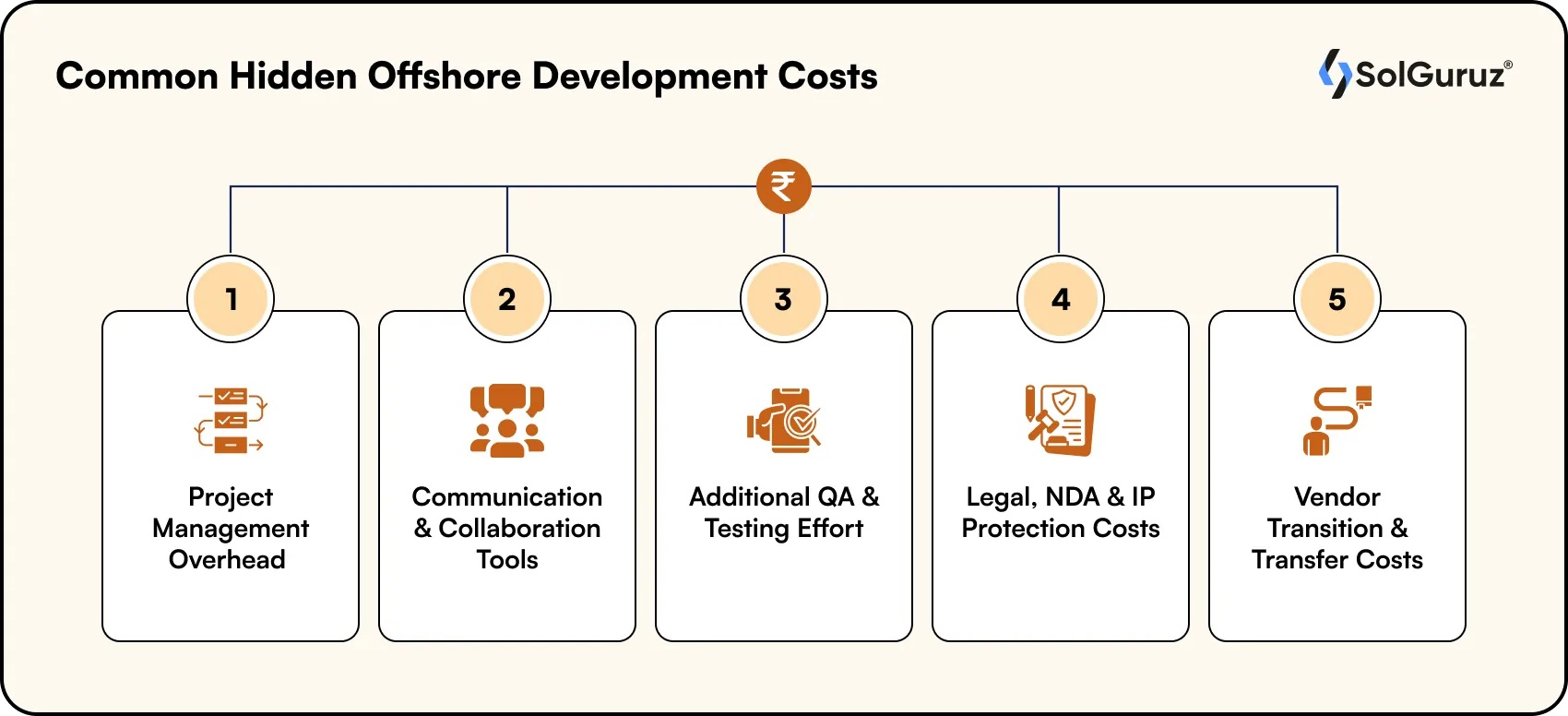
While offshore mobile app development can significantly reduce upfront costs, businesses should plan for potential hidden expenses that can impact the final project budget if not addressed early.
Project Management Overhead
If your offshore development partner does not provide a dedicated project manager, you may incur additional costs for coordination, sprint planning, and delivery oversight.
Communication & Collaboration Tools
Expenses for tools such as Slack, Jira, Confluence, GitHub, and video conferencing licenses are often excluded from initial cost estimates.
Additional QA & Testing Effort
Lack of clearly defined quality benchmarks can lead to extended testing cycles, rework, and higher quality assurance costs later in the development phase.
Legal, NDA & IP Protection Costs
Offshore projects may require legal review for contracts, non-disclosure agreements, and intellectual property protection, especially for cross-border engagements.
Vendor Transition & Knowledge Transfer Costs
Switching offshore vendors mid-project can result in documentation gaps, onboarding delays, and additional development hours to transfer product knowledge.
The most effective way to avoid hidden offshore development costs is to work with a partner that offers transparent pricing, defined SLAs, dedicated project management, and clear ownership of intellectual property from day one.
Popular Engagement Models for Offshore App Development
How you structure your engagement with an offshore team matters just as much as the team itself. Here are the three most common models.
1. Fixed-Price Model
You define the scope, timeline, and deliverables upfront. The offshore partner commits to a fixed cost. This works well for MVPs, small apps, or projects with clearly defined requirements.
Best for: Startups with a tight budget and a well-documented project scope.
2. Time & Material Model
You pay for the actual hours worked. The scope can change as the project evolves. This is the most flexible model and works best for medium to complex apps where requirements shift during development.
Best for: Growing businesses building feature-rich apps with evolving requirements.
3. Dedicated Team Model
You hire a full team (developers, designers, QA, project manager) who work exclusively on your project. They function as an extension of your in-house team. This model is ideal for long-term projects or products that need ongoing development.
Best for: Companies planning continuous product development over 6+ months.
Common Risks in Offshore Mobile App Development (And How to Handle Them)
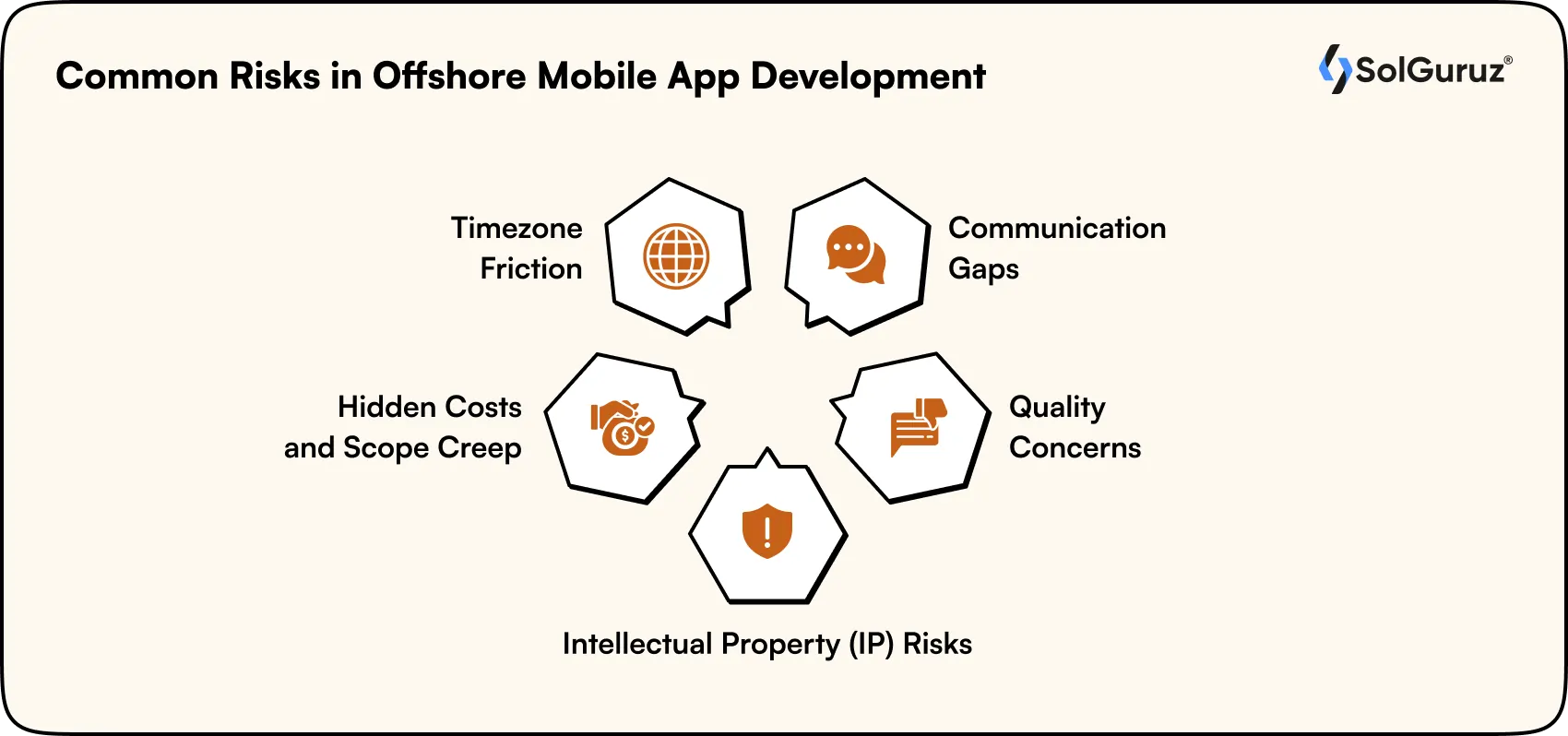
Offshore development has clear benefits, but it also comes with risks. The good news? Every one of these risks is manageable if you plan for them upfront.
1. Communication Gaps
Language differences and timezone gaps can slow things down. Misunderstood requirements lead to rework, missed deadlines, and frustration on both sides.
How to handle it: Set a 4-hour daily overlap window. Use async communication tools like Loom for walkthroughs and Slack for quick updates. Insist on a single point of contact from the offshore side.
2. Quality Concerns
Not all offshore teams maintain the same quality bar. Without proper oversight, you might receive code that is functional but poorly structured, hard to maintain, and full of technical debt.
How to handle it: Request code samples before signing. Define coding standards in your onboarding document. Run weekly code reviews. Automate testing from sprint one.
3. Intellectual Property (IP) Risks
When your code is written in another country, protecting your IP can feel uncertain. Without the right agreements, you may not legally own the code your team produces.
How to handle it: Sign a detailed NDA and IP assignment agreement before any work begins. Work with a legal advisor familiar with cross-border contracts. Choose vendors with a track record of working with international clients.
4. Hidden Costs and Scope Creep
Projects that start small can balloon when requirements are not locked down. Offshore teams sometimes agree to vague scopes just to win the contract, then charge extra for every change.
How to handle it: Use a detailed project brief with wireframes and user stories before development starts. Break the project into milestones. Approve each milestone before moving to the next.
5. Timezone Friction
A 10-12 hour timezone difference means your feedback might not reach the team until the next day. This can slow iteration speed.
How to handle it: Schedule one live standup during the overlap window. Use Jira or Asana for task tracking so progress is visible 24/7. Plan sprints in a way that accounts for async handoffs.
Best Practices for Offshore Mobile App Development
Here is what we have learned from delivering 100+ offshore projects. These best practices make a measurable difference in outcomes.
Start With a Discovery Phase
Before writing a single line of code, invest 2-4 weeks in discovery. Document your app idea, target audience, core features, technical requirements, and success metrics. This step alone prevents 70% of the miscommunication problems that plague offshore projects.
Define Your Tech Stack Early
Decide upfront whether you are going native (Swift/Kotlin) or cross-platform (Flutter/React Native). This decision affects team composition, timeline, and long-term maintenance costs. If you are not sure, your offshore partner should help you choose based on your goals and budget.
Set Up a Proper Communication Framework
- Daily standups (15 minutes, video on)
- Weekly sprint reviews with demos
- Bi-weekly stakeholder check-ins
- A shared Slack channel for real-time questions
- Documented decisions in Confluence or Notion
Use Milestone-Based Delivery
Break your project into clear milestones. Each milestone should have defined deliverables, a timeline, and acceptance criteria. Pay against milestones, not monthly invoices. This keeps the team accountable and gives you control over the budget.
Invest in QA From Day One
Do not treat testing as a phase that happens at the end. Set up automated unit tests, integration tests, and manual QA checks within every sprint. This catches bugs early when they are cheap to fix.
Protect Your Code and Data
- Use version control (Git) with proper access permissions
- Store code in your own repository, not the vendor’s
- Limit database access to only the team members who need it
- Run periodic security audits, especially for apps handling user data or payments
How to Choose the Right Offshore Mobile App Development Partner
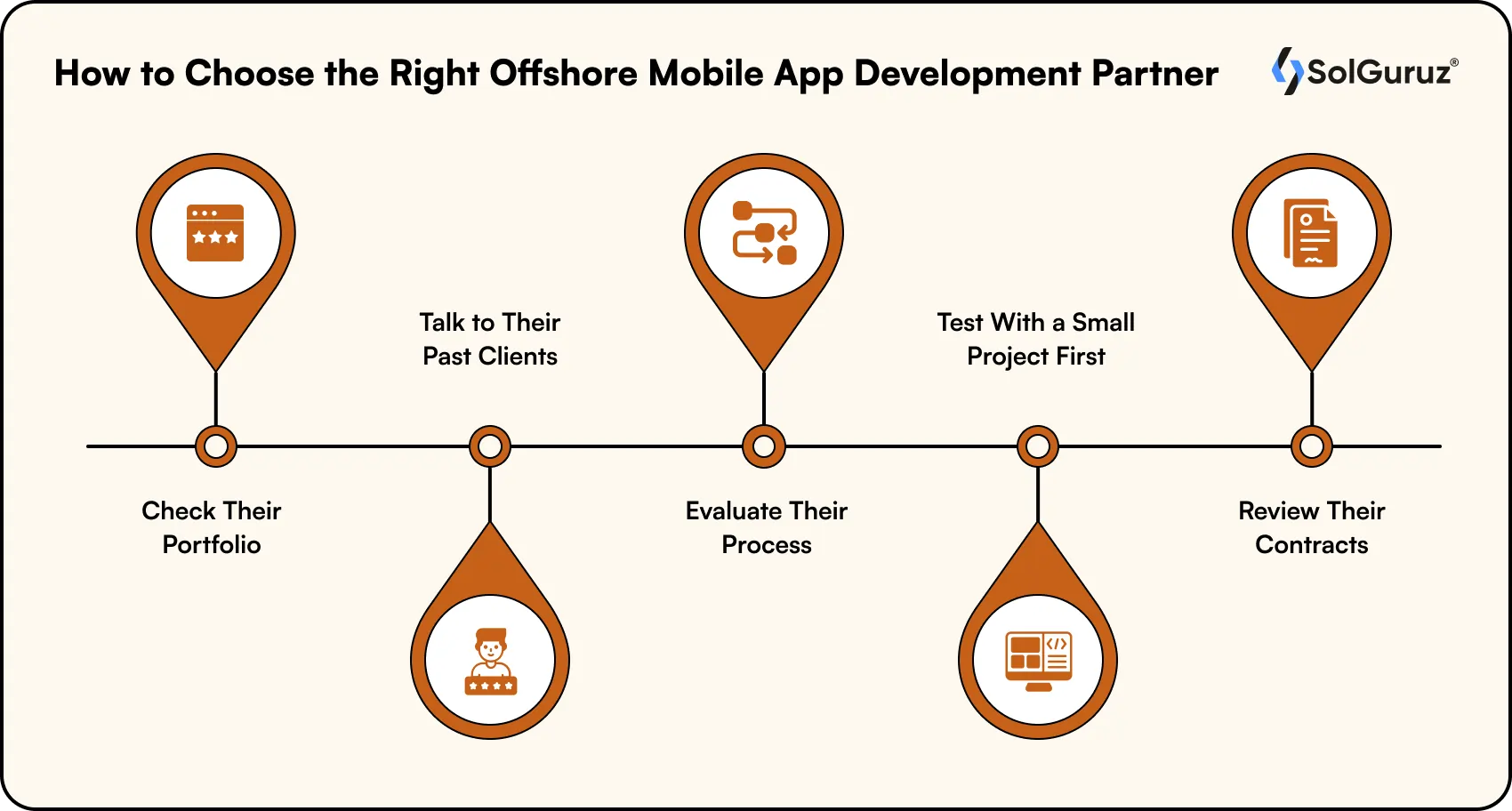
When you plan to hire a mobile app development company offshore, choosing the wrong partner can become the most expensive mistake of your project. Use the checklist below to evaluate vendors before you sign a contract.
Check Their Portfolio
Look for apps similar to what you want to build. Download them. Use them. Check reviews. A portfolio tells you more about a company than any sales pitch.
Talk to Their Past Clients
Ask for 2-3 references and actually call them. Ask about communication, deadline adherence, and how the team handled unexpected problems.
Evaluate Their Process
A strong offshore partner will walk you through their development process in the first call. They should talk about discovery, sprint planning, QA, deployment, and post-launch support without you having to ask.
Test With a Small Project First
Before committing to a 6-month engagement, start with a small paid pilot project. This gives you firsthand experience with the team’s communication, code quality, and reliability.
Review Their Contracts
Check for IP ownership clauses, confidentiality terms, termination conditions, and dispute resolution. If a vendor pushes back on signing an NDA, that is a red flag.
Why SolGuruz for Offshore Mobile App Development?
We have been building mobile apps for startups and growing businesses since 2014. Our team of 50+ developers specializes in iOS, Android, Flutter, and React Native development.
Here is what sets us apart:
- Transparent pricing with no hidden charges
- Dedicated project managers who speak your language (literally and figuratively)
- A proven sprint-based delivery model with weekly demos
- Full IP ownership transferred to you from day one
- Post-launch support and maintenance are included in every engagement
- Strict NDA and security protocols for every project
We follow flexible hiring models – whether you need a fixed-price MVP, a time & material engagement, or a full dedicated team. You stay in control of the process, the timeline, and the budget.
Conclusion
Offshore mobile app development in 2026 is not a gamble. It is a proven strategy used by thousands of companies to build better products faster and at a lower cost.
The key is choosing the right partner, setting up strong communication habits, protecting your IP, and following a structured development process.
Whether you are building an MVP to test your idea or scaling a product with millions of users, the right offshore team can make it happen without draining your budget.
If you are considering offshore development for your next mobile app, start with a conversation. We will help you map out the scope, estimate costs, and find the right engagement model for your business.
FAQs
1. How much does it cost to build a mobile app with an offshore team?
It depends on app complexity and team location. A simple MVP built with an Indian offshore team can cost $7,500-$20,000. A complex, feature-rich app may range from $48,000 to $150,000 or more. The biggest cost factors are total development hours and the hourly rate of the team.
2. How do I protect my intellectual property when working with an offshore team?
Sign a comprehensive NDA and IP assignment agreement before work starts. Store all code in your own repository. Limit access to sensitive data. Work with a legal advisor experienced in international contracts.
3. What is the best engagement model for offshore app development?
For small, well-defined projects, a fixed price works well. For evolving products, the time & material model gives you flexibility. For long-term development, a dedicated team model is the most efficient. Your choice should match your budget, timeline, and how clearly your requirements are defined.
4. How long does it take to build a mobile app offshore?
A simple app takes 2-3 months. A mid-complexity app takes 4-6 months. A complex app with advanced features can take 6-12 months. These timelines assume a well-run process with clear requirements and regular feedback loops.
5. How do I pick the right offshore development company?
Review their portfolio, talk to past clients, evaluate their development process, and start with a small pilot project. Check for clear contracts with IP ownership and confidentiality clauses. A good partner will be transparent about their process and pricing from the first conversation.

Satendra Bhadoria is the Co-Founder and Chief Operating Officer at SolGuruz, bringing over a decade of experience in large-scale operations and delivery management within the global BPO and services industry. Before co-founding SolGuruz, he managed large delivery teams supporting clients across the United States, Europe, and Australia. At SolGuruz, Satendra oversees delivery governance, quality frameworks, hiring and staffing models, offshore development center (ODC) setups, and client engagement practices. His day-to-day work revolves around execution discipline, process maturity, delivery reliability, and building team structures that scale effectively for both startups and enterprises. He is also actively engaged in domain-driven delivery initiatives, including real estate technology platforms, property workflow systems, and operations-focused digital solutions areas, where process clarity and dependable execution are critical for long-term growth. He also contributes as a core member of the Uttar Bharatiya Business Network (UBBN), engaging with business leaders and entrepreneurs on operational practices, collaboration models, software solutions, and sustainable growth strategies. This involvement keeps his perspective grounded in real business operations beyond software delivery.


From Insight to Action
Insights define intent. Execution defines results. Understand how we deliver with structure, collaborate through partnerships, and how our guidebooks help leaders make better product decisions.
 How we Work
Ready to Build Your App With an Offshore Team?
We help startups and businesses hire skilled offshore developers at transparent rates. No hidden costs. No surprises.

Strict NDA

Trusted by Startups & Enterprises Worldwide

Flexible Engagement Models

1 Week Risk-Free Trial
Real-World Examples of Our Expertise
Explore how real-world challenges were turned into opportunities with our success stories and case studies, showcasing impactful solutions and measurable results.
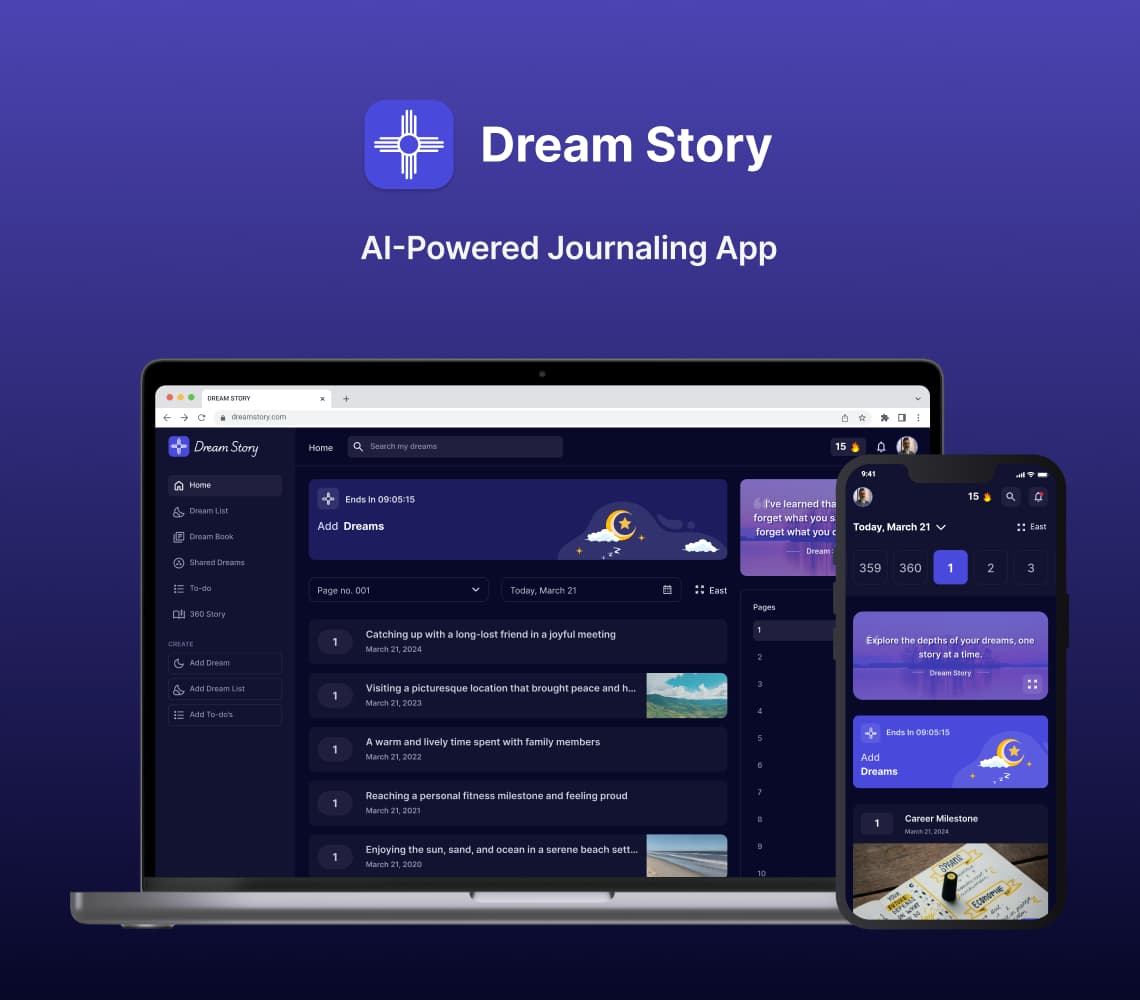
AI Journaling App Development Solution
Discover with us how we built Dream Story, an AI-powered journaling application that helps manage daily notes by capturing your thoughts and emotions. A one-stop solution for those who love noting down daily summaries!
Generative AI
Prompt Engineering
AI Integration
Mobile App
Flutter
Android
iOS
Web App
Desktop
Website
UI/UX
Backend
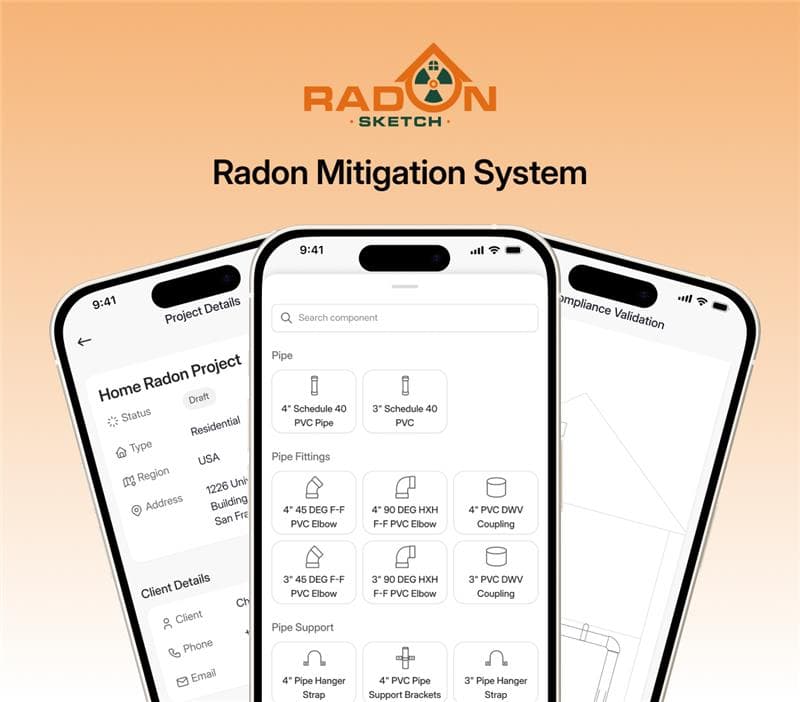
Radon Mitigation System for Mitigators And Enterprise
SolGuruz designed and developed RadonSketch, a smart radon mitigation system solution for mitigators and enterprises. It modernizes outdated workflows with automation, guided compliance, and a powerful visual builder - built end-to-end by our expert team.
Real Estate
UI/UX
MVP Development
Mobile App
Flutter
Android
iOS
Backend
Launch & Maintenance
Digital Transformation
Digital Marketing