




Build a Workout Tracker App Like Hevy With AI Tracking: Pricing, Features & Revenue Models
The fitness app market is booming, with global revenues projected to reach $12.44 billion by 2030. Building a Workout Tracker App Like Hevy means combining fast logging, intuitive UI, community features, and smart tracking to drive retention. In this guide, we will cover cost breakdowns, development steps, tech stack, monetization strategies, and top trends for 2026. Unlock actionable insights to see exactly how to turn your app idea into a high-performing fitness platform users love.


Summarise with AI


A few years ago, I downloaded a basic workout app to track sets, reps, and rest. Nothing special, until the progress became visible.
Every extra rep, every 2.5 kg added, and every PR was recorded. Progress wasn’t a feeling anymore. It was proof.
That’s why workout trackers exploded. 82% of people stick to their routines longer when they track their workouts, and apps with measurable progress reports have 3.4 times higher retention rates.
A Workout Tracker App Like Hevy doesn’t just log numbers, but it turns discipline into motivation.
And the market backs it: the global fitness app industry is projected to reach $12.44 billion in 2030 and $39.35 billion by 2034, with Hevy alone attracting over 9 million users.
In this guide, I’ll show you how to build an app like Hevy in 2026, the must-have features, the Hevy app development process, business model, and the cost to build an app like Hevy.
Table of Contents
Understanding the Hevy App Phenomenon: Why It Works
Before diving into how to build something similar, it helps to look at why Hevy caught on in the first place.
The app addresses a very simple reality: most gym-goers struggle to keep track of what they did in the last session, and even fewer have a clear picture of how far they’ve actually progressed.
This is where Hevy plays an important role.
- Allow people a clean, fast way to log their workouts
- Highlight their improvement
- Personalized recommendations
Key Statistics That Matter:
- 9+ million active users worldwide trust Hevy for workout tracking
- 60% of fitness app users have replaced gym memberships with app-based solutions
- The fitness tracking app segment accounts for over 54% of the entire fitness app market
Partnering with the right Fitness App Development Company ensures you can recreate this kind of user-focused experience.
Essential Features to Create an App Like Hevy
When making an app like Hevy, know that must-have features are crucial.
| Feature Category | What It Includes | Why It Matters (Real Competitive Advantage) |
| AI-Powered Training Engine | Adaptive workout plans, dynamic rep/weight adjustments, progressive overload automation, real-time workout difficulty scoring | Users don’t guess their next step; the app trains with them like a smart personal coach |
| Smart Exercise Recognition & Auto-Logging | Detects exercise type, rep count, duration using sensors/camera/accelerometer; automatic logging from mobile/watch | Removes manual tracking, the biggest friction blocker in fitness apps |
| Motion Analysis & Form Correction (Computer Vision) | Camera-based posture detection, rep quality scoring, injury risk alerts, form improvement tips | Helps users lift safely and improve performance major retention booster |
| Workout Digital Twin & Predictive Analytics | Predicts PR timelines, recovery days, weekly volume targets; simulates progress outcomes based on workout variables | Makes progress predictable instead of reactive huge motivation driver |
| Gamified Community Ecosystem | Real-time competitions, AI-ranked leaderboards, challenge tiers, squad workouts, and private coaching communities | Builds accountability, and long-term addiction turns fitness into a social habit |
| Offline-First + Cloud Sync Architecture | Full functionality without internet; AI predictions and analytics sync once online | Ensures reliability in gyms, a major user complaint has been solved |
Insight: Fitness apps that integrate AI-powered training and motion analysis can see over 60% higher user engagement compared to standard trackers.
Technology Stack for Hevy-Like App Development
When planning to develop a workout tracker similar to Hevy, pick a Dedicated Development Team that can deliver the result you want.
Here’s a clean breakdown of the tech stack commonly used:
1. Frontend Development – Mobile Apps
For the front-end development (mobile apps),
- Choose React Native, focusing on a single codebase
- Flutter offers higher performance and a smooth UI.
Native options such as Swift and Kotlin provide enhanced performance.
2. Frontend Development – Web Dashboard
- Build a responsive web dashboard
- Use React.js or Vue.js for modern UI
- Go for TypeScript for better code safety
3. Backend Development
Node.js with Express is suitable mostly for real-time features and scalability.
Python with Django/Flask is perfect for AI and ML modules, while Ruby on Rails speeds up development with strong conventions.
4. Database
During the app development process, it is critical to select the database wisely, as it is important for storing user data.
Well-organized workout and user data can be stored in PostgreSQL, while MongoDB manages flexible UGC.
5. Cloud Infrastructure
Make sure to opt for cloud architecture, such as AWS, which provides scalable, comprehensive services; Google Cloud excels in AI/ML integration. Firebase enables real-time sync, quick setup, and cross-device data consistency.
6. AI & Machine Learning
Focus on integrating with TensorFlow or PyTorch for workout suggestions and predictive analytics.
Use OpenAI API for conversational coaching features and Computer Vision to analyze form and prevent injuries.
7. Analytics & Monitoring
It is also important to track user behaviour through Google Analytics or other tools.
You can also choose Crashlytics for monitoring crashes ensure app performance with New Relic.
Top Trends for Developing a Workout Tracker App Like Hevy (2026)

Creating a Workout Tracker App Like Hevy in 2026 means adapting to trends that combine AI, data, and user engagement.
Here are the trends that make your app competitive.
1. AI-Powered Personalized Workouts
Most of today’s apps are focusing on adapting AI for personalized adoption. Keep in mind that AI adapts workout plans based on users’ history, recovery patterns, and performance level.
By personal recommendations, it enhances engagement and retention.
2. Real-Time Form Analysis with Computer Vision
Computer vision tracks exercise form and provides instant feedback. This reduces injury risk, improves efficiency, and builds trust with users.
3. Wearable & Biometric Data Integration
Syncing with wearables allows tracking of heart rate, sleep, and recovery. AI uses this data to optimize training load, prevent overtraining, and enhance user experience across devices.
4. Intuitive Workout Logging
Users expect simple logging of exercises, sets, reps, and weight. Quick input, rest timers, and history tracking remain fundamental for usability and retention.
5. Social & Community Features
Features like following friends, sharing progress, or joining small challenges give people a reason to stay consistent.
When users see others training, it naturally builds motivation and a sense of accountability.
6. Progress Tracking & Analytics
Visual charts, PR tracking, and historical performance overviews help users see improvement.
Analytics remain a core expectation, even in AI-driven apps, for measurable results.
Workout Tracker App Like Hevy Development Process: Step-by-Step Guide

Building an app like Hevy requires a structured approach.
Here’s the proven development process we follow at our Workout Tracker App Development Company:
1. Conceptualization & Market Research
Every successful Workout Tracker App Like Hevy starts with clarity: who you’re building for, and why.
Understand the target audience and check what problem you’ll solve better than competitors.
2. MVP Definition & Prioritization
Start small and strategic; an MVP should include only the essential tracking and progress features that validate product-market fit.
3. UI/UX Design & Prototyping
Focuses on:
- Create wireframes and prototypes
- Test workout logging, history, and profile screens
Improve usability
The main goal is speed; people record their sets between exercises, so every action should take as few taps as possible.
4. Development (Frontend + Backend)
- Opt for native iOS/Android if you prefer fast performance.
- Or use Flutter/React Native for faster cross-platform app development. Your backend must handle speed, security, and scale, workout data, analytics, and user profiles creates broader traffic.
5. Testing & Quality Assurance
Testing every core user flow: create workout, log, edit, and review progress- any disruption here reduces the retention.
Further, add usability testing with real gym users to catch delays caused by UI.
6. Launch (MVP) + Feedback Loop
Release the MVP to early adopters, fitness communities, trainers, or beta users. Collect feedback aggressively on what’s working, what’s missing, and which screens slow them down.
7. Phase 2- Feature Expansion
Now expand your app’s features. Add smart workout recommendations, social communities, wearable syncing, and hybrid monetization.
Include features based on what users actually do, not what they say.
8. Maintenance, Updates & Scaling
Run regular checks, push updates, and scale your infrastructure as more people use your app.
Monitor database load and API calls; both increase when user numbers expand.
Cost to Build an App Like Hevy: Detailed Cost Breakdown
Before you start development, understand what it costs to build a Workout Tracker App Like Hevy.
Each stage-MVP, mid-level, and full-scale has a different price range based on how many features you include.
1. MVP / Basic App
Cost: $10,000 – $45,000
This version covers the basic features: workout logging, progress tracking, and a clean interface. Built to test your idea fast, collect user feedback, and see what people actually think.
2. Mid-Level App
Cost: $50,000 – $80000
Here, the app starts feeling more polished. You get improved analytics, deeper workout insights, better design, and early integrations like cloud sync or a lightweight web dashboard.
This tier fits creators who already have user traction or want to offer a more professional experience right from day one. It supports a growing user base without jumping into full enterprise-level complexity.
3 . Full-Featured Hevy-Like App
Cost: $90,000+ 150,000
This provides you with a full package:
- Custom training guides
- Wearable support, community tools
- Detailed progress data
Business Model for Hevy App: Monetization Strategies
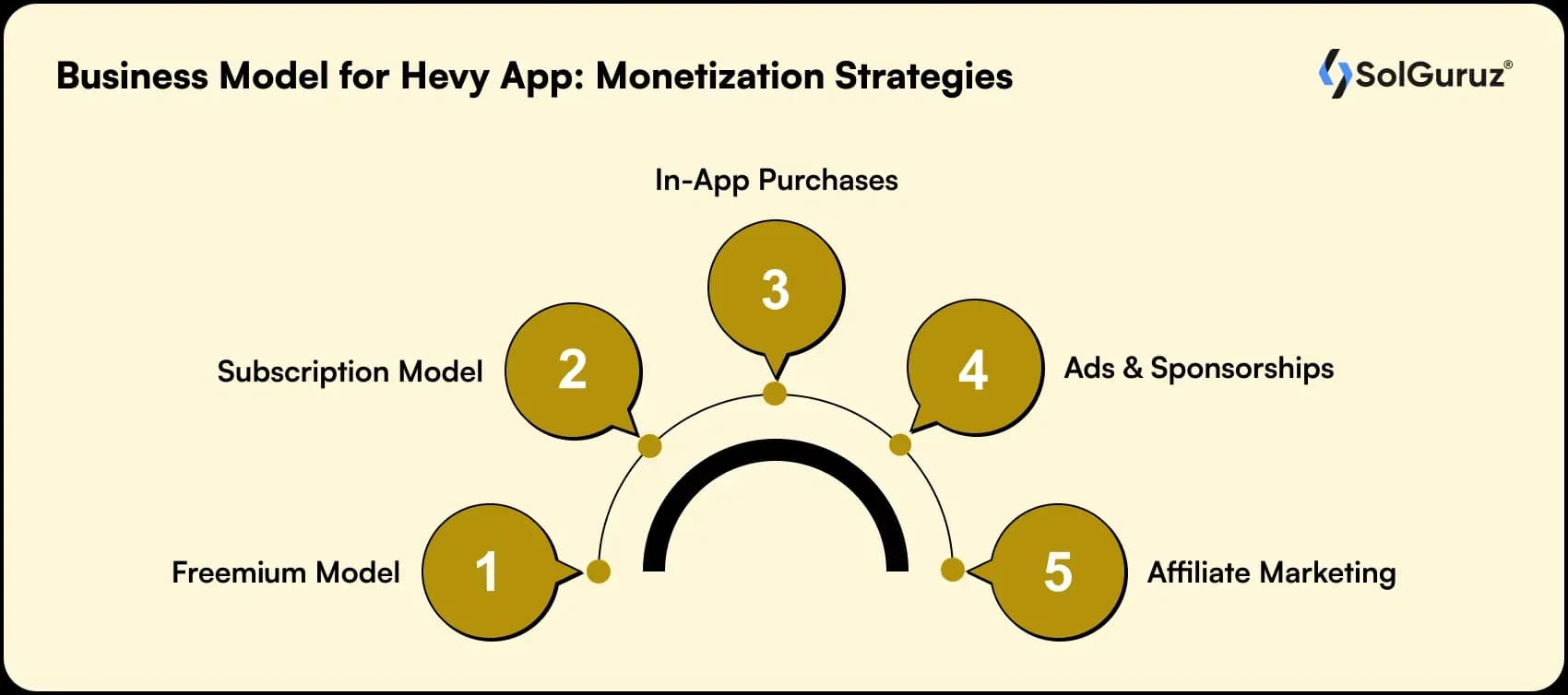
A Workout Tracker App Like Hevy can generate revenue using multiple models, often combined for maximum growth:
1. Freemium Model
Users get basic workout tracking and progress tools for free. Want smart recommendations, personal coaching, or advanced analytics? That costs money.
2. Subscription Model
Monthly or yearly plans unlock premium content, custom programs, or exclusive features. Pricing: $9–$29/month or $99–$199/year. Subscriptions = predictable monthly income.
3. In-App Purchases
It includes customized and special workout plans, nutritionist support, and online coaching sessions within the app itself. Users can purchase more whenever they want, hence generating revenue streams beyond subscriptions.
4. Ads & Sponsorships
With the help of sponsorships and advertisements, you can enhance your revenue generation stream. For example, run simple ads or get into a partnership with fitness brands.
Running ads in such a way that they don’t interfere with workout routines, like showing ads at the time of sessions or summary screens.
5. Affiliate Marketing
Partner with fitness brands and add their product links to your app.
When users click through and buy gear, supplements, or equipment, you take a commission. Simple revenue stream with no additional work after setup.
Remember: Strong insights and smooth device syncing make the premium features feel genuinely useful, giving users a reason to stick around longer and spend more over time.
Why Partner with a Fitness App Development Company
Developing a Workout Tracker App Like Hevy is not easy and is a time-consuming process. It requires expertise in UI/UX design, AI integration, wearable sync, and more.
Getting into a partnership with a professional fitness app development company ensures your app is built efficiently and meets industry standards properly at all phases.
Key Advantages of Working with Experts:
1) Experienced Development Team:
A good development company gives you developers who already know fitness apps, what keeps users coming back, what makes them delete, and where the money is.
2) Faster Time-to-Market
Experienced app developers focus on keeping MVP as the priority, and design a robust workflow, implement an AI-ready architecture, and ensure product launches in the market master. ,
3) Future-Proof Architecture
A professional team ensures your app is scalable, secure, and ready for advanced integrations like AI-driven recommendations or wearable syncing.
Why SolGuruz is the Right Choice
Fitness app trends shift fast. What users wanted last year isn’t what they expect now. When you hire SolGuruz, you get a fitness app development team that builds apps people stick with.
We handle technical complexity so you can focus on growing your business. Want to see how we actually work? Check our process here: (how we work).
Conclusion: Your Journey to Build a Workout Tracker App Like Hevy
Building a workout tracker app like Hevy goes beyond screens and features; it shows users their actual progress. When they watch their lifts increase, see their consistency improve, or hit a 30-day streak, your app becomes part of their daily habit.
You’ve got the blueprint: features, development phases, monetization, and costs. Now it’s about execution speed.
How quickly can you move from idea to live app?
SolGuruz has spent years building fitness platforms, and we know what works.
At SolGuruz, we’ve built fitness apps for founders who started exactly where you are. Our dedicated development team combines real fitness knowledge with technical execution to create fitness apps people actually want to use daily.
FAQs
1. How long does it take to develop a fitness app like Hevy?
An MVP takes 3-4 months when you stick to basic features. Want social tools, analytics, and wearable sync? That's 6-9 months. Your timeline shifts based on which features you pick and how many developers you hire: a bigger team, quicker launch.
2. Can I start with just iOS or Android?
Absolutely. Many founders launch on one platform first to keep things simple and control costs. Starting with a single version helps you test the idea, watch how real users behave, fix early issues, and prove there’s demand before investing in the second platform. It’s a practical way to reduce the initial cost of building an app like Hevy while still moving fast.
3. Do I need AI features to compete with Hevy?
Not right away. Users care more about fast logging and clear progress tracking than fancy algorithms. Build those first, get traction, then add smart features in version 2.0 as a paid upgrade. Don't over-engineer your MVP.
4. What's the difference between hiring freelancers vs. a development company?
Freelancers cost less upfront, but you manage everything, including communication, deadlines, and quality checks. A fitness app development company gives you a full team that works together, handles QA, and sticks around after launch. Less stress, fewer gaps in your product.
5. How much does it cost to maintain a fitness app annually?
Budget 15-20% of what you spent building it. That covers cloud hosting, bug fixes, OS updates, and small feature tweaks. If you spent $80K building your app, plan to spend $12K–$16K per year to keep it running smoothly.

Paresh Mayani is the Co-Founder and CEO of SolGuruz, a global custom software development and product engineering company. With over 17+ years of experience in software development, architecture decisions, and technology consulting, he has worked across the full lifecycle of digital products, from early validation to large-scale production systems. He started his career as an Android developer and spent nearly a decade building real-world mobile applications before moving into product strategy, technical consulting, and delivery leadership roles. Paresh works directly with founders, scaleups, and enterprise teams where technology choices influence product viability, scalability, and long-term operational success. He partners closely with founders and cross-functional teams to take early ideas and turn them into scalable digital products. His work revolves around AI integration, agent-driven workflow automation, guiding product discovery, MVP validation, system design, and domain-specific software platforms across industries such as healthcare, fitness, and fintech. Instead of solely focusing on building features, Paresh helps organizations adopt technology in a way that fits business workflows, teams, and growth stages. Beyond delivery, Paresh is also an active tech community contributor and speaker, contributing to global developer ecosystems through Stack Overflow, technical talks, mentorship, and developer community (Google Developers Group Ahmedabad and FlutterFlow Developers Group Ahmedabad) initiatives. He holds more than 120,000 reputation points on Stack Overflow and is one of the top 10 contributors worldwide for the Android tag. His writing explores AI adoption, product engineering strategy, architecture planning, and practical lessons learned from real-world product execution.





From Insight to Action
Insights define intent. Execution defines results. Understand how we deliver with structure, collaborate through partnerships, and how our guidebooks help leaders make better product decisions.
 How we Work
Scale a Workout Tracker App Like Hevy
Master features, tech, and monetization to compete with top fitness apps.

Strict NDA

Trusted by Startups & Enterprises Worldwide

Flexible Engagement Models

1 Week Risk-Free Trial
Real-World Examples of Our Expertise
Explore how real-world challenges were turned into opportunities with our success stories and case studies, showcasing impactful solutions and measurable results.
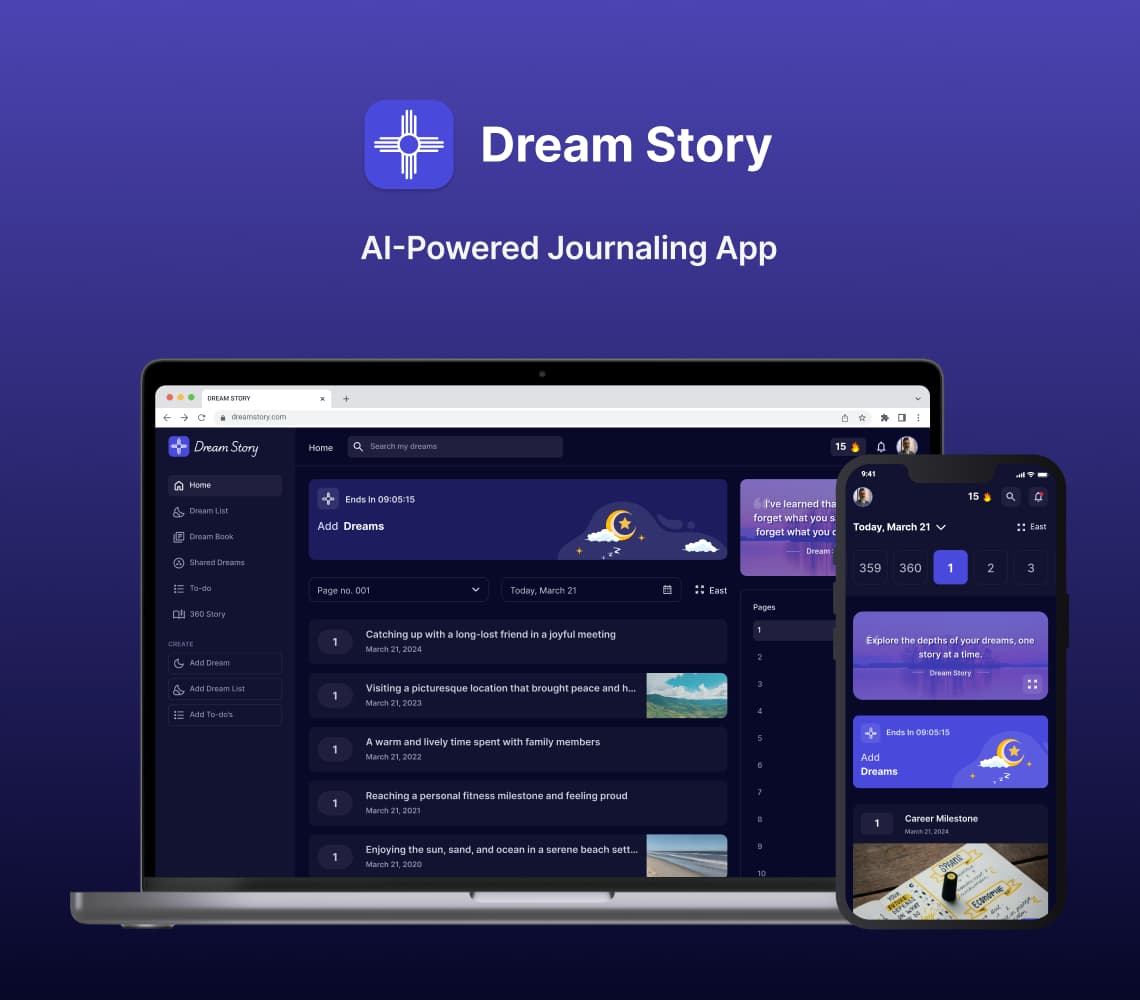
AI Journaling App Development Solution
Discover with us how we built Dream Story, an AI-powered journaling application that helps manage daily notes by capturing your thoughts and emotions. A one-stop solution for those who love noting down daily summaries!
Generative AI
Prompt Engineering
AI Integration
Mobile App
Flutter
Android
iOS
Web App
Desktop
Website
UI/UX
Backend
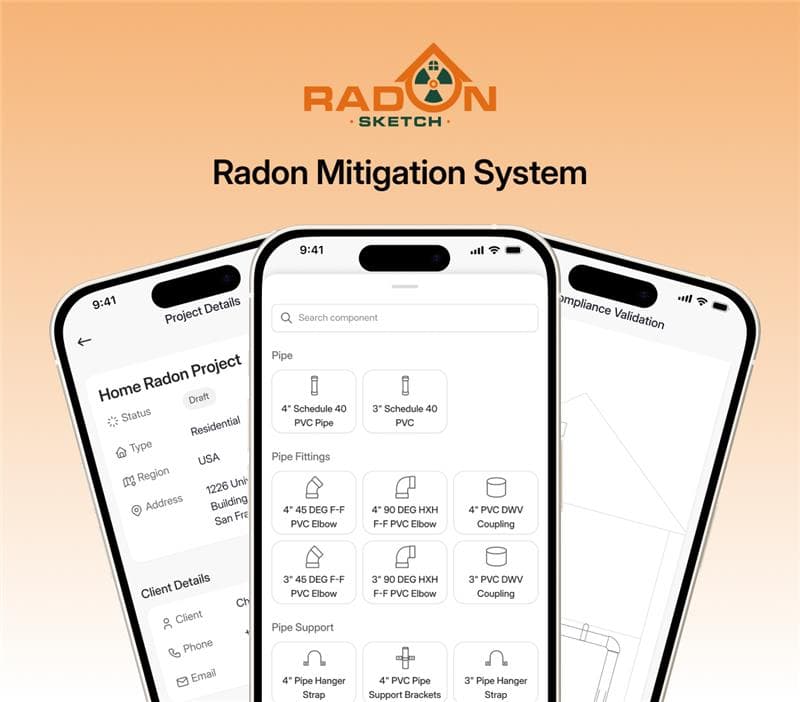
Radon Mitigation System for Mitigators And Enterprise
SolGuruz designed and developed RadonSketch, a smart radon mitigation system solution for mitigators and enterprises. It modernizes outdated workflows with automation, guided compliance, and a powerful visual builder - built end-to-end by our expert team.
Real Estate
UI/UX
MVP Development
Mobile App
Flutter
Android
iOS
Backend
Launch & Maintenance
Digital Transformation
Digital Marketing